
If you’ve ever wondered what is custom apparel, the short answer is simple: it’s clothing made to your specifications. Your logo, your colors, your design, printed or stitched onto the garments you choose. But the longer answer matters more, because the method you pick, the blanks you order, and the quantity you need all affect what you’ll pay and how the finished product looks.
Business owners, coaches, and event organizers come to us at Dr. Tee’s Design & Screen Printing with this exact question all the time. After over 20 years of screen printing and designing custom apparel in Kansas City, we’ve learned that most people don’t need a sales pitch, they need a straight explanation of their options. That’s what this article delivers. We’ll break down the main production methods (screen printing, embroidery, heat transfer, and more), walk through realistic costs, and cover the situations where custom apparel makes the most sense.
By the end, you’ll know exactly which method fits your project, how to avoid overspending, and what to look for when choosing a provider. Whether you need 12 branded work shirts or 1,000 event tees, this guide gives you the information to make a confident decision.
What counts as custom apparel
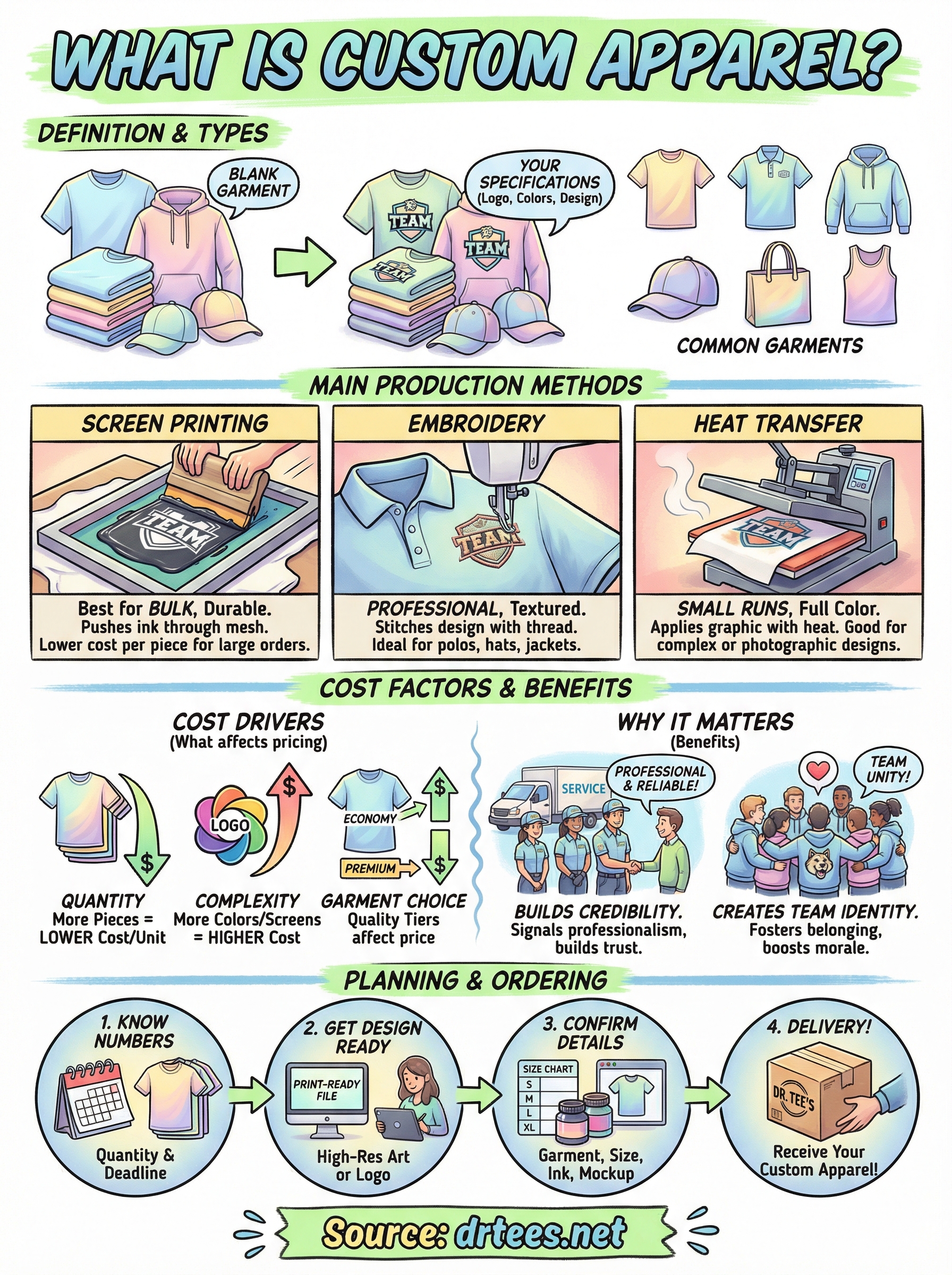
When people ask what is custom apparel, they usually picture a t-shirt with a company logo on it. That’s a fair starting point, but the category is broader than that. Custom apparel covers any garment modified from its original blank form to display a specific design, logo, text, or graphic chosen by the person or organization ordering it. A plain white t-shirt sitting in a warehouse becomes custom apparel the moment your business name is printed across the chest.
The garments that qualify
Custom apparel isn’t limited to t-shirts. You can customize a wide range of clothing and accessory types, and each one serves a different purpose depending on your industry, your team, and your audience. The most common options include:
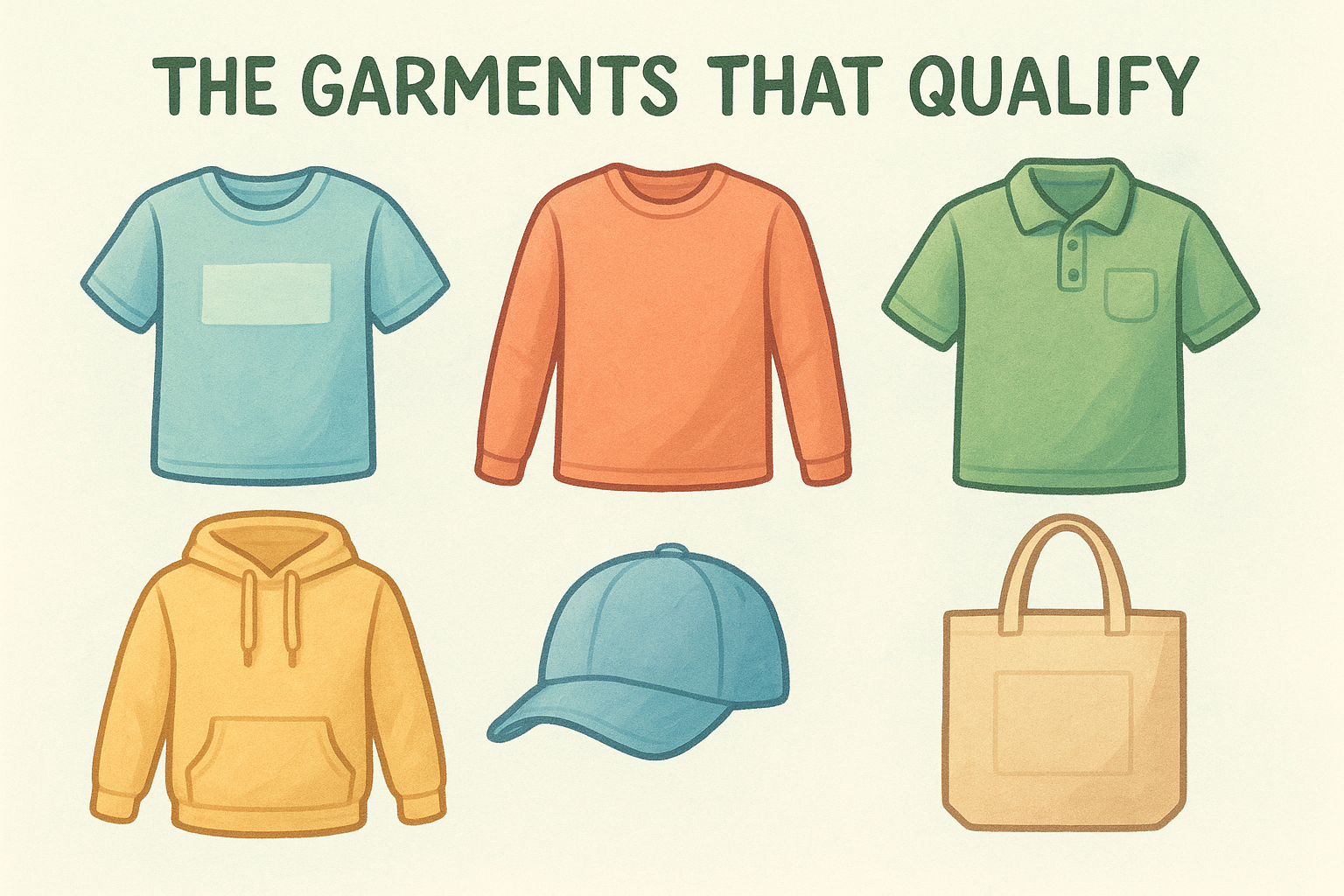
- T-shirts and long sleeves for events, promotions, and casual team uniforms
- Polo shirts for professional offices, healthcare practices, and service businesses
- Hoodies and sweatshirts for schools, athletic programs, and cold-weather crews
- Hats and caps for outdoor workers, sports teams, and brand merchandise
- Tote bags and accessories for retail giveaways, events, and nonprofit outreach
- Tank tops for gyms, summer events, and performance-focused wear
Your garment choice should match how your audience will actually wear it and the environment it’s going into. A roofing crew needs something durable and breathable. A dental office wants a fitted, professional-looking polo. Getting that match right is as important as the design itself.
What makes apparel “custom”
The customization is the defining factor. Your design gets applied to the garment through a production method chosen based on the design complexity, quantity, garment type, and your budget. What matters here is understanding that “custom” means the finished product reflects decisions you made: the colors, the print placement, the graphic size, and what the garment communicates about you or your organization.
The blank garment is just the starting point. What you put on it and why is what makes it custom apparel.
Fabric, fit, and garment brand all shape the final result too. At Dr. Tee’s, we carry blanks from brands like Next Level, Bella Canvas, Gildan, and Hanes, organized across four tiers: Economy, Standard, Premium, and Eclectic. Each tier gives you a different balance of cost, comfort, and durability. A high-quality print on a poorly fitting shirt won’t represent your business the way you intend. Choosing the right blank from the start saves you from ordering again and keeps your brand looking sharp every time someone sees it.
Why custom apparel matters for businesses and teams
Once you understand what is custom apparel and what falls under its umbrella, the next question is why it actually matters. Branded clothing does something a business card or website can’t: it turns the people wearing it into walking representations of your organization. Every time a crew member shows up in a uniform or a team wears matching shirts at an event, your brand gets in front of people who never searched for you.
It builds immediate credibility
When someone sees your service truck pull up and your crew steps out in matching, clean, branded shirts, their first impression shifts. Consistent, professional presentation signals that your business is organized and reliable, even before you say a word. This matters especially in trade industries like plumbing, HVAC, roofing, and landscaping, where customers are letting strangers into their homes. A branded uniform reduces hesitation and builds trust fast.
People make judgments about your professionalism within seconds of seeing your team, and what they’re wearing is part of that judgment.
It creates team identity
Custom apparel isn’t only about what customers think. How your team feels wearing it matters just as much. A school sports program with matching hoodies, a nonprofit staff in coordinated polo shirts, or a construction crew in branded tees all share something: a visible sense of belonging that casual clothes can’t create. That shared identity translates to real outcomes, including better morale, stronger team cohesion, and more consistent brand representation across every interaction.
Whether your team is three people or three hundred, giving them something to wear that represents the organization shows you take your brand seriously. That message lands with employees and customers alike.
Common customization methods and when to use each
Part of understanding what is custom apparel is knowing how the decoration actually gets applied. Each method produces a different result, and the best choice depends on your design, your garment type, and how many pieces you’re ordering.
Screen printing
Screen printing pushes ink directly through a mesh stencil onto the fabric, creating a sharp, durable print that holds up through heavy use and repeated washing. This method works best when you’re ordering 12 or more pieces with the same design, since setup involves creating a separate screen for each color. The more units you order, the lower your cost per piece, which makes screen printing the go-to choice for work uniforms, event shirts, and team gear.
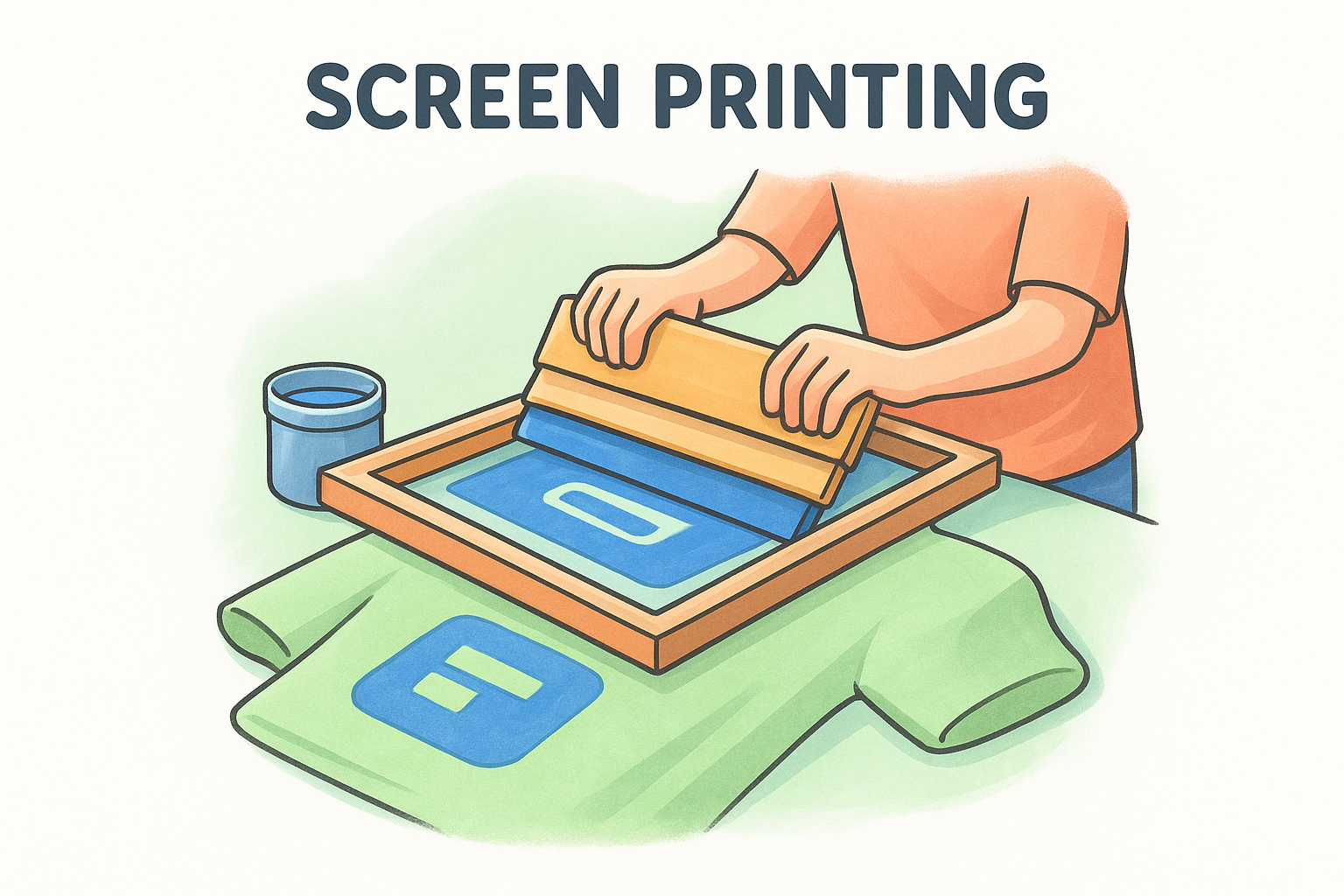
Screen printing is the most cost-effective method for bulk orders with bold, straightforward designs.
Most shops, including Dr. Tee’s, can handle 1 to 8 colors per design, so you have real flexibility on how detailed your artwork gets. Just keep in mind that each additional color adds to the setup cost.
Embroidery
Embroidery stitches your design directly into the fabric using thread, which gives the finished product a textured, professional look that flat printing doesn’t replicate. This method suits polo shirts, hats, jackets, and any apparel where you want a polished, premium feel. It’s a common choice for healthcare offices, real estate teams, and corporate accounts where the presentation needs to be clean and refined.
The tradeoff is that embroidery works better with simpler logos. Highly detailed designs with thin lines or small text don’t translate well into thread, so if your logo is complex, your designer may need to simplify it before production.
Heat transfer
Heat transfer applies a pre-printed graphic to the garment using pressure and heat. This method works well for short runs, full-color photographic designs, or one-off custom pieces where screen printing setup costs wouldn’t make sense. It’s a practical option when flexibility matters more than long-term volume pricing.
What custom apparel costs and what affects pricing
Pricing for custom apparel isn’t one flat rate. It shifts based on several factors working together, and understanding those factors helps you budget accurately before you reach out to a printer. Most quotes assume a specific quantity, method, and design, so the number you get for 12 shirts will look very different from what you’d pay for 500.
Quantity drives the cost per piece
The single biggest lever on your price per unit is how many pieces you order. Screen printing has setup costs tied to screen creation, and those costs spread across every shirt in your run. When you order 12 shirts, that setup cost hits each piece harder. When you order 200, it barely registers per unit, which is why pricing drops significantly as quantity climbs.
Ordering more pieces lowers your cost per shirt, so if you’re close to a pricing tier, rounding up usually saves you money overall.
Businesses with ongoing uniform needs often benefit from ordering in larger batches rather than placing small repeat orders throughout the year. Consolidating your orders is one of the simplest ways to cut your per-piece cost without changing anything about the design or garment.
Design complexity and color count
Every color in a screen-printed design requires a separate screen, and each screen adds to your setup fee. A one-color logo on a standard t-shirt is the most budget-friendly option. A six-color graphic with fine detail costs more to set up, even if the shirts themselves are the same blank.
Embroidery pricing works differently. Stitch count, not color count, determines your cost for embroidered pieces, so a small chest logo runs less than a large back design. If you’re asking what is custom apparel going to cost for your specific project, knowing your quantity and simplifying your design before requesting a quote gives you the clearest starting point.
How to plan and order custom apparel that works
Understanding what is custom apparel is only half the job. The other half is placing an order that actually delivers what you need, without back-and-forth delays or surprises when the finished product arrives. Starting with a clear plan saves time, reduces miscommunication, and keeps your project on budget.
Know your numbers before you reach out
Your quantity and timeline are the two pieces of information every print shop needs first. Before you contact a provider, decide how many pieces you need and when you need them. If you’re ordering for an event, work backwards from your deadline and build in at least a week of buffer for production. Rushing an order almost always costs more, so the earlier you start, the better your pricing will be.
Give your printer a firm quantity, a hard deadline, and a clear design file, and the entire process moves faster for everyone.
Get your design ready before production
A print-ready file speeds up production and prevents miscommunication about colors, sizing, and placement. If you already have a logo, ask your printer what file format they need and whether your file meets their resolution requirements. If you don’t have a logo yet, work with a designer before you order. Low-resolution artwork produces blurry prints, and fixing that mid-order creates delays you don’t want.
At Dr. Tee’s, our graphic design team helps customers develop or refine logos and artwork before anything goes to production, so your finished shirts match your brand standards.
Confirm garment and ink details
Before your order goes to print, confirm the garment style, color, and size breakdown in writing. Double-check that your ink colors match your brand standards, especially if these shirts join an existing uniform program. Reviewing a mockup before full production catches any issues before they affect your entire run.
Pay attention to size distribution across your order as well. Most groups need a range from small through XL, but trade crews often skew toward larger sizes. Getting the size split wrong means some team members end up with shirts that don’t fit, which defeats the whole purpose of ordering in the first place.
Next steps
Now you know what is custom apparel, how it gets made, and what drives the price. The decision-making part is behind you. Screen printing works best for bulk runs, embroidery suits professional settings, and your quantity and design complexity will determine what you pay. The right garment for your team depends on your industry, your budget, and how the people wearing it will actually use it.
Your next move is straightforward. Pull together your quantity, your deadline, and any existing logo files, then reach out to a printer who can answer your specific questions without making you feel like you’re guessing. At Dr. Tee’s, we’ve been helping Kansas City businesses and organizations get this right for over 20 years. If you’re ready to move forward, get a quote for your custom apparel project and we’ll walk you through every step from design to delivery.
