
If you’ve ever shopped for custom t-shirts, you’ve probably seen the term "ringspun cotton" on a product description and wondered what does ringspun cotton mean, and whether it actually matters. Short answer: it does, especially when you’re putting your brand’s name and logo on a shirt.
Ringspun cotton refers to a specific manufacturing process that twists and thins cotton fibers before spinning them into yarn. The result is a fabric that’s noticeably softer, smoother, and more durable than standard cotton. For screen printing, that smoother surface also means sharper, more vibrant prints, which is exactly why we recommend it to most of our clients at Dr. Tee’s Design & Screen Printing.
With over 20 years of printing custom apparel in Kansas City, we’ve run jobs on just about every fabric type out there, from budget-friendly open-end cotton to premium ringspun options from brands like Bella Canvas and Next Level. That hands-on experience gives us a clear picture of how different fabrics perform under ink, after washes, and on actual people. This article breaks down how ringspun cotton is made, how it compares to regular cotton, and how to decide if it’s the right choice for your next order.
Why ringspun cotton matters for tees and printing
When you order custom shirts, the fabric isn’t just a background detail. It’s the foundation everything else builds on. The quality of your garment directly affects how your print looks on day one and how both the shirt and the ink hold up over time. Most clients focus on the design, which makes sense, but the fabric choice quietly determines whether that design still looks sharp after 50 washes or starts cracking after 10.
How the fabric surface affects your print
Screen printing lays ink directly onto the surface of a garment. On a smooth, tight ringspun fabric, the ink sits on top of aligned fibers and produces crisp, clean edges with consistent color coverage. On coarser open-end cotton, the fibers are rougher and less uniform, which causes ink to spread slightly into the fabric structure, leaving edges that look fuzzy rather than sharp, especially on fine details and small text.
A smoother fabric surface is one of the biggest factors in print sharpness, and ringspun cotton consistently delivers that surface.
Fine lines, small lettering, and tight gradients all demand a smooth printing surface. If your design includes a phone number or thin strokes in your logo, ringspun cotton gives the ink somewhere clean to land. Open-end cotton can make that same design look muddy, even when the artwork file is technically perfect and the press settings are dialed in correctly.
Why wearability keeps your brand visible longer
A shirt that feels good to wear gets worn more often. That sounds obvious, but it’s one of the most practical reasons to choose ringspun cotton for branded apparel. When you hand someone a uniform or promo shirt and it’s soft and comfortable, they reach for it regularly. When it feels rough and stiff, it ends up in a drawer and never gets seen again.
Every time someone wears your shirt in public, your logo gets seen by people who didn’t get one. A ringspun tee from a brand like Next Level or Bella Canvas has a retail-quality feel that people actually want to wear on a regular basis. That’s ongoing, passive visibility for your business at no additional effort on your part.
Understanding what does ringspun cotton mean for your specific order comes down to this: it’s a practical decision that improves print quality, increases how often people actually wear the shirt, and extends the life of both the garment and your branding investment. For most clients ordering uniforms or promotional shirts, ringspun cotton is worth the small price difference per unit.
How ringspun cotton is made
Understanding what does ringspun cotton mean starts with the manufacturing process itself. The term "ringspun" describes how the cotton fibers are handled before and during spinning, and those steps are what separate it from standard cotton fabric.
Combing and aligning the fibers
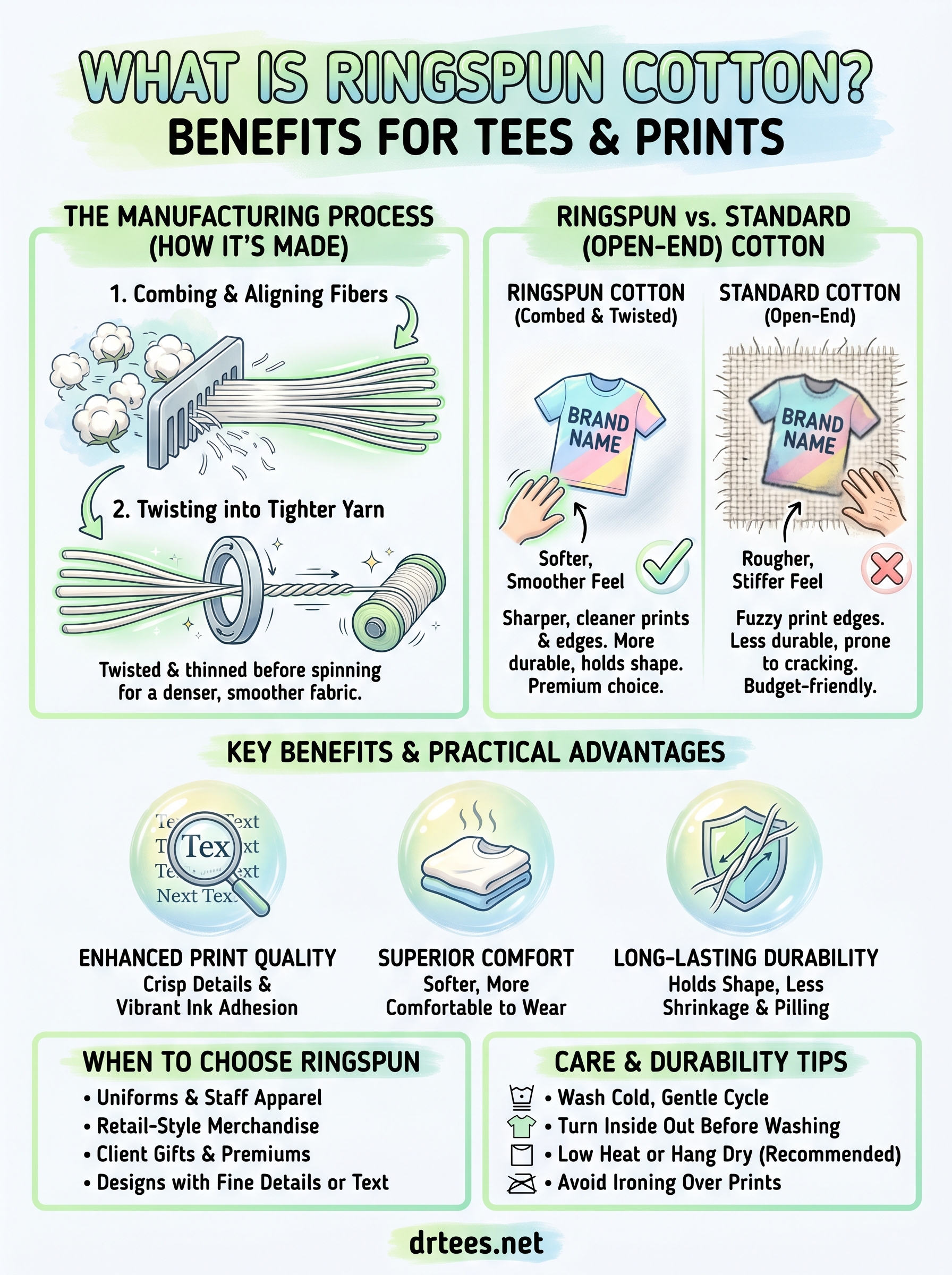
Raw cotton contains fibers of different lengths mixed with short, weak strands. In ringspun production, the raw cotton goes through a combing process that removes those short, uneven fibers and pulls the remaining long fibers into parallel alignment. This step gives ringspun cotton its clean, consistent structure before the spinning even starts. The longer fibers that survive combing are stronger and smoother, which sets the foundation for a higher-quality yarn.
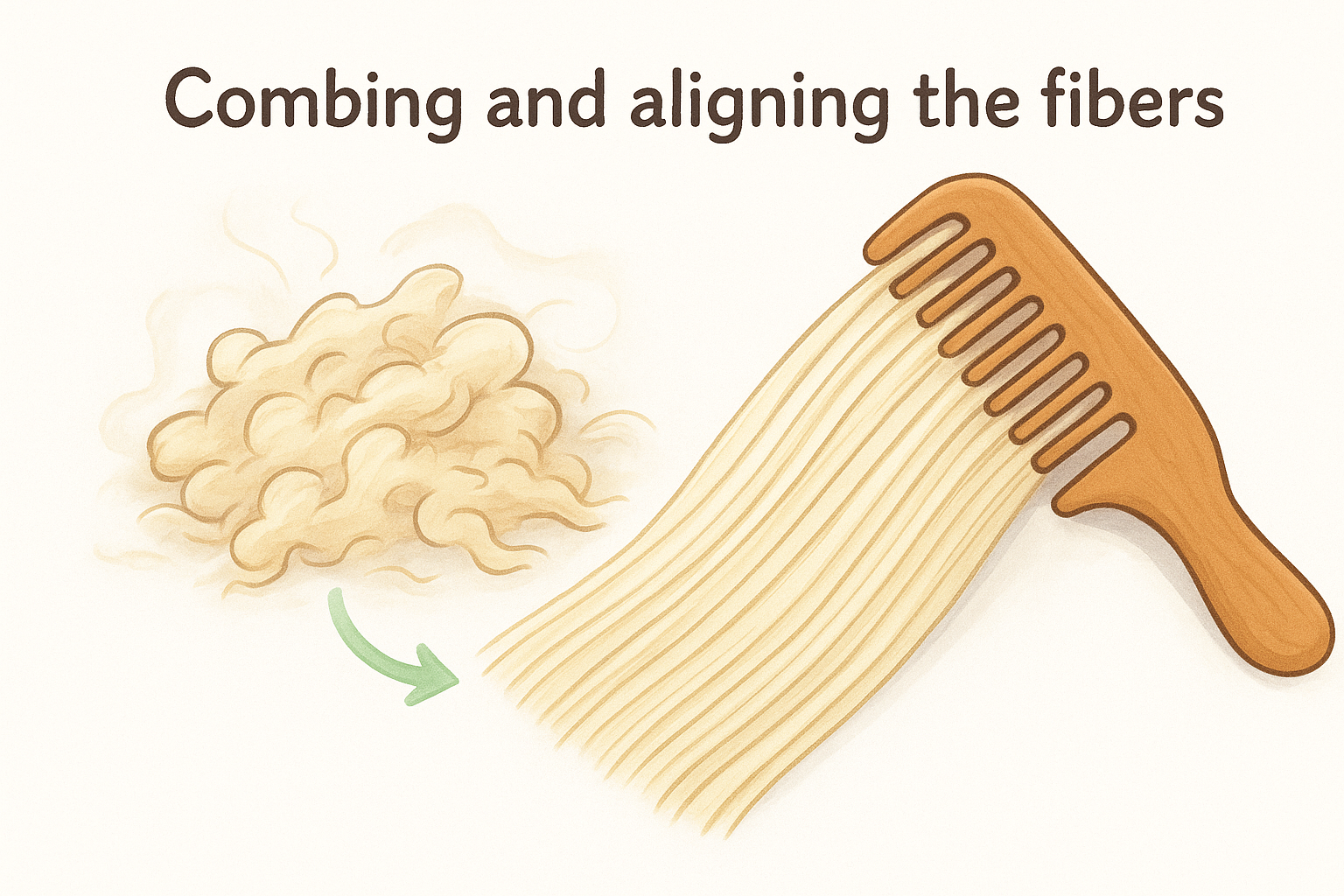
The combing step is what separates ringspun cotton from open-end cotton, and it’s the reason the final fabric feels noticeably different against your skin.
Twisting into tighter yarn
After combing, the aligned fibers pass through a ring spindle, which is where the name comes from. The spindle continuously twists the fiber bundle as it draws it into yarn. That twisting action compresses the fibers tightly together, which reduces the overall thickness of the yarn while making it stronger and more uniform along its entire length. The result is a thinner, tighter yarn that weaves into a denser, smoother fabric.
This process takes more time and requires more precise equipment than standard open-end spinning, which is why ringspun garments cost slightly more per unit. But the tighter yarn produces a surface that holds printed ink more accurately, wears more comfortably, and holds its shape better over repeated washing. For branded apparel that needs to look professional and last, the extra step in production pays off in the final product you hand to customers or employees.
Ringspun vs regular cotton
The main difference comes down to how each yarn is made. Ringspun cotton uses combed, aligned fibers that are tightly twisted into smooth yarn, while regular cotton uses a faster, cheaper open-end spinning method that traps fibers together randomly. That production difference creates a noticeably different finished fabric, which shows up the moment you put both shirts side by side.
The spinning method
Open-end spinning is fast and inexpensive, which is why manufacturers use it for budget-priced garments. The machine pulls fibers with a burst of air and wraps them into yarn without aligning them first. The result is a bulkier, rougher yarn with short fiber ends sticking out in every direction, and those loose ends are what give standard cotton that scratchy, stiff feel.
Ringspun spinning takes more time because the combed fibers are continuously twisted through a ring spindle as the machine draws them into yarn. That step produces a tighter, more uniform thread with no loose ends, which results in the softer, smoother fabric you feel when you pick up a ringspun shirt.
Feel, durability, and print quality side by side
If you’re still unclear on what does ringspun cotton mean in practical terms, a direct comparison makes it obvious. Ringspun shirts feel softer immediately, hold their shape better through repeated washing, and take screen printing ink with much sharper results. Open-end cotton is lower cost per unit, but the trade-off shows up in print clarity and wearability.
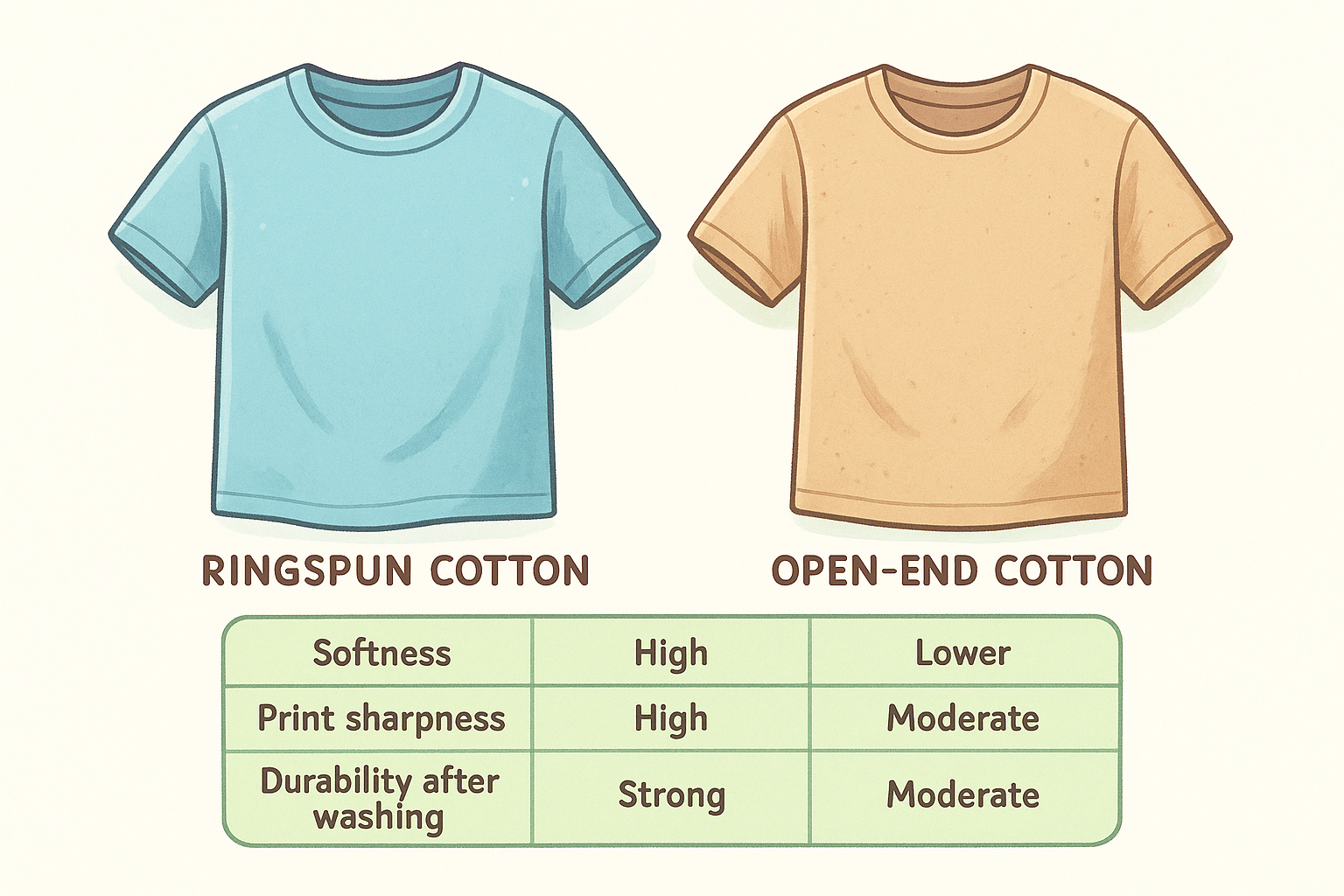
| Feature | Ringspun Cotton | Open-End Cotton |
|---|---|---|
| Softness | High | Lower |
| Print sharpness | High | Moderate |
| Durability after washing | Strong | Moderate |
| Cost per unit | Slightly higher | Lower |
The softness and surface quality of ringspun cotton directly affects how good your printed design looks and how long the shirt stays in regular rotation.
For branded apparel or uniforms, that combination of better print quality and everyday comfort makes ringspun cotton the more practical choice for most orders.
How to choose ringspun cotton for your project
Picking the right fabric comes down to three things: your budget, your intended use, and what you’re printing. Ringspun cotton isn’t the right fit for every single order, but knowing when to use it saves you from overspending on shirts that don’t need it or underspending on shirts that do.
Match the fabric to the use case
If you’re ordering uniforms, client gifts, or retail-style merchandise, ringspun cotton is the clear choice. These shirts represent your brand in a visible, ongoing way, and the softer feel and sharper print results justify the slightly higher cost per unit. People wear comfortable shirts regularly, which means your logo stays in circulation longer.
For basic promotional giveaways where the shirt is more of a throwaway item than a wearable brand asset, standard open-end cotton may be enough. If the design is simple and the shirts are going into a bag at a trade show booth, spending extra on premium fabric may not serve your goal.
The clearer your use case, the easier it is to decide whether ringspun cotton is the right call for your specific order.
Pick the right brand and weight
Once you decide ringspun is the right direction, the brand and fabric weight matter next. At Dr. Tee’s, we carry ringspun options from Next Level, Bella Canvas, and Gildan, each at different price points and weights. Next Level and Bella Canvas run lighter and softer, which makes them popular for fitted retail-style tees. Gildan’s ringspun line runs a bit heavier and works well for durable everyday workwear.
Understanding what does ringspun cotton mean for your specific project also means thinking about the print itself. Heavier ringspun fabrics hold ink well and resist shrinkage, while lighter options give a softer drape that many customers prefer for fitted styles.
Care, shrinkage, and durability tips
Ringspun cotton is more durable than open-end cotton, but it still requires basic care to hold its shape and keep your printed design looking sharp. Understanding what does ringspun cotton mean for long-term use includes knowing how to wash and dry these shirts correctly. The combed, tightly spun fibers resist pilling and fraying better than standard cotton, but heat and rough handling are still the two main factors that shorten the life of any garment.
Washing and drying
Wash ringspun cotton shirts in cold water on a gentle cycle to reduce stress on the fibers and slow down any fading in the printed ink. Hot water breaks down the cotton structure faster and causes the garment to shrink more aggressively. Most ringspun shirts are pre-shrunk at the factory, which means the first wash won’t dramatically change the fit, but repeated hot washes will eventually cause some shrinkage over time.
Turning shirts inside out before washing protects the printed surface from friction against other garments and keeps colors looking brighter longer.
Dry on low heat or hang dry when possible. High-heat drying is the fastest way to shrink a cotton shirt and crack a screen printed design. A tumble dry on low is fine for most ringspun garments, but air drying extends the life of both the fabric and the ink significantly.
Getting the most out of the fabric over time
Beyond washing, how you store and handle these shirts affects their lifespan. Folding rather than hanging heavier garments prevents the collar from stretching out. For printed shirts specifically, avoid ironing directly over the design, since direct heat softens the ink and can cause it to peel or smear. If the shirt needs ironing, flip it inside out first and use a low setting.
Next steps for picking the right shirt
Now that you understand what does ringspun cotton mean and how it affects your print quality, wear life, and overall brand impression, you have what you need to make a confident fabric decision for your next order. Ringspun cotton works best for uniforms, client gifts, and any shirt you want people to wear repeatedly. Standard cotton still works for simple, one-time promotional runs where cost per unit is the primary concern.
Your design deserves a fabric that makes it look its best. The right garment choice directly affects how sharp your print lands, how long the shirt stays in rotation, and how your brand comes across to everyone who sees it. If you’re ready to move forward, get a quote for your custom order and our team at Dr. Tee’s Design & Screen Printing will help you match the right fabric and print approach to your specific project.
