
Whether you’re outfitting a roofing crew, a dental office, or a school athletics program, uniform apparel plays a bigger role than most people give it credit for. It shapes how your team is perceived, builds trust with customers, and creates a sense of identity that carries weight both internally and externally. But the term itself covers a lot of ground, from industrial workwear and medical scrubs to branded polos and spirit wear, and knowing what falls under that umbrella matters before you spend a dollar.
This article breaks down what uniform apparel actually means, the major types you’ll run into, and practical tips for getting your uniforms custom printed the right way. We’ll cover fabric choices, garment categories, and the details that separate a uniform that lasts from one that falls apart after a few washes. If you’ve been searching for the clothing brand called Uniform Apparel, we’ll touch on that too so you’re not left guessing.
At Dr. Tee’s Design & Screen Printing, we’ve spent over 20 years helping Kansas City businesses, from HVAC companies to real estate offices, get their teams into quality custom-printed uniforms. Everything here comes from hands-on experience working with the garments, inks, and printing methods that make uniform programs actually work. So whether you need 12 shirts or 1,000, you’re in the right place to learn what goes into making that decision a good one.
Why uniform apparel matters
Uniform apparel does more than cover your employees. It communicates professionalism and brand consistency before a single word is spoken. When a technician shows up to a job wearing a clean, branded shirt with your company logo, the customer immediately registers that this is a legitimate operation. That visual cue works in your favor every time. For small and mid-sized businesses especially, the appearance of a well-organized team can be the difference between a referral and a one-time job.
A uniform that fits well and displays your logo cleanly signals that you take your business seriously, and customers notice.
First Impressions and Customer Trust
Your team’s appearance shapes how customers feel about your business before any work is done. Research on consumer behavior consistently shows that professional presentation increases perceived trustworthiness, particularly in service industries where people invite strangers into their homes or offices. A plumber in a branded polo reads differently than one in an unmarked t-shirt. The former looks like a professional. The latter leaves room for doubt.
For businesses like HVAC companies, landscaping crews, or cleaning services, the uniform is often the first piece of brand communication a new customer sees in person. When your team looks consistent and put-together, customers are more likely to leave positive reviews, recommend your service, and return for future work.
Team Cohesion and Internal Accountability
Beyond the customer-facing benefits, uniforms have a real impact on how your team functions internally. When everyone wears the same thing, a sense of shared purpose and collective identity takes over. Workers stop thinking of themselves as individuals doing separate tasks and start identifying as part of a crew. That shift matters in industries where coordination and accountability are tied to how well people work together.
There’s also a practical visibility factor at play. When your team is clearly identifiable as part of your organization, they carry that identity throughout the workday, whether they’re working on-site, driving a company vehicle, or grabbing lunch. That visibility keeps professional standards up in ways that informal dress codes rarely accomplish.
Compliance and Safety Standards
Some industries don’t have the option of treating uniforms as a preference. Construction, healthcare, food service, and manufacturing all operate under regulations that require specific types of apparel. High-visibility vests, color-coded identification, and material requirements are tied to real safety outcomes. Failing to meet those standards creates liability, not just an HR issue.
Even in industries where safety codes are less strict, consistent dress code compliance signals that your business takes its obligations seriously. Healthcare offices that put staff in matching scrubs create an environment that feels orderly. Schools that issue spirit wear or athletic uniforms build culture and belonging. In each case, the uniform is doing specific work that street clothes simply cannot replicate.
Brand Visibility as a Daily Marketing Tool
Every uniform your team wears functions as a moving advertisement for your business. A crew of five workers wearing shirts printed with your company name and phone number generates public impressions throughout the day without any extra marketing spend. People notice branded apparel, read logos, and share that information when someone asks for a recommendation.
This passive visibility builds over time. The more consistently your team represents your brand in public, the more recognizable your business becomes in your local market. For Kansas City businesses especially, where word-of-mouth and neighborhood reputation carry serious weight, that steady presence has real monetary value. Custom-printed uniform apparel is one of the most cost-effective ways to build that recognition without running a single ad.
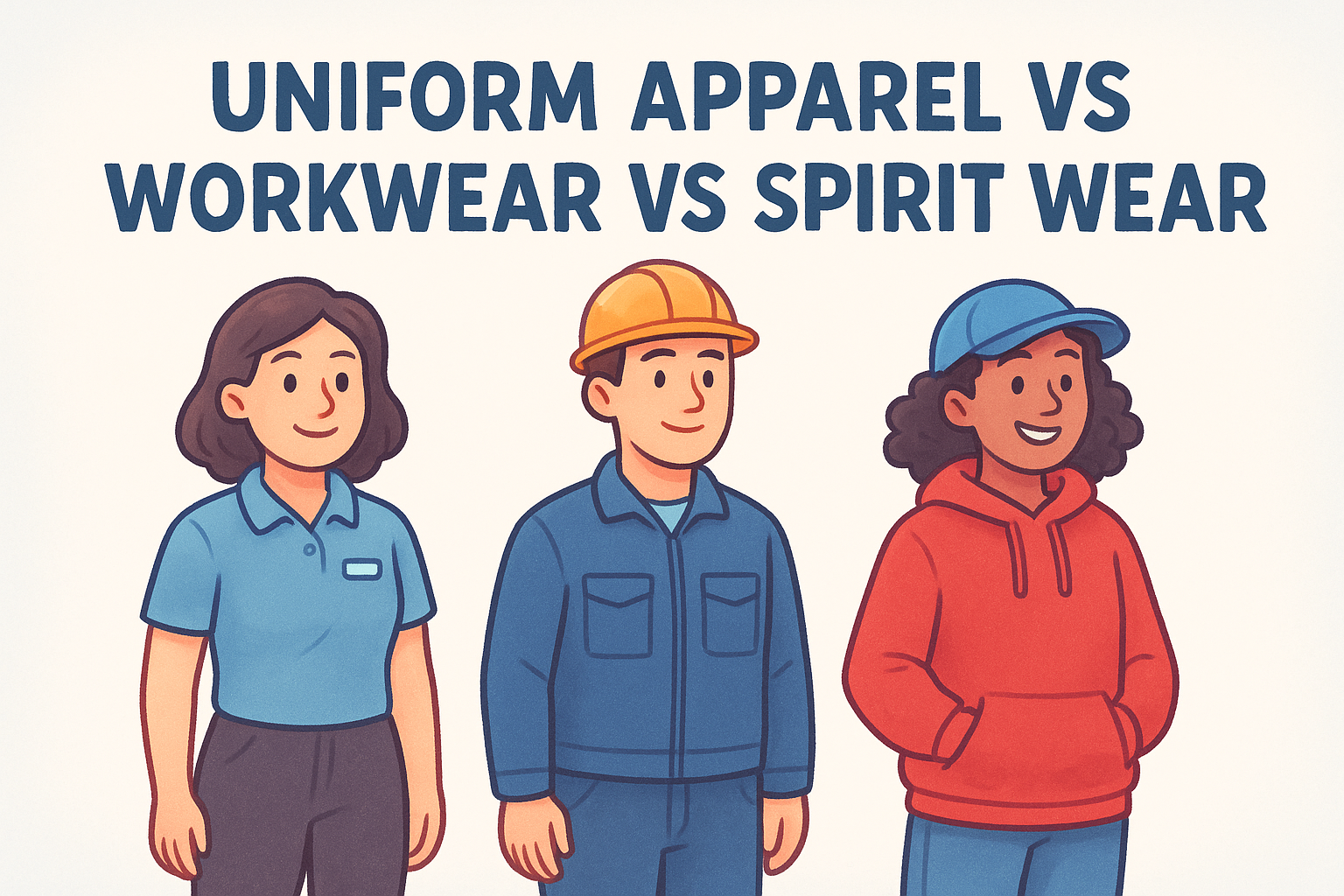
Uniform apparel vs workwear vs spirit wear
These three terms get used interchangeably in conversations about branded clothing and team apparel, but they each describe something distinct. Understanding the difference helps you make smarter decisions about what your team actually needs and how to communicate that to a printer or supplier before you place an order.
What uniform apparel actually covers
Uniform apparel refers to any clothing worn by members of a group to create a consistent, identifiable appearance. The key concept here is intentional sameness: everyone wears the same thing, and that sameness serves a clear purpose, whether that’s professional identification, regulatory compliance, or brand visibility. Uniforms can be simple, like matching polo shirts printed with your logo, or structured, like full sets that include specific jackets and headwear.
The scope is wider than most people realize. It includes employee uniforms, team kits, medical scrubs, and safety-compliant work shirts across dozens of industries. What connects all of them is that the garments were chosen specifically to make a group look like a group.
The moment a shirt is selected to create a unified appearance for your team, it qualifies as uniform apparel regardless of the industry you’re in.
How workwear differs
Workwear is a subcategory that puts function ahead of visual identity. It prioritizes durability, safety, and performance in physically demanding environments. Think heavy-duty denim, flame-resistant fabric, reinforced construction, or high-visibility materials required on job sites. Workwear may or may not carry branding, and its primary purpose is to protect the person wearing it rather than to communicate anything about the company behind them.
That distinction matters when you’re ordering for a crew. A landscaping team might need both: branded polos for customer-facing situations and sturdy, unbranded work pants built to handle daily abuse in the field. Those two needs call for different garments and different purchasing decisions.
Where spirit wear fits in
Spirit wear operates at the opposite end of the spectrum from workwear. It’s apparel designed to build enthusiasm and shared identity around a team, school, or organization rather than to meet professional or safety requirements. Hoodies, t-shirts, and hats printed with mascots, slogans, or team colors all fall squarely into this category.
For schools, sports clubs, and community organizations, spirit wear fills a gap that neither traditional uniforms nor workwear addresses. It gives supporters and members a way to show affiliation and belonging without the compliance requirements or dress code structure that come with a formal uniform program.
Types of uniform apparel by industry
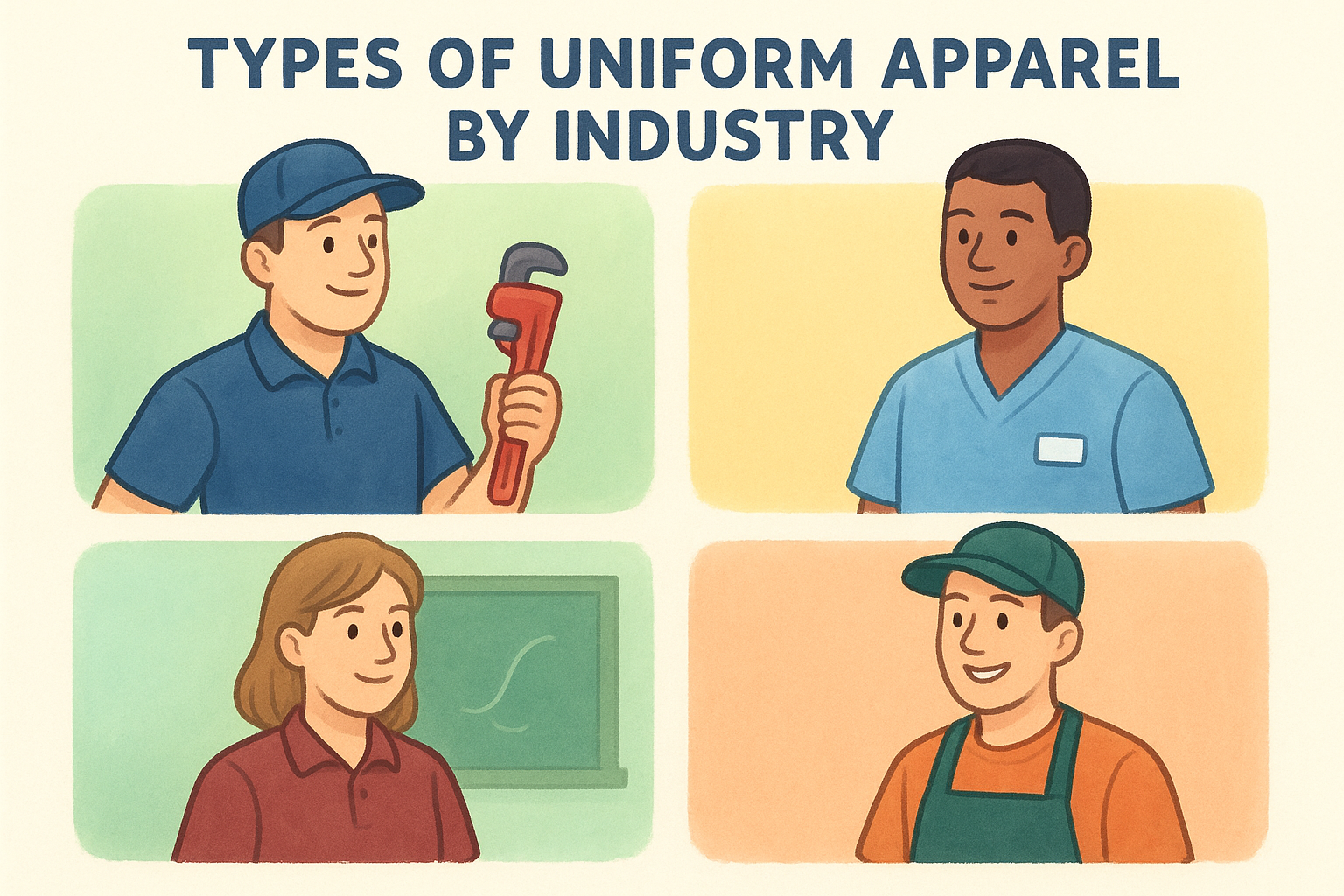
Industries don’t share the same uniform needs, and choosing the wrong garment type for your field creates problems that go beyond aesthetics. The right uniform apparel selection depends on what your team does, where they do it, and what impression you need to make. Here’s a breakdown of the major categories by industry so you can identify where your situation fits.
Service Trades
Trade businesses like plumbing, HVAC, roofing, and landscaping operate in physical environments that demand tough, comfortable garments. Workers move constantly, deal with weather, and often kneel, climb, or reach throughout the day. A shirt that restricts movement or falls apart after a few washes wastes money and creates frustration.
The most effective trade uniform is one your crew will actually wear consistently, which means it needs to hold up to real working conditions.
Moisture-wicking performance polos and heavyweight cotton tees are the most common choices in this sector. They’re easy to customize with screen printing, durable enough for daily wear, and comfortable across temperature ranges. Many trade businesses also add high-visibility options for crew members working near traffic or heavy equipment.
Healthcare and Professional Offices
Medical and professional office environments prioritize clean appearance and brand consistency. Dental offices, chiropractic clinics, and real estate teams typically lean toward embroidered polo shirts or branded button-downs that present a polished, trustworthy image without looking like a corporate chain.
Embroidery works particularly well for this audience because it carries a premium, finished look that screen printing doesn’t always replicate on structured fabrics. If your team interacts with clients face-to-face throughout the day, the way your apparel looks when someone walks in the door matters more than its durability in the field.
Schools and Athletics
Schools and sports organizations need two distinct types of apparel: performance gear for athletes and spirit wear for supporters and staff. Athletic uniforms typically use moisture-wicking polyester that moves with the body and handles repeated washing without fading. Spirit wear, on the other hand, leans toward heavyweight cotton hoodies, crewnecks, and tees built for casual everyday wear.
Both categories benefit from vibrant, accurate color printing because school colors and mascots carry real meaning for students, families, and communities. Getting those details right builds the kind of pride that makes people actually wear the shirts they receive.
Food Service and Hospitality
Food service and hospitality businesses balance appearance requirements with functional needs like stain resistance and breathability. Aprons, branded t-shirts, and polo uniforms are all common in this sector, often chosen in darker colors that hide daily wear and maintain a clean look through a full shift.
Many food service operations also issue specific color requirements based on role, with kitchen staff, front-of-house, and management each wearing something distinct. That visual separation makes it easier for customers to know who to approach and helps managers identify staff quickly during busy service periods.
Fabric and durability basics
The fabric your team wears every day determines how long your uniforms last and how they look after repeated washing. Choosing the wrong material for your environment is one of the most common mistakes businesses make when ordering uniform apparel for the first time. Before you commit to a specific garment, understanding the core fabric categories and what each one handles well saves you money and prevents a lot of frustration.
Cotton and cotton blends
100% cotton is the most familiar option and for good reason. It’s breathable, comfortable across a wide range of conditions, and holds up well under repeated printing and washing when the garment quality is solid. Trade workers, school programs, and retail environments lean on heavyweight cotton tees and polos because the fabric feels natural against the skin and needs no special care to maintain.
Cotton-poly blends bring durability and shape retention into the picture. A 50/50 cotton-polyester blend resists shrinking and wrinkles better than pure cotton, which matters when your team wears the same shirts five days a week. Tri-blends, which add rayon to the mix, take comfort up another notch and drape well across a wider range of body types.
The blend you choose affects not just wearability but how well your print holds up after dozens of wash cycles, so factor that into your decision from the start.
Performance polyester
Moisture-wicking polyester is the right call for teams working in hot conditions or physically demanding environments. It pulls sweat away from the skin and dries faster than cotton, keeping workers more comfortable throughout a full shift. Athletics programs, trade crews in summer heat, and food service staff in warm kitchens all benefit from performance fabric options that manage moisture without adding bulk.
Polyester can be trickier to screen print than cotton. Dye migration, where pigment from the fabric bleeds into the print, is a real risk if your printer isn’t using the right inks and process settings. Always confirm that whoever handles your order has direct experience printing on synthetic fabrics before you approve a large run.
Fabric weight and wash durability
Fabric weight, measured in ounces per square yard, is one of the clearest indicators of how a garment holds up over time. Lighter fabrics in the 4 to 5 ounce range work well for promotional or seasonal use. Heavier fabrics at 6 ounces and above offer more structure and survive daily wear far better, making them the smarter pick for year-round team uniforms.
Teams that launder uniforms daily put significantly more stress on fabrics than those worn a few times a week. Selecting garments with double-stitched seams and reinforced construction extends uniform life regardless of material, so check those specs before placing your order.
Fit, sizing, and inclusivity
Fit matters more than most businesses account for when ordering uniform apparel for the first time. A shirt that looks great on a hanger but fits poorly on the person wearing it creates discomfort, inconsistency, and complaints that land back on whoever placed the order. Before you finalize any garment selection, you need to understand the sizing landscape, available fit types, and how to build a program that works for everyone on your team.
Size range and coverage
Most reputable apparel brands now offer adult sizing from XS to 5XL, which covers the vast majority of team members without requiring special orders or awkward exceptions. Brands like Bella Canvas, Next Level, and Gildan have expanded their core lines significantly in recent years, making it easier to order across a full range of sizes within the same style.
Ordering from a brand that covers your full team’s size range in a single style keeps your uniform program looking cohesive and prevents the fragmented appearance that comes from mixing different shirts to fill gaps.
What you want to avoid is a situation where your standard shirt only goes to 2XL, and three members of your crew end up in a different garment because nothing else was available. That breaks visual consistency and signals to those employees that their size was an afterthought. Check the full size run of any garment before committing to a style, not after.
Fit types and what they mean
Garments in the same size can fit very differently depending on how they are cut. Unisex fits use a wider, straighter silhouette that works across body types but tends to run boxy on smaller frames. Women’s-specific cuts bring in the waist and adjust sleeve length and shoulder width for a more fitted result.
Knowing which fit types your team needs before you order prevents a flood of size-swap requests after delivery. Many businesses order a mix of unisex and women’s-cut styles in the same color and design, which gives team members the option to pick the silhouette that actually fits them. Your printer can typically run both cuts in the same job if you plan for it.
Ordering for a diverse team
Physical jobs add another layer to the fit conversation. Workers who spend the day bending, climbing, or operating equipment need garments with enough room in the shoulders and torso to move without restriction. A shirt cut for office wear can become genuinely uncomfortable on a construction site after an hour of physical work.
Requesting samples or size sets before your full order goes into production lets team members try garments on and flag problems before they become an expensive mistake. That step adds a few days to your timeline but saves you from reprinting shirts or eating return costs on a full order.
How to choose uniform apparel for your team
Picking the right garments for your team comes down to asking a few specific questions before you start browsing styles or requesting quotes. When you approach the selection process without a clear framework, you end up making decisions based on price alone, which almost always leads to uniforms that don’t last or don’t fit your environment. Taking twenty minutes to work through the factors below saves you from costly do-overs.
Start with your environment
Your team’s daily working conditions should drive every garment decision you make. If your crew works outdoors in summer heat, a heavyweight cotton tee becomes uncomfortable and counterproductive by midday. If your team works in a climate-controlled office or retail setting, a performance polyester shirt solves a problem they don’t actually have. Match the fabric and construction to the physical demands of the job first, and then layer in branding and aesthetics from there.
Think about how often the uniforms will be washed and who handles that laundry. Teams that wash garments at home need apparel that survives standard residential washing machines without fading, shrinking, or losing print quality. Crews that send items to a commercial laundry service need heavier, more reinforced construction to hold up under industrial cycles.
Choosing uniform apparel based on appearance alone, without factoring in durability and comfort, is the single fastest way to burn through your uniform budget in the first season.
Set your budget and minimum quantities
Quantity affects price per unit more than almost any other variable in a uniform order. At Dr. Tee’s, orders starting at 12 pieces are available, which works well for small office teams or new businesses testing a uniform program. As your order grows toward 100 or 1,000 pieces, the cost per garment drops meaningfully, so it’s worth planning your full team headcount before you place your first order rather than coming back in batches.
Factor in replacement inventory when you set your initial budget. Uniforms wear out, new hires arrive, and sizes change. Ordering a small buffer above your current headcount, usually 10 to 15 percent extra, prevents you from scrambling to match an old dye lot or print run months down the line.
Lock in your design before you order
No garment decision is complete without knowing what artwork will go on it and where. A complex multi-color logo plays very differently on a light cotton tee versus a dark performance polo. Confirm your print placement, color count, and decoration method before you finalize the garment style, because some combinations require adjustments that affect your timeline and final cost.
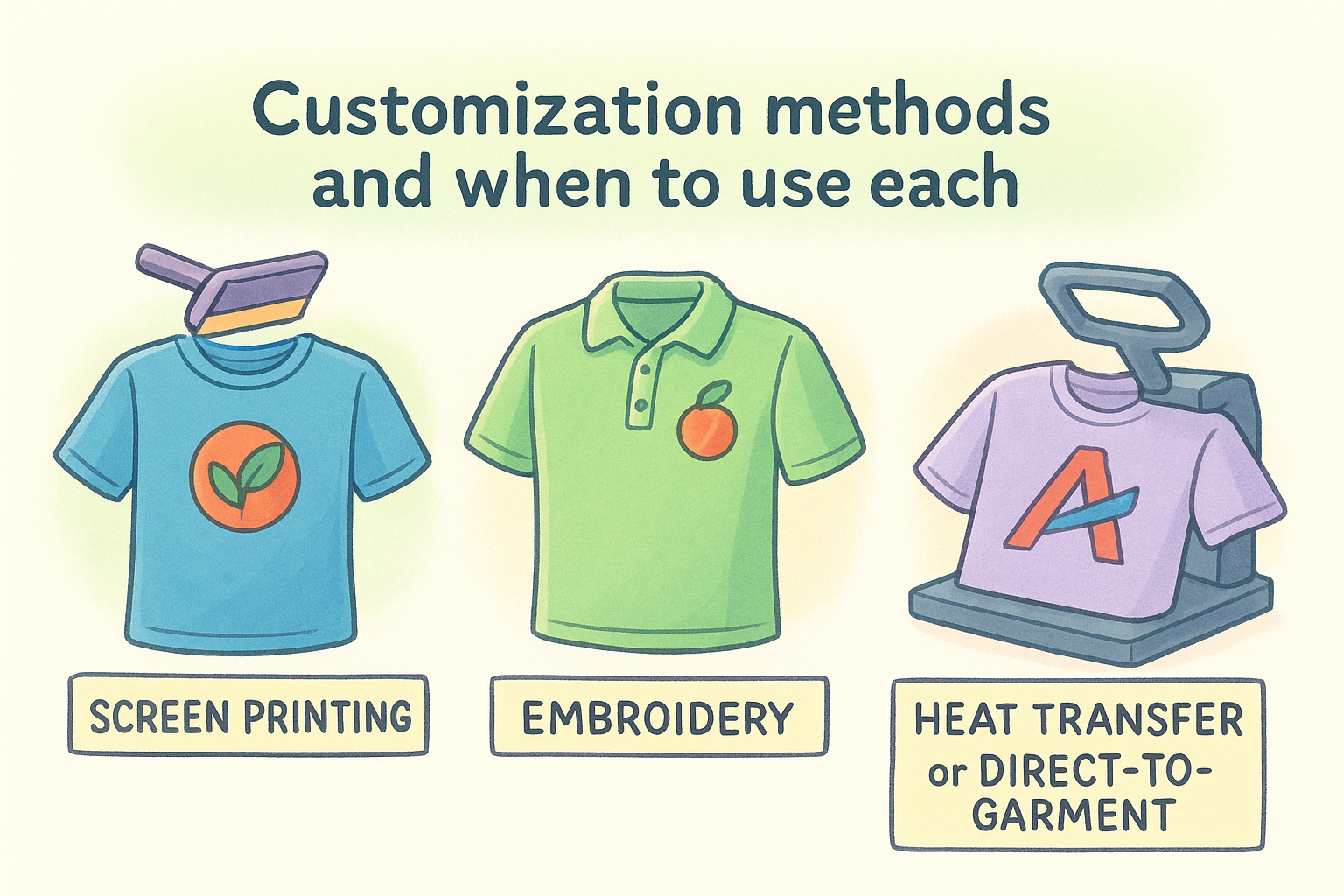
Customization methods and when to use each
Not every decoration method works equally well for every garment or application. Choosing the right customization technique for your uniform apparel order affects the final appearance, the long-term durability of the print, and your cost per piece. Understanding the core options upfront helps you ask the right questions before your order goes into production.
Screen Printing
Screen printing is the most widely used method for custom team and uniform orders, and for good reason. It produces vibrant, durable prints that hold their color through hundreds of wash cycles when applied correctly. Each color in your design gets its own screen, so the process works best when your artwork uses a limited, defined color palette rather than gradients or photographic images.
Screen printing delivers the lowest cost per unit at volume, which makes it the right call for any team order where you need 12 or more pieces in the same design.
This method works particularly well on cotton and cotton-blend garments like t-shirts and standard polos. If your logo uses three colors or fewer, screen printing is almost always your most cost-effective and visually consistent option across a full uniform run.
Embroidery
Embroidery stitches your design directly into the fabric using thread rather than ink, which gives it a structured, premium appearance that works well on polo shirts, hats, and jackets. Healthcare offices, real estate teams, and professional service businesses frequently choose embroidery because it reads as polished and durable in client-facing settings.
The trade-off is that embroidery handles fine detail and small text less precisely than screen printing. Complex logos with thin lines or intricate shapes need to be simplified before they translate well into thread. Your printer or decorator should provide a digitized preview of how your artwork converts to stitch format before any production begins.
Heat Transfer and Direct-to-Garment
Heat transfer applies a pre-printed design to a garment using heat and pressure, making it a practical choice for short runs, custom name additions, or designs that require full-color printing on dark fabrics. It works well when you need individual name or number customization across a roster, like a sports team or a crew with personalized shirts.
Direct-to-garment printing, or DTG, works similarly to an inkjet printer applied directly to fabric. It handles detailed, full-color artwork well on light-colored cotton but is less suited to large-volume runs or performance polyester. Use it when design complexity matters more than quantity or per-piece cost.
Custom print tips for logos and artwork
Getting your logo onto uniform apparel correctly takes more than uploading a file and approving a quote. The decisions you make about artwork preparation, color, and placement directly affect how your printed shirts look on day one and how they hold up over the life of the garment. These tips apply whether you’re ordering 12 pieces or 1,000.
Prepare your artwork files correctly
Your artwork file format determines how much control your printer has over the final output. Vector files, typically saved as .AI or .EPS formats, scale to any size without losing quality, which makes them the standard for screen printing and embroidery. If you hand over a low-resolution JPEG or PNG pulled from your website, your printer has to either trace your artwork manually or ask you to start over, both of which add time and cost to your order.
Sending a print-ready vector file from the start eliminates the most common delay in any custom uniform order.
If your original logo file no longer exists in vector format, ask your printer about recreation services. Many shops, including those with in-house design staff, can rebuild a logo from a clean image in a format that works for production.
Manage your color counts
Each color in your design adds a screen to the printing process, and each screen adds to your setup cost. A three-color logo costs more to set up than a one-color logo, even if the garment price stays the same. Before you finalize your design for a large uniform run, look at whether your logo works well as a one or two-color version without losing its identity.
Dark garments require additional consideration. Printing a light-colored design on a dark shirt typically requires an underbase layer, which adds a color to your count even if your logo only uses one ink color. Factor that into your budget before you commit to a dark shirt color across your full team order.
Placement and sizing on the garment
Standard placement for chest logos runs roughly three to four inches wide on polos and structured shirts, and four to five inches wide on t-shirts. That range keeps the logo visible and proportional without overwhelming the front of the garment. Sleeve, back, and left chest placements each carry their own standard sizing conventions that your printer should walk you through before production begins.
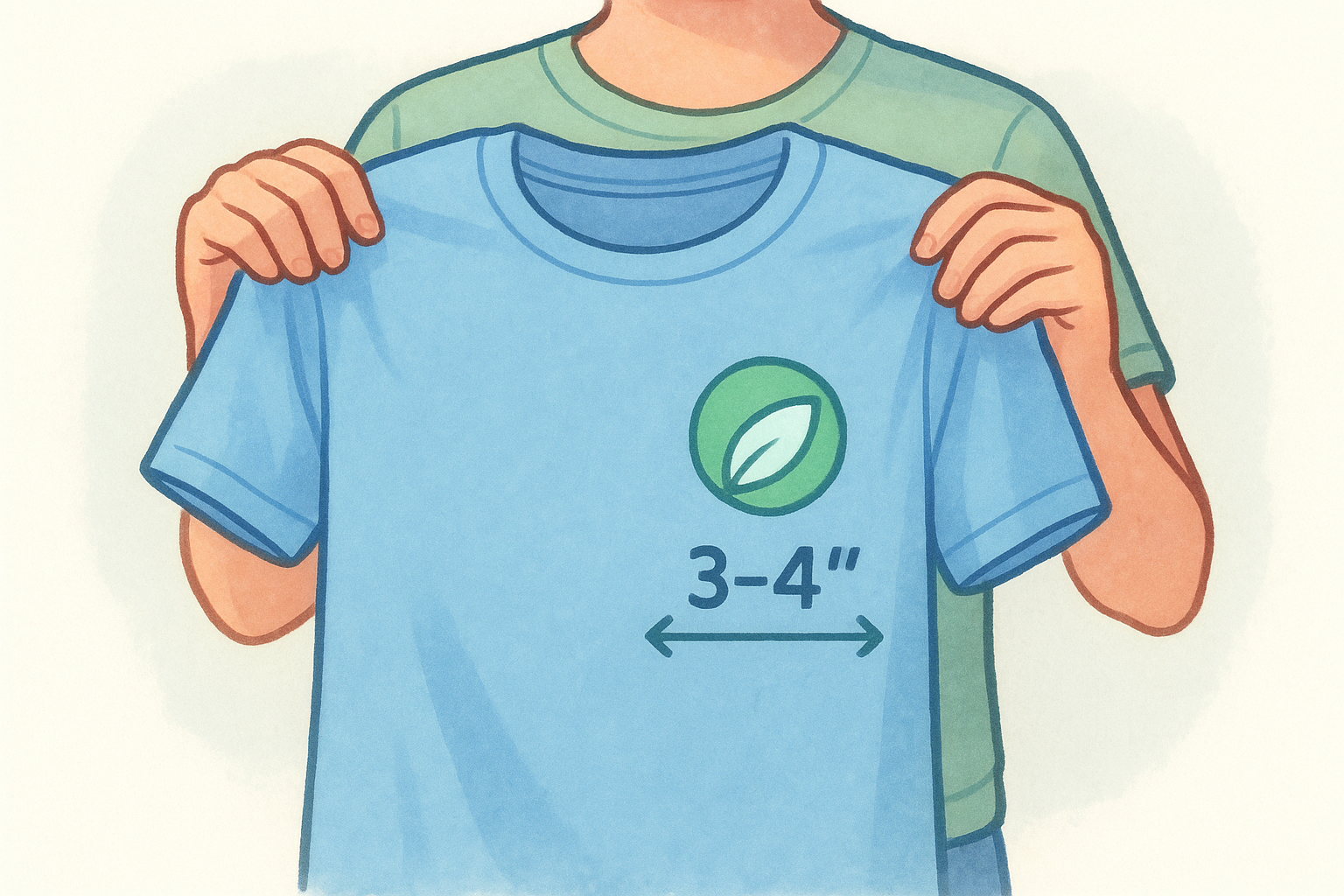
Avoid shrinking your logo to fit small placement areas without reviewing a mockup first. Fine lines and small text that look sharp on a screen often lose clarity when printed at two inches wide. Always request a printed sample or size-accurate digital mockup before approving any job.
If you mean Uniform Apparel the brand
Some people searching for uniform apparel are not looking for a printing service or a general category of workwear. They are specifically searching for Uniform Apparel, a clothing brand that sells ready-made lifestyle and athletic-style garments through retail channels. If that is what brought you here, this section clears up the distinction so you can move forward with the right information.
What the brand offers
Uniform Apparel as a brand positions itself around minimalist, everyday basics built for consistent wear. The product line typically includes t-shirts, hoodies, and casual staples designed with a clean, understated aesthetic. The appeal is straightforward: simple garments in neutral tones that work across multiple settings without drawing attention to the clothing itself.
If you are shopping for that brand specifically, you will find their products through major retail platforms and their direct channels. What you will not find through that brand is the ability to add your own logo, select your team’s colors, or customize artwork for a crew of employees. That is a fundamentally different product category, even though the name creates overlap.
How custom printing differs from retail brands
When your actual need is outfitting a team or building a branded uniform program, a retail clothing brand cannot solve that problem regardless of how well-made the base garments are. You need a service that takes your artwork, applies it consistently across multiple pieces, and delivers finished garments that represent your business or organization.
Buying blank retail apparel and buying custom-printed uniform apparel serve completely different purposes, so confirming which one you actually need before you spend time or money on the wrong path matters.
Custom printing services like Dr. Tee’s Design & Screen Printing start where retail brands stop. You bring your logo or let a designer build one for you, choose a garment style and fabric that fits your team’s work environment, and receive finished shirts ready to wear on the job. The process is built around your specific needs rather than around a standard product someone else designed for a general audience.
If after reading this you realize you were actually searching for a custom uniform solution rather than the retail brand, the rest of this article already covered everything you need to make a smart decision. The sections on fabric, fit, customization methods, and print tips apply directly to your situation and give you a practical foundation before you contact any supplier or printer.
Key takeaways
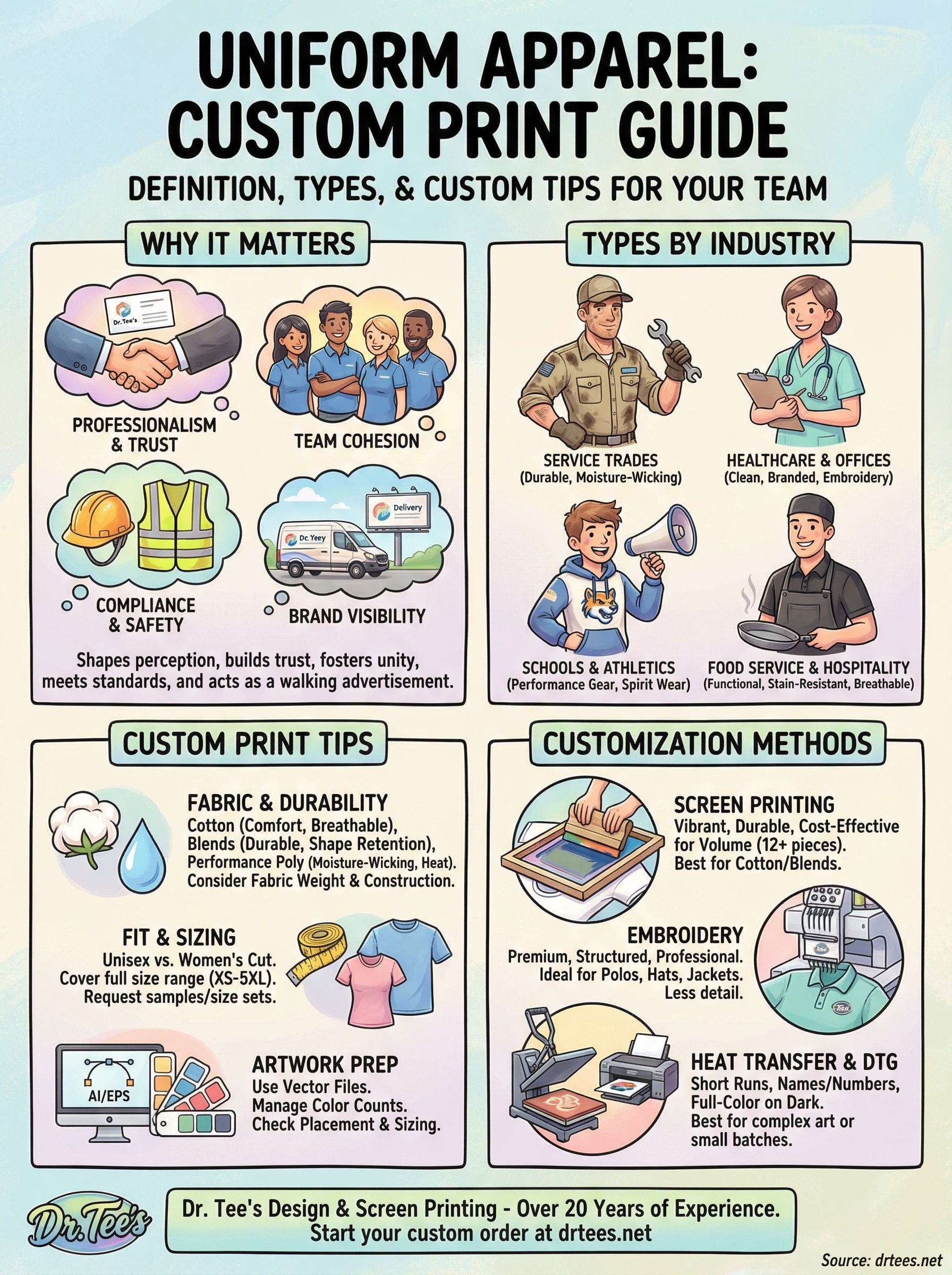
Uniform apparel covers a wide range of garments across industries, from trade crew shirts to healthcare polos to school spirit wear, and every good uniform program starts with matching the fabric, fit, and decoration method to your team’s actual working conditions. Screen printing handles volume runs with clean, durable results. Embroidery adds a polished finish for client-facing teams. Getting your artwork into vector format before you order eliminates the most common production delay.
Fit and size coverage matter as much as the garment itself. A uniform that leaves team members out or restricts movement undermines the whole point of having one. Your budget goes further when you plan your full headcount upfront and order in quantities that bring the cost per piece down.
If you’re ready to put a custom uniform program together for your team, start your order with Dr. Tee’s Design & Screen Printing and see how straightforward the process can be.
