
You’ve got a logo, a stack of blank apparel, and one question: should you screen print it or embroider it? The screen printing vs embroidery debate isn’t just about looks, it affects your budget, how long your gear lasts, and whether your design even works on the fabric you’ve chosen. Both methods have their place, but picking the wrong one can mean wasted money or a finished product that doesn’t match your vision.
At Dr. Tee’s Design & Screen Printing, we’ve spent over 20 years helping Kansas City businesses, sports teams, and organizations make this exact decision. We offer both screen printing and embroidery services because neither method is universally better, the right choice depends on your specific project, quantity, and goals.
This guide breaks down the real differences between screen printing and embroidery. You’ll learn which method costs less at different order sizes, which one holds up longer through washes and wear, and which designs work best for each technique. By the end, you’ll know exactly which option fits your next apparel project.
Screen printing and embroidery basics
Screen printing pushes ink through a mesh screen onto fabric, creating a printed layer on top of the material. The process uses a separate screen for each color in your design, and the ink sits on the garment’s surface rather than becoming part of the fabric itself. You’ll see vibrant, solid colors with sharp edges that work especially well for bold logos and text.
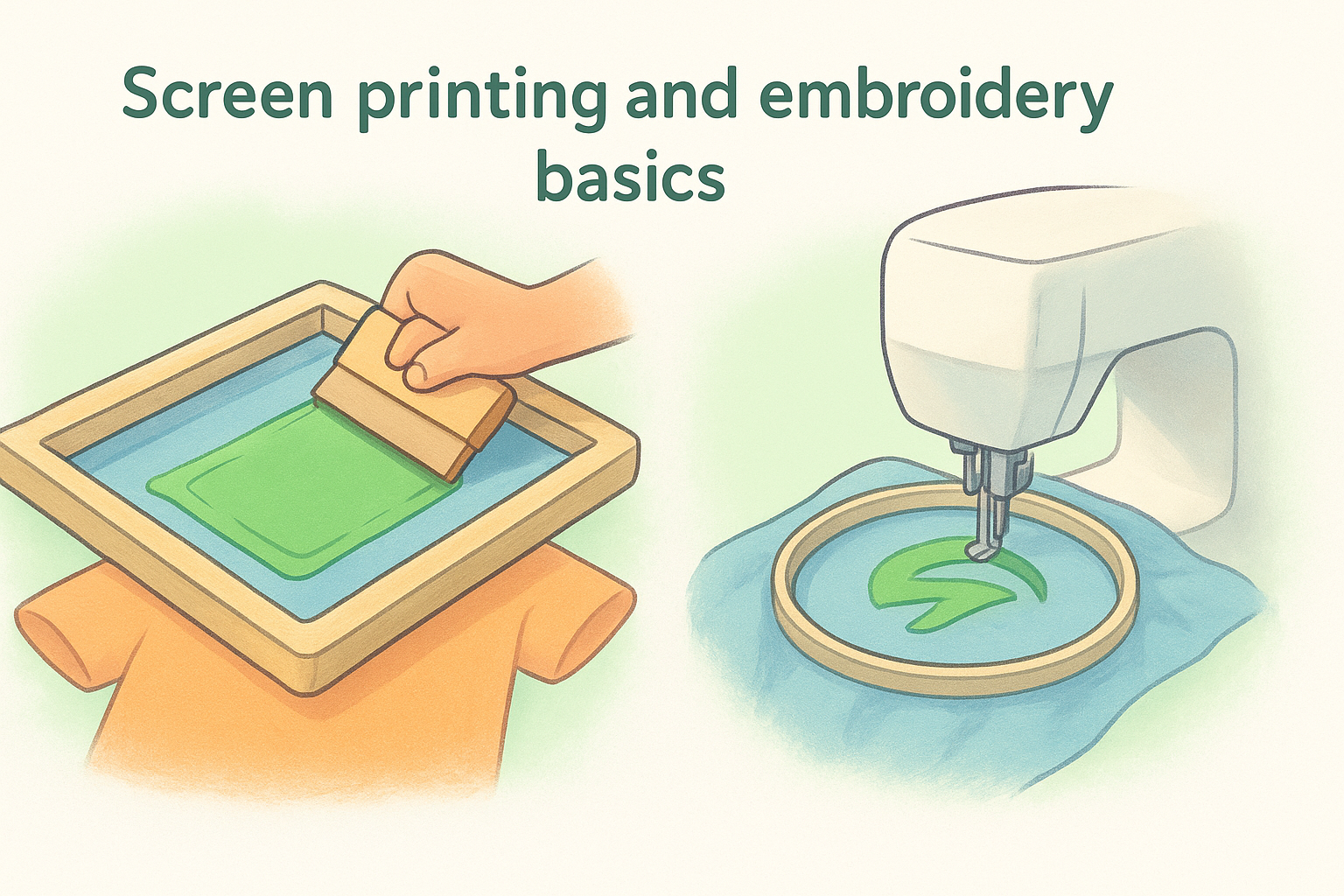
Embroidery uses needle and thread to stitch your design directly into the fabric. The machine punches thousands of tiny stitches through the material, building up your logo or text with thread density and direction. This creates a raised, textured result that you can both see and feel, unlike the flat finish of screen printing.
What screen printing actually does
The screen printing process starts with creating a stencil (called a screen) for each color in your design. Ink is then forced through the mesh using a squeegee, depositing a layer of color onto your shirt, hoodie, or bag. Each color requires a separate pass through a different screen, which is why setup costs increase with more complex, multicolor designs.
You get clean lines and solid coverage with this method. The ink bonds to the fabric through heat curing, but it stays on the surface. Fine details and photographic images work well with screen printing, especially when you’re producing larger quantities where the setup cost spreads across many pieces.
Screen printing excels when you need consistent color matching across hundreds of identical items at a lower per-piece cost.
How embroidery works on fabric
Embroidery machines follow digitized pattern files that tell the needle exactly where to stitch. The process builds your design one stitch at a time, layering thread to create density and dimension. Thread color remains consistent regardless of how many pieces you produce, since the thread itself is the color rather than a printed ink.
Your design’s complexity affects embroidery differently than screen printing. Smaller text and intricate details can become difficult to read when stitched, since thread has physical thickness. The screen printing vs embroidery decision often comes down to whether your design needs fine detail (print) or a premium, textured feel (embroidery).
Why the choice matters for your apparel
Your customization method shapes how customers perceive your brand and determines whether your apparel survives real-world use. The screen printing vs embroidery decision affects everything from your initial budget to how your team looks after six months of weekly washes. Choose poorly, and you’ll either overspend on the wrong technique or end up with logos that fade, crack, or look unprofessional before their time.
Professional appearance drives perception
Your apparel sends a message before you say a word. Embroidered polo shirts communicate established professionalism for businesses like real estate offices, dental practices, and service companies. The raised, textured finish projects permanence and quality that flat printed designs can’t match in formal settings.
Screen printing delivers impact when you need bold visibility and bright colors. Sports teams, event staff, and promotional campaigns benefit from the vibrant, eye-catching results that printing provides. Your design pops off the fabric with intensity that embroidery’s thread limitations can’t achieve.
The wrong customization method can undermine your brand’s credibility or waste your budget on a technique that doesn’t match your actual needs.
Long-term costs stack up quickly
Replacement expenses hit harder than initial pricing. Printed designs can crack or fade after repeated washing, especially on garments that go through commercial laundries or heavy use. Service companies running work trucks or landscaping crews often replace printed shirts annually, turning cheap upfront costs into expensive ongoing purchases.
Embroidery outlasts printing by years, not months. The thread becomes part of the fabric itself, resisting the wear that destroys printed ink layers. You’ll spend more initially but replace items less frequently, making embroidery cheaper over the garment’s lifetime for uniforms and professional wear.
How to choose based on design and fabric
Your design’s details and your fabric choice narrow your options before you even consider price. Complex artwork with gradients or photo-realistic images demands screen printing, while simple logos with fewer colors work equally well with either method. The screen printing vs embroidery question gets clearer once you examine what you’re actually trying to put on the garment.
Design complexity determines method
Screen printing handles fine lines, small text, and intricate details that embroidery can’t reproduce. Your design loses clarity when thread thickness makes 8-point fonts unreadable or thin lines blob together. Photographic images or designs with color gradients require screen printing since embroidery works with solid thread colors and can’t blend or fade smoothly.
Embroidery shines with bold, simple designs that benefit from texture and dimension. Your company logo with clean letterforms and minimal detail gains perceived value through the raised, professional appearance of stitched thread. Designs with fewer than six colors typically embroider well, while more complex artwork drives up thread changes and production time.
Simple designs with clean lines work for both methods, but complexity over three colors with fine details demands screen printing.
Fabric type limits your options
Performance fabrics and moisture-wicking materials handle screen printing better than embroidery. The needle punches required for embroidery can damage technical fabrics or create holes that compromise the moisture management you paid extra for. Lightweight materials like tri-blends may pucker under heavy embroidery thread density.
Thicker fabrics like polo shirts, jackets, and canvas bags support embroidery’s physical stitching without warping or bunching. Your heavyweight hoodies and denim work wear provide the stability that embroidery needs to look professional rather than distorted.
Costs and minimums: what drives price
Your budget shifts dramatically based on order quantity and method. Screen printing requires expensive setup for each color in your design, creating screens that take time and materials to produce. These fixed costs get spread across every piece you order, making small batches expensive per shirt but large runs increasingly affordable.
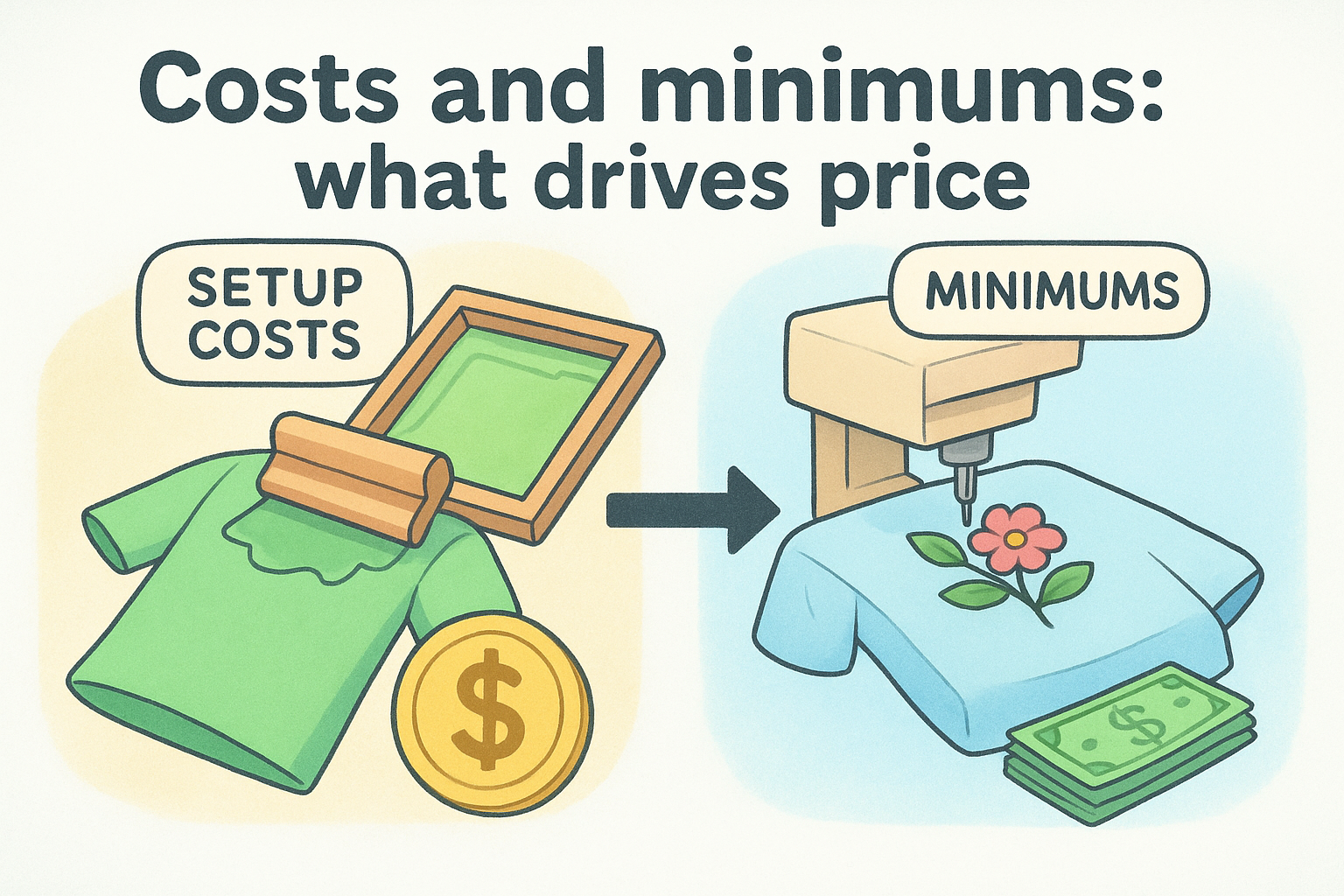
Embroidery costs work differently since digitizing your design happens once regardless of quantity. The per-piece price stays more consistent because each item requires the same machine time and thread whether you order 12 pieces or 500. Your choice between screen printing vs embroidery often comes down to how many items you need and how many colors your design uses.
Setup costs favor different quantities
Screen printing makes financial sense at higher quantities, typically 50 pieces or more. You’ll pay $50 to $100 per screen color upfront, but this cost disappears into the per-piece price as your order grows. A four-color design on 100 shirts spreads $400 in setup costs to just $4 per shirt, while the same design on 20 shirts adds $20 per piece to your base garment and printing costs.
Embroidery avoids per-color charges but charges more per stitch count, making simple logos more economical regardless of order size.
Per-piece pricing shifts at scale
Embroidery charges by stitch count and placement, running $5 to $15 per location depending on design complexity. Your costs stay stable across quantities, making embroidery competitive for orders under 50 pieces where screen printing setup fees dominate pricing. Print costs drop to $2 to $5 per shirt at volume, flipping the economics once you cross the 50 to 100 piece threshold.
Durability, comfort, and care over time
Your apparel choices face daily wear that reveals whether you picked the right customization method. Screen printing degrades faster than embroidery under repeated washing and friction, while comfort differences become obvious after the first time you wear the garment. The screen printing vs embroidery decision directly affects how long your investment lasts and whether your team actually wants to wear what you ordered.
How each method ages through washing
Embroidery outlasts screen printing by years because thread becomes part of the fabric itself. Your embroidered logos resist fading, cracking, and peeling that destroy printed designs after 25 to 50 wash cycles. Screen printed ink sits on the fabric’s surface, where washing machines and dryers gradually break down the bond between ink and material.
Embroidered designs maintain their appearance through hundreds of washes while screen printed artwork often shows visible wear within the first year of regular use.
Commercial laundering accelerates printed ink failure, making embroidery essential for uniforms that go through industrial wash cycles. Your service company vehicles, restaurant staff, or healthcare workers need the durability that only stitched thread provides.
Comfort differences you’ll feel
Screen printing adds minimal thickness to your garment, maintaining the fabric’s original feel and breathability. Your lightweight performance shirts and tri-blend tees stay soft and comfortable with printed designs that don’t create stiff, heavy spots.
Embroidery creates noticeable texture and weight where thread density builds up your design. This works well on polo shirt chests and jacket backs but can feel uncomfortable on thinner fabrics or sensitive skin areas like the upper back. Your comfort preferences and garment type should guide placement decisions.
Final pick and next steps
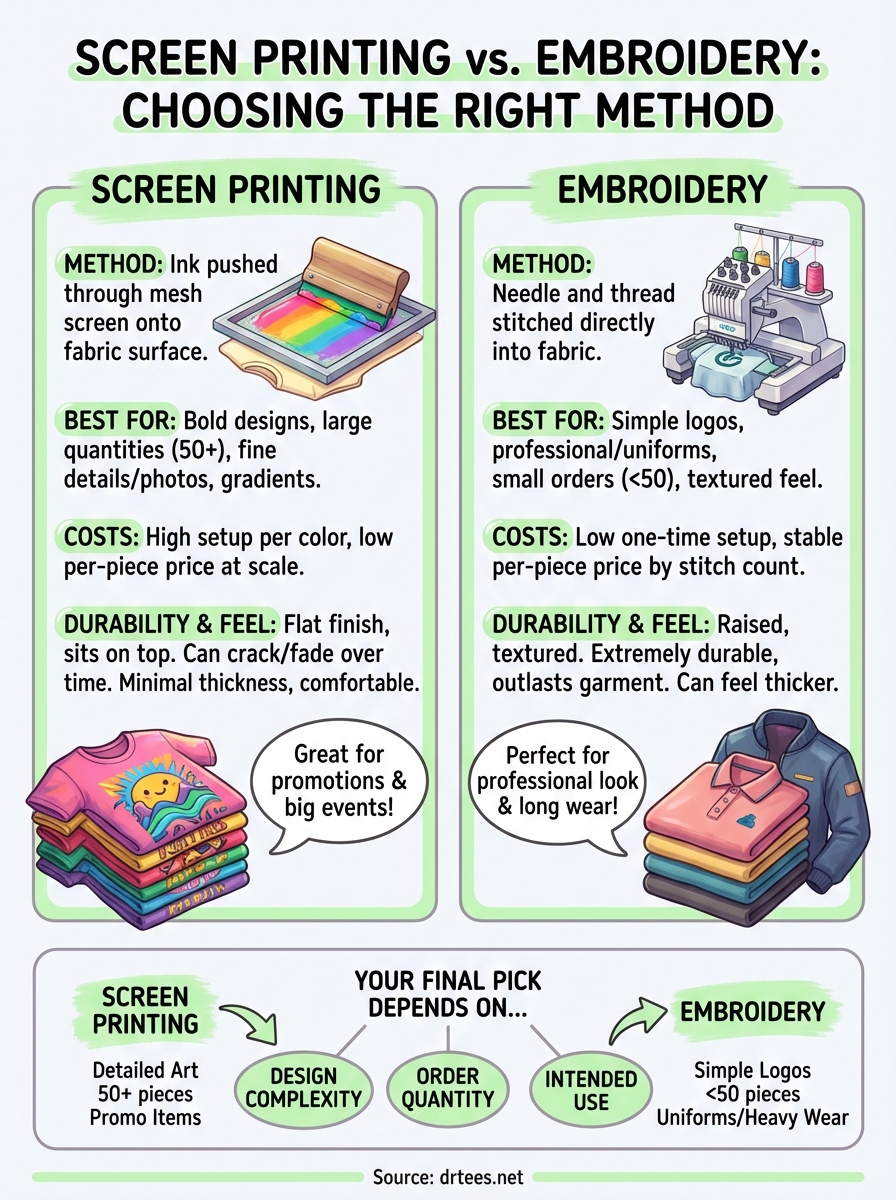
Your screen printing vs embroidery choice comes down to three factors: design complexity, order quantity, and intended use. Screen printing wins for detailed artwork, large orders over 50 pieces, and budget-conscious promotional items. Embroidery delivers the professional appearance and durability your uniforms and corporate wear demand, especially for orders under 50 pieces or garments that face heavy washing.
Most businesses benefit from using both methods strategically. Your polo shirts and jackets earn the premium look of embroidery, while event shirts and promotional items stay affordable through screen printing. Kansas City businesses have trusted Dr. Tee’s Design & Screen Printing for over 20 years to guide these decisions and deliver quality results on every order.
Ready to start your project? Contact us to get a quote and we’ll walk you through which method fits your specific needs, budget, and timeline. We handle everything from design to delivery, with minimums starting at just 12 pieces.
