
Choosing the right ink can make or break your custom shirts. If you’ve started researching screen printing for your business or organization, you’ve probably run into the plastisol ink vs water based ink debate, and the answers you’ve found so far might feel contradictory. That’s because both inks have real strengths and real trade-offs, and the best choice depends on your specific project.
At Dr. Tee’s Design & Screen Printing, we’ve spent over 20 years printing custom apparel for Kansas City businesses, teams, and organizations. We’ve run thousands of jobs using both ink types, so we know firsthand how each one performs on different fabrics, holds up after repeated washes, and feels against the skin. That hands-on experience is exactly what shaped this guide, not recycled spec sheets from ink manufacturers, but practical knowledge from the press.
This article breaks down the key differences between plastisol and water-based inks across feel, durability, print quality, color vibrancy, and environmental impact. By the end, you’ll have a clear picture of which ink type fits your project and why it matters for the finished shirts your customers or team will actually wear.
Why ink choice matters for your shirts
The ink on your shirt is more than just color. Screen printing ink determines how the finished garment feels against skin, how long the print lasts, and how sharp the design looks after repeated washing. When you’re ordering custom apparel for your business, team, or organization, ink choice directly affects whether people actually wear the shirts or leave them folded in a closet because they feel stiff or uncomfortable.
How ink affects feel, durability, and color
Texture is something people notice immediately. Plastisol ink sits on top of the fabric fibers, producing a slightly raised, tactile print that feels firm under your fingers. Water-based ink absorbs into the fibers, so the printed area feels like part of the shirt itself, which many wearers prefer on lightweight or fitted styles. If you’re ordering polos for a dental office or performance tees for a sports team, that softness difference affects how often the shirt actually gets worn.
Durability and color vibrancy add another layer to the plastisol ink vs water based ink decision. Plastisol inks cure at a consistent temperature and hold up reliably through dozens of wash cycles without cracking or peeling. Water-based inks can match that durability when cured correctly, but they are more dependent on fabric type and production conditions. On dark garments, plastisol delivers stronger color opacity. On lighter shirts, water-based inks produce a natural, breathable finish that works well for retail-quality apparel.
Getting the ink type right for your fabric and design is the single most practical step you can take before placing a bulk order.
How ink affects your brand presentation
Your custom shirts are a direct reflection of your business. A print that fades, cracks, or looks muddy after a few washes signals poor quality to everyone who sees it. Vivid, sharp, long-lasting prints tell customers, employees, and the public that you pay attention to detail. For service contractors, healthcare offices, or school organizations in Kansas City ordering 50 to 500 shirts, that distinction matters every single day those garments are in use.
Here is what ink choice influences beyond the press:
- Color accuracy: whether your brand colors look consistent across the full run
- Print lifespan: how many wash cycles the design survives intact
- Garment feel: whether the wearer actually reaches for the shirt regularly
- Perceived value: how professional the finished product looks to customers or clients
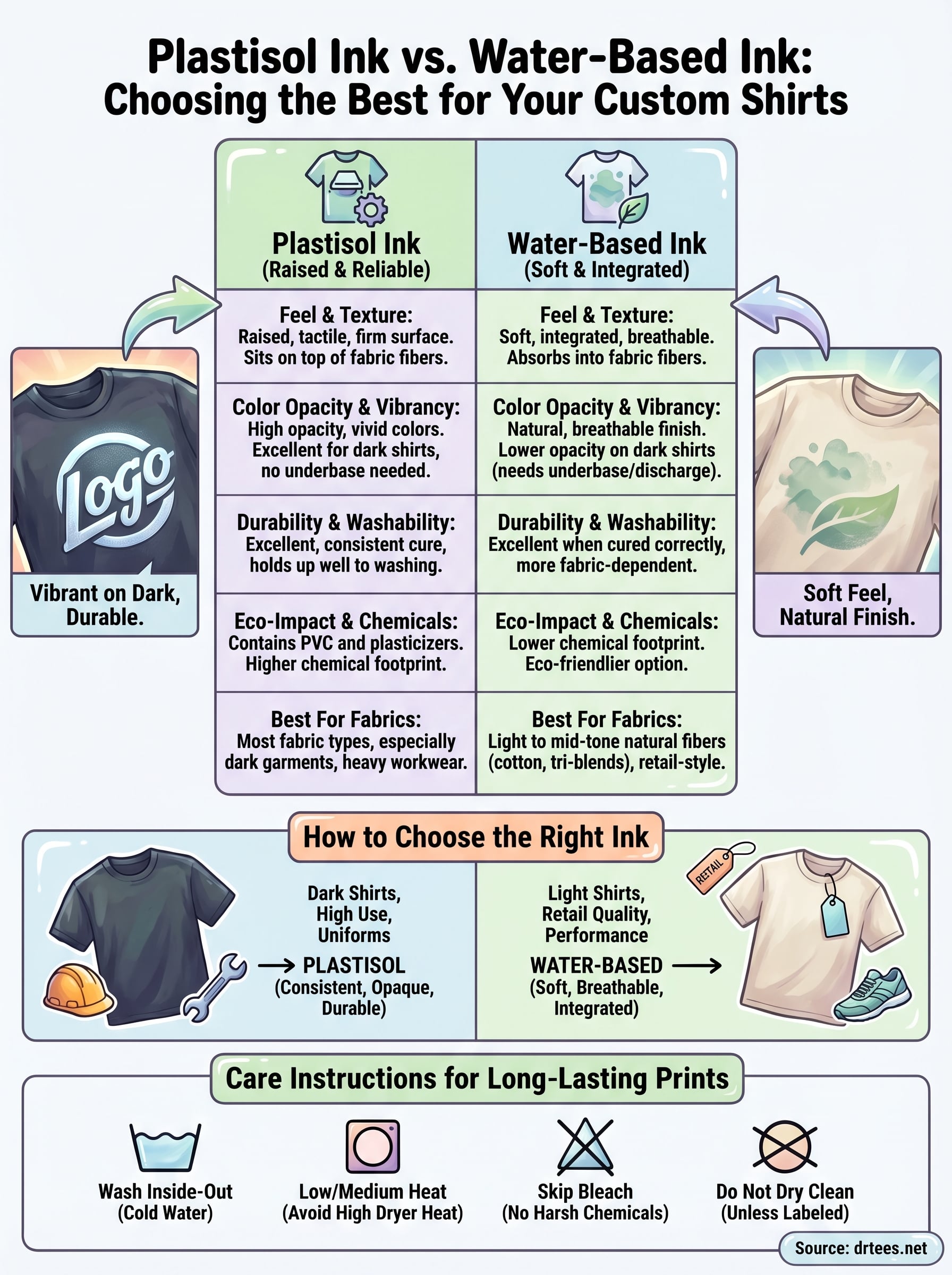
Plastisol ink vs water-based ink at a glance
When you need a quick reference before diving deeper, this side-by-side comparison puts plastisol ink vs water based ink on the same page. Both inks work well for screen printing, but they solve different problems. Knowing their core differences upfront saves you from committing to the wrong product and ending up with prints that don’t perform the way you expected.
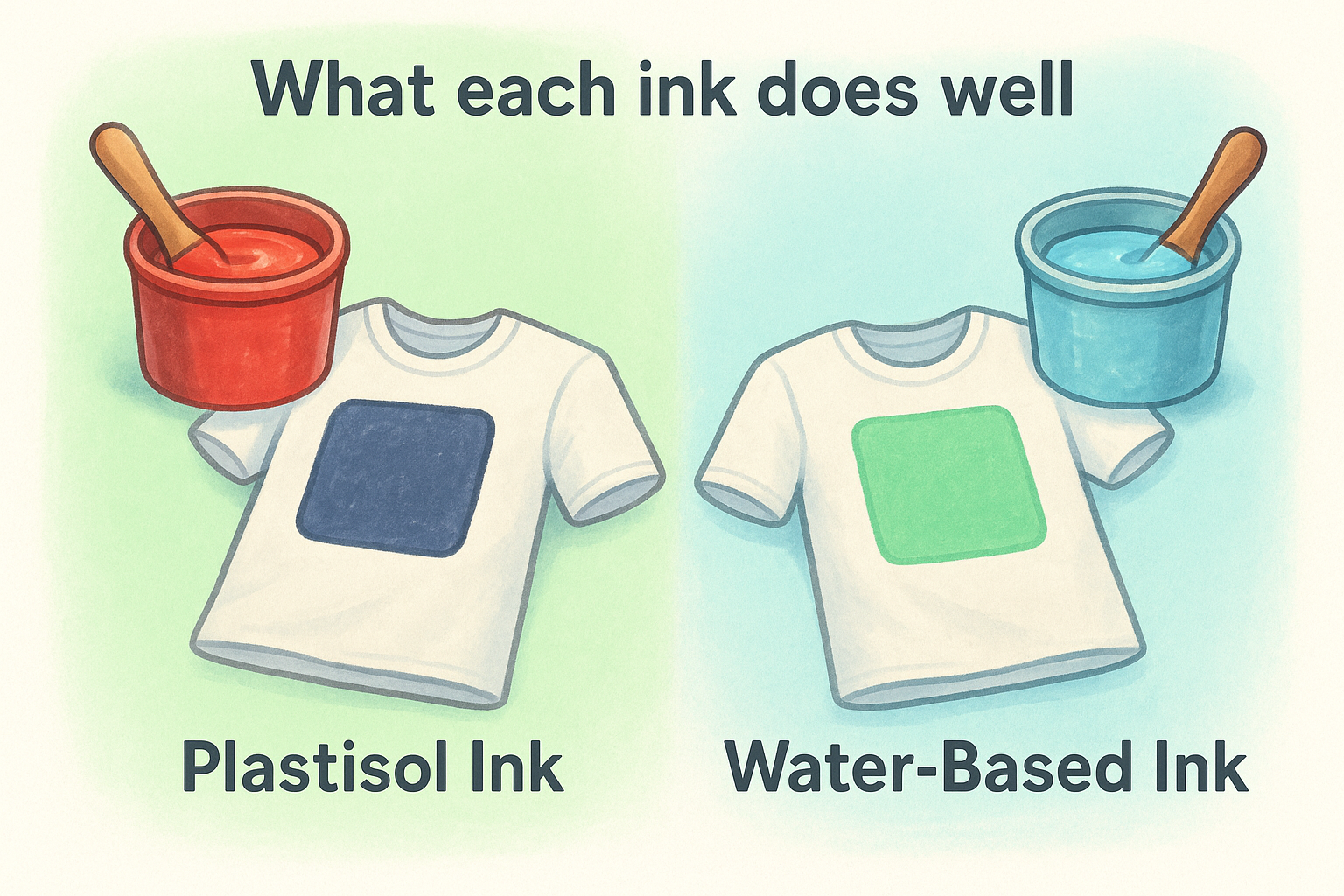
What each ink does well
Plastisol is the most widely used screen printing ink in the industry, and its popularity comes from consistency. It cures reliably, holds strong color opacity on dark garments, and tolerates a wide range of fabric types without major production adjustments. Water-based ink performs best on light to mid-tone fabrics where its breathable, soft hand really shows. Below is a direct comparison across the factors that matter most for your shirts.
| Factor | Plastisol Ink | Water-Based Ink |
|---|---|---|
| Feel on fabric | Raised, tactile print | Soft, integrated into fabric |
| Color opacity | High, especially on dark shirts | Lower on dark, natural on light |
| Durability | Excellent, consistent wash results | Excellent when cured properly |
| Eco-impact | Contains PVC and plasticizers | Lower chemical footprint |
| Best fabric match | Most fabric types | Light to mid-tone, natural fibers |
Where each ink falls short
Each ink has a weakness worth knowing before you place an order. PVC and plasticizers in plastisol raise environmental concerns for some buyers, and the raised texture is not always preferred on lightweight, retail-style garments. Water-based ink can struggle to deliver the same bold color punch on dark fabrics, and if curing conditions are off during production, the print lifespan drops. Knowing these limits helps you pick the right match for your design, fabric, and end use.
Neither ink is universally better; the right call depends on your garment color, fabric type, and how the shirt will actually be used.
How to choose the right ink for your project
The plastisol ink vs water based ink decision comes down to three practical factors: garment color, fabric type, and how the shirts will be used. If you work through those factors before contacting your printer, you’ll land on the right ink without second-guessing yourself once production starts.
Match your ink to your garment color and fabric
Dark garments almost always perform better with plastisol ink because the opacity covers the base fabric without requiring extra production steps like an underbase layer. On light or white shirts made from natural fibers like cotton or tri-blends, water-based ink produces a soft, breathable finish that holds up well over time. Your garment color is the first filter to apply when deciding between the two.
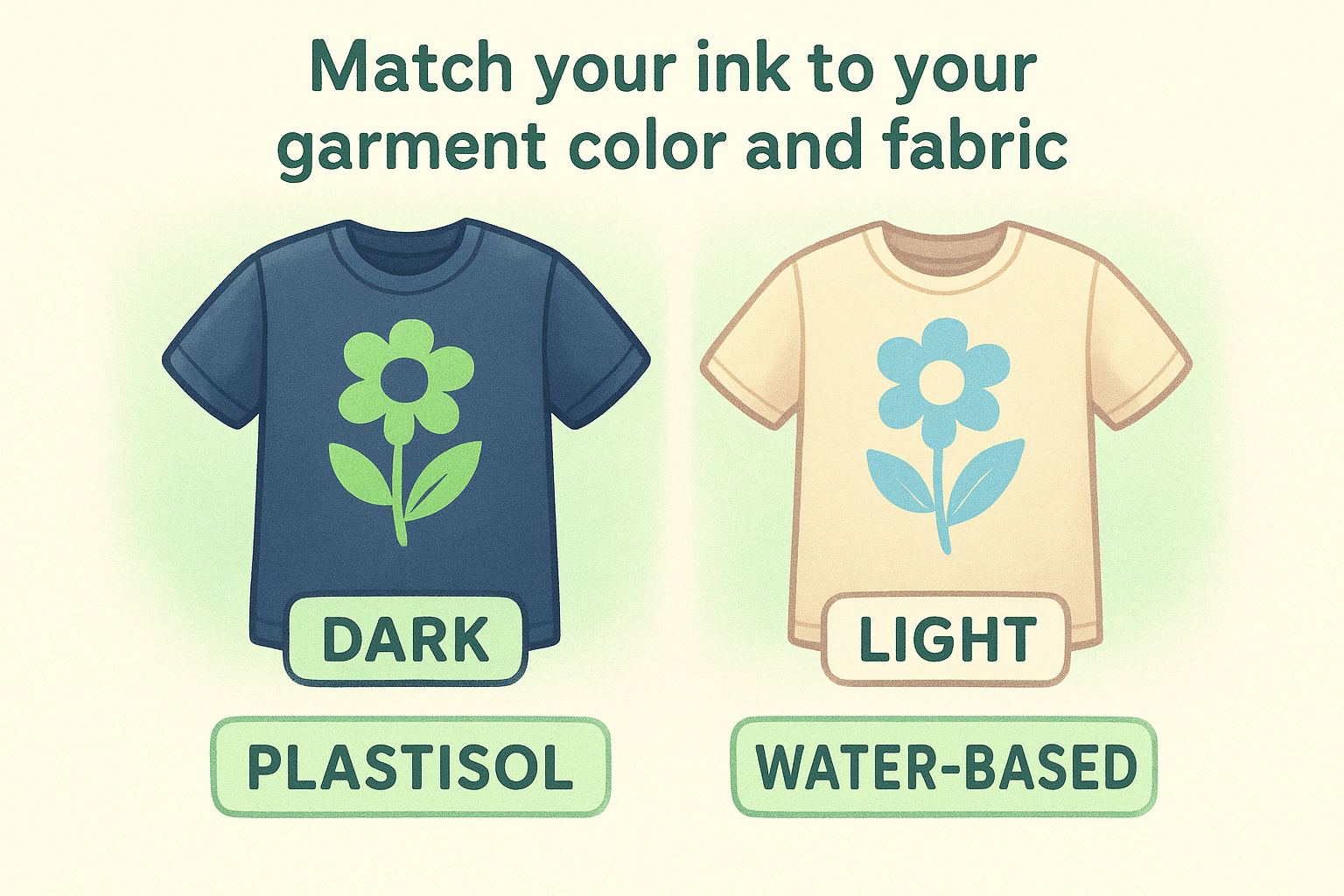
If you’re ordering on dark navy, black, or heather gray, plastisol is the more reliable default for vivid, long-lasting color.
Here is a quick reference for common shirt scenarios:
- Dark shirts (black, navy, charcoal): plastisol for strong opacity and consistent color
- Light shirts (white, natural, light gray): water-based for a soft, integrated feel
- Tri-blend or performance fabric: water-based when print softness is a priority
Factor in your end use and order size
Think carefully about who will wear the shirts and how hard they’ll work. Uniforms for service contractors, construction crews, or HVAC technicians take real daily wear, so plastisol’s consistent durability fits those applications well. For retail-style apparel or branded gifts where a premium feel matters, water-based ink gives you a finish wearers actually notice against their skin.
Order size also plays a role in the decision. Water-based inks require more precise curing conditions, which can affect production time and per-unit cost on smaller runs. Sharing your end use and quantity with your printer upfront avoids surprises later in the process.
What to expect in production and care
Understanding how each ink behaves during production and after delivery helps you set realistic expectations before your order ships. The plastisol ink vs water based ink decision doesn’t end at the press; it follows your shirts through every wash cycle.
Production timelines and curing
Plastisol ink cures at a fixed temperature, typically around 320°F, which makes it straightforward to run consistently across large quantities. Your printer can move through a high-volume run without stopping to adjust settings between pieces. Water-based ink requires more careful temperature and dwell time management during curing, which can add production time on certain jobs. If your deadline is tight, ask your printer upfront how each ink type affects their turnaround for your specific order size.
Confirming production timelines before you approve artwork prevents delays from catching you off guard when your event or distribution date is approaching.
Washing and care instructions
How your team or customers wash the shirts affects how long the print holds up, regardless of which ink was used. Both plastisol and water-based prints benefit from similar care habits that protect the design over time.
Follow these basic care steps to extend the life of any screen-printed garment:
- Wash inside-out in cold water to reduce friction on the print surface
- Avoid high heat in the dryer; use low or medium settings instead
- Skip bleach entirely, as it breaks down both ink types faster than normal wash cycles
- Do not dry clean screen-printed apparel unless the garment label specifically recommends it
Sharing these instructions with whoever receives the shirts, whether employees or customers, keeps your prints looking sharp through regular use.
Common questions and pitfalls to avoid
Most of the confusion around the plastisol ink vs water based ink decision comes from the same handful of questions customers ask before placing their first order. Knowing where people typically go wrong before you commit to a production run saves time, money, and frustration.
Questions that come up before every order
One of the most common questions is whether water-based ink will last as long as plastisol on everyday workwear. The honest answer is yes, provided the garments are cured correctly and cared for properly. Plastisol does not automatically outlast water-based ink; the real difference is that plastisol tolerates a wider range of curing conditions, which gives it a more consistent track record across high-volume runs.
Another frequent question involves dark-colored garments and whether water-based ink can cover them effectively. On deep navy, black, or charcoal shirts, water-based ink typically requires an underbase layer or a discharge process to achieve strong color. Skipping that step is the most common production mistake on dark-fabric orders, and it results in dull, washed-out prints that disappoint.
Always confirm with your printer which ink type they recommend for your specific garment color and fabric before artwork is finalized.
Pitfalls that trip up first-time buyers
Choosing ink based on environmental preference alone without considering fabric type leads to mismatched results. Water-based ink is the lower-impact option, but that benefit means little if the print looks faded after ten washes because it was applied to the wrong garment. Matching ink type to fabric and garment color comes first. Environmental considerations are a valid secondary factor once the technical fit is confirmed. Talking through both priorities with your printer ensures the final result works on every level.
Final take
The plastisol ink vs water based ink decision is not complicated once you know your garment color, fabric type, and how the shirts will actually be used. Plastisol gives you reliable opacity and consistent durability, making it the practical default for dark garments and high-volume workwear orders. Water-based ink delivers a soft, fabric-integrated feel that works well on lighter shirts where comfort and print quality both matter to the wearer.
Neither option is the universal winner. Matching the right ink to your specific project is what separates a print that lasts from one that disappoints after a few wash cycles. If you are still unsure which direction fits your order, talking it through with an experienced printer before artwork is finalized is the smartest move you can make. At Dr. Tee’s, we have been helping Kansas City businesses get this right for over 20 years. Start your custom apparel project today and get it done right the first time.
