
If you’re shopping for custom printed apparel, the Next Level vs. Bella+Canvas debate is one you’ll run into fast. Both brands sit at the top of the premium blank market, and for good reason, they’re soft, they print well, and they look sharp. But they’re not interchangeable. Each brand makes distinct choices in fabric weight, fit, and construction that affect how your finished product looks, feels, and holds up over time.
At Dr. Tee’s Design & Screen Printing, we’ve run both brands through our presses thousands of times across over 20 years of screen printing in Kansas City. We’ve seen how each one handles ink, how they shrink after washing, and which styles our customers reorder most. That hands-on experience puts us in a solid position to break down what actually matters when you’re choosing between the two, not just spec-sheet comparisons, but real-world printing results.
This article covers 7 key differences between Next Level and Bella+Canvas that directly impact your custom printing project. We’ll walk through fabric composition, softness, fit and silhouette, shrinkage, print quality, pricing, and style variety. Whether you’re ordering crew uniforms for your trades company or branded tees for a promotional event, you’ll walk away knowing exactly which brand fits your needs and your budget.
1. Print surface and ink results
The first thing that separates these two brands in a real production environment is how their fabric surface interacts with ink. Before you finalize your order, understanding how each shirt behaves on press will save you from surprises on delivery day and help you set the right expectations with whoever is printing your order.
How the fabrics feel and behave on press
Next Level shirts, particularly the 6210 CVC and the 3600 premium fitted tee, have a noticeably smooth hand feel. That smoothness translates directly to the print surface. When you lay ink on a Next Level shirt, you get clean, controlled edges because the fabric doesn’t carry a lot of texture variation or loose surface fibers that interfere with the squeegee pass during production.
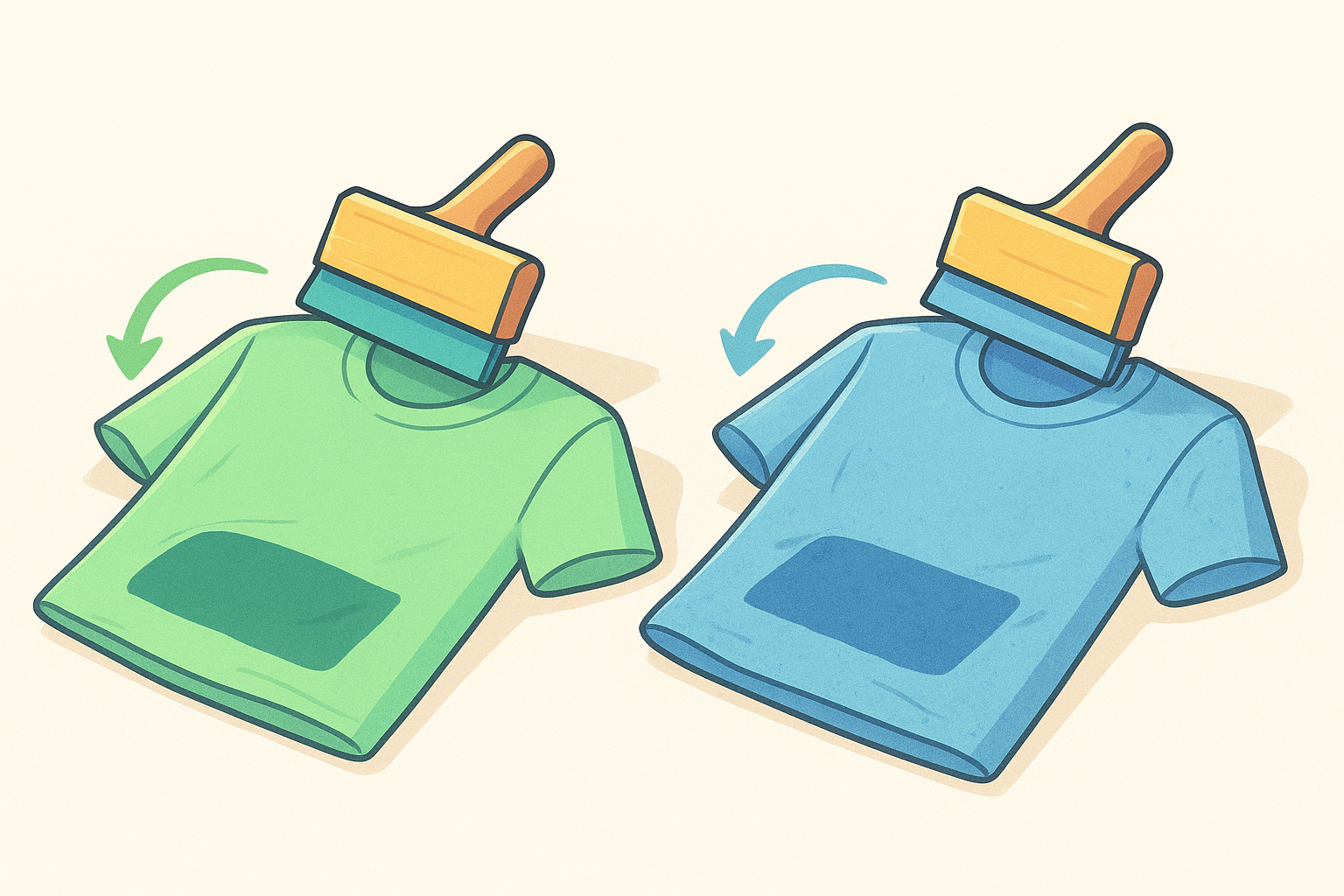
Bella+Canvas shirts, especially the 3001 unisex tee, run slightly different. The fabric has a soft, almost airbrushed texture that holds ink well but can occasionally show slight variation in coverage on very fine details at smaller print sizes. This is a product of the combed and ring-spun cotton construction, not a quality defect. Both brands produce excellent results, but the surface behavior on press is not identical, and that difference matters when your artwork includes intricate linework or small type.
What changes for screen printing vs. embroidery
For screen printing, both brands accept ink well across standard plastisol and water-based formulations. Next Level’s tighter weave gives you slightly better dot sharpness on halftones and fine lines, which makes it the stronger choice for photorealistic or gradient-heavy artwork. Bella+Canvas responds well to soft-hand printing because of how the fabric absorbs a lighter ink deposit without sacrificing opacity on standard colors.
Embroidery is where the conversation shifts significantly. A heavier Bella+Canvas style like the 3945 sponge fleece handles embroidery threads cleanly because the fabric body is stable under the needle. Next Level has fewer fleece and structured options, which limits your embroidery choices if you need consistent branding across a full apparel program that goes beyond basic tees.
For standard embroidery on either brand’s regular tee, you’ll need a backing stabilizer regardless. The fabric weight and weave density of each shirt will guide how much stabilizer is appropriate, and your decorator should factor this into digitizing before the job goes into production.
When each brand gives you the cleanest result
Next Level delivers its cleanest print results on light-colored shirts with detailed or multi-color artwork. The tight CVC and cotton construction holds registration accurately across print runs, and jobs with tight color trapping benefit directly from that stability. If your design includes small text, thin borders, or precise halftone work, Next Level is the stronger candidate for consistent output.
Bella+Canvas performs best when you need bold, high-impact graphics on either light or dark garments. Their darker colorways, particularly the heathers, print beautifully once you apply a proper underbase. The slight texture of the fabric gives finished prints a premium, tactile quality that works well for retail-style products and high-end branded merchandise. When you’re weighing next level vs. bella+canvas for large production runs with complex color work across a wide range of colorways, Bella+Canvas gives you more flexibility without sacrificing print quality.
2. Fit and cut change design placement
Fit is one of the most overlooked variables in custom printing decisions, but it directly controls where your artwork lands on the body and how it reads when someone wears the shirt. Before you lock in your print placement specs, you need to understand how these two brands differ in their cut.
Where Next Level and Bella+Canvas Fits Differ Most
Next Level shirts are cut closer to the body, with a slightly longer body and narrower chest across most unisex and fitted styles. The 3600 unisex tee runs noticeably slimmer through the midsection compared to traditional blanks. Bella+Canvas, particularly the 3001 unisex tee, offers a more relaxed, contemporary fit with a wider chest that reads more like a modern streetwear silhouette.
When you’re ordering for a mixed group, this difference in torso length and chest width can shift your print placement by an inch or more between brands, which matters if you’re running a multi-brand program.
How Fit Affects Full-Front, Left-Chest, and Sleeve Prints
The shorter torso on Next Level shirts means your full-front graphic needs to sit higher to stay in the visual center of the chest. If you apply the same placement specs from a Bella+Canvas order directly to a Next Level job, your artwork can end up sitting low and too close to the hem. On left-chest prints, the seam position and shoulder drop on each brand also shifts the ideal starting point by roughly half an inch.
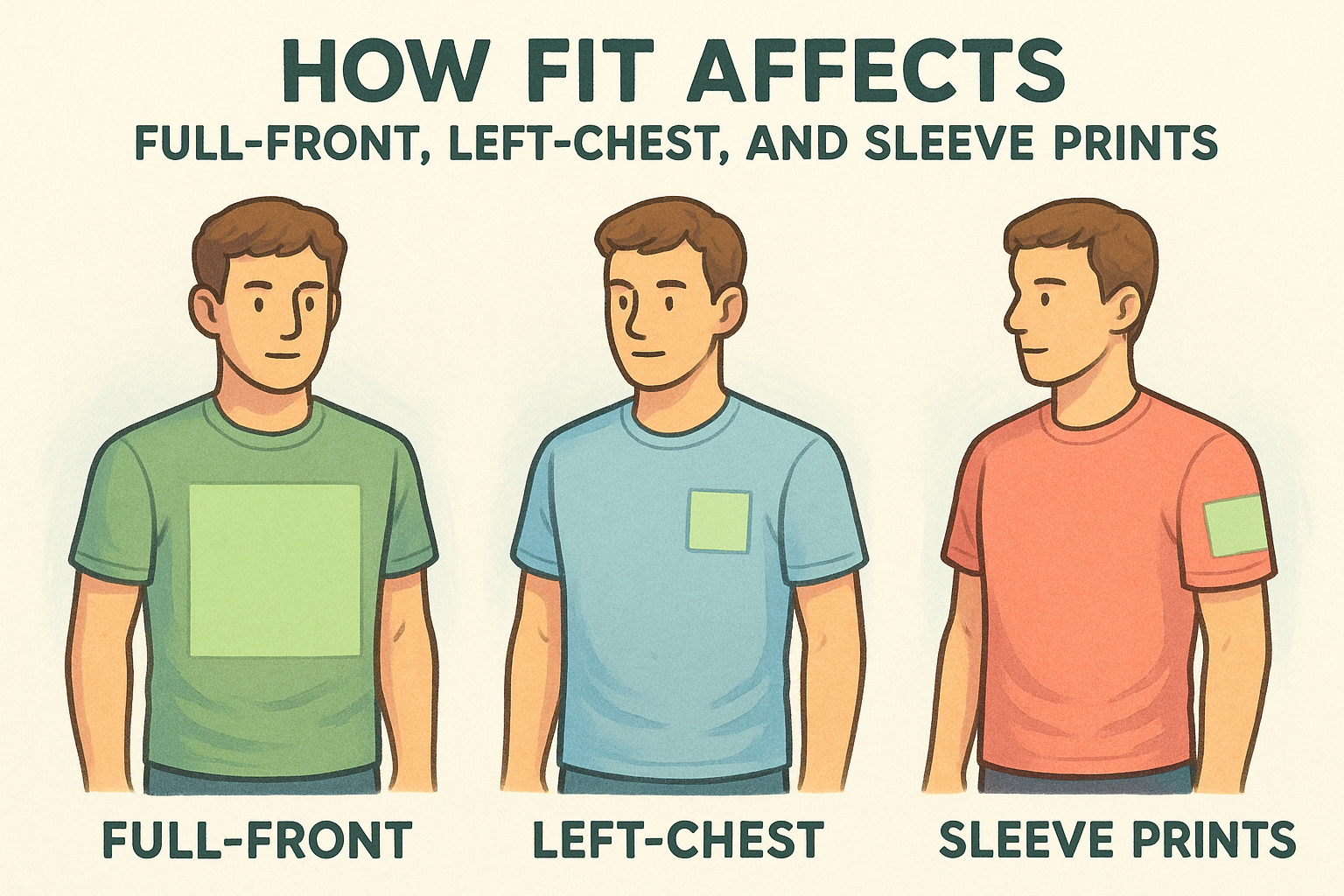
Sleeve prints are equally sensitive to cut differences. Bella+Canvas sleeves tend to be slightly longer and wider, giving you more canvas for arm prints or wraparound designs. Next Level sleeves are trimmer, so designs need tighter placement boundaries to avoid distortion near the seam.
Quick Placement and Sizing Tips for Common Jobs
When you’re working through the next level vs. bella+canvas decision for a production run, use these starting points to avoid costly placement errors on your finished order:
- Full-front prints: Drop 3 to 3.5 inches from the collar on Bella+Canvas; drop 2.5 to 3 inches on Next Level
- Left-chest prints: Center the design 4 inches from the left shoulder seam on both brands, but confirm on a physical sample before approving the full run
- Sleeve prints: Limit width to 4 inches on Next Level fitted styles; you can push to 4.5 inches on most Bella+Canvas unisex sleeves
3. Fabric blends drive the final look
The fabric blend inside each shirt controls more than how it feels in your hands. It determines how ink sits on the surface, how color reads after washing, and whether your finished product holds up or fades after a season of use. Both Next Level and Bella+Canvas offer multiple blend constructions, and knowing how each one behaves on press will guide you to the right choice before you place your order.
100% cotton vs CVC vs tri-blend vs sueded
Each construction handles ink and wear differently, and the differences show up clearly once production is complete. Here is a quick breakdown of the four main blend types you’ll encounter across both brands:
| Blend | Fiber Mix | Key Characteristic |
|---|---|---|
| 100% ring-spun cotton | Cotton only | Highest opacity, deepest ink absorption |
| CVC | ~60% cotton, 40% polyester | Tighter knit, better ink sharpness |
| Tri-blend | Cotton, polyester, rayon | Lightweight drape, heathered look |
| Sueded | Cotton or CVC, brushed finish | Velvety texture, premium hand feel |
Next Level leans heavily on CVC construction across its most popular styles, while Bella+Canvas builds much of its core lineup around 100% ring-spun and airlume combed cotton. Both brands offer tri-blend options, but the fiber ratios vary by style, so check the spec sheet before finalizing your order.
How each blend affects opacity, hand feel, and detail
100% cotton absorbs ink deeply, which gives you rich, saturated color on light garments but demands a solid underbase on dark shirts to maintain coverage. CVC blends sit slightly on top of the fabric surface, which tends to sharpen edge definition on detailed artwork and fine type. Tri-blends present the biggest challenge for opacity and registration because the rayon content can cause uneven ink distribution if the deposit is too light or the flash cure timing is off.
Tri-blend shirts require careful underbase management and experienced handling on press, so confirm your decorator has run them before before you commit to a large quantity.
Best blends for workwear, retail tees, and event shirts
Matching the right blend to your specific use case prevents costly reprints and keeps your customers happy on reorders. Use these guidelines when working through the next level vs. bella+canvas decision for a particular job type:
- Workwear and uniforms: 100% cotton or CVC for durability and reliable ink coverage run after run
- Retail and branded merchandise: Tri-blend or sueded finish for a soft, premium result that reads high-end at point of sale
- Promotional and event shirts: 100% cotton for cost efficiency and consistent print output across large quantity runs
4. Color range and heathers impact print strategy
Color selection isn’t just a branding decision. It directly shapes how your ink performs, how your underbase is built, and how consistent your output looks across a bulk run. When you’re comparing next level vs. bella+canvas for a large order, the color range of each brand will influence your production decisions from the moment you finalize your artwork.
Color availability differences that matter on bulk orders
Bella+Canvas consistently offers one of the widest color palettes in the premium blank market, with the 3001 unisex tee available in over 100 color options across solids, heathers, and seasonal releases. Next Level runs a strong but narrower selection, with most core styles landing in the 60 to 80 color range depending on the style. For bulk orders where you need to match a specific brand color across multiple garments, Bella+Canvas gives you more flexibility to land close to your target without custom dye work.
If you’re ordering the same design across multiple shirt colors in a single run, check current stock levels on both brands before committing, because popular colorways can go on backorder quickly during peak seasons.
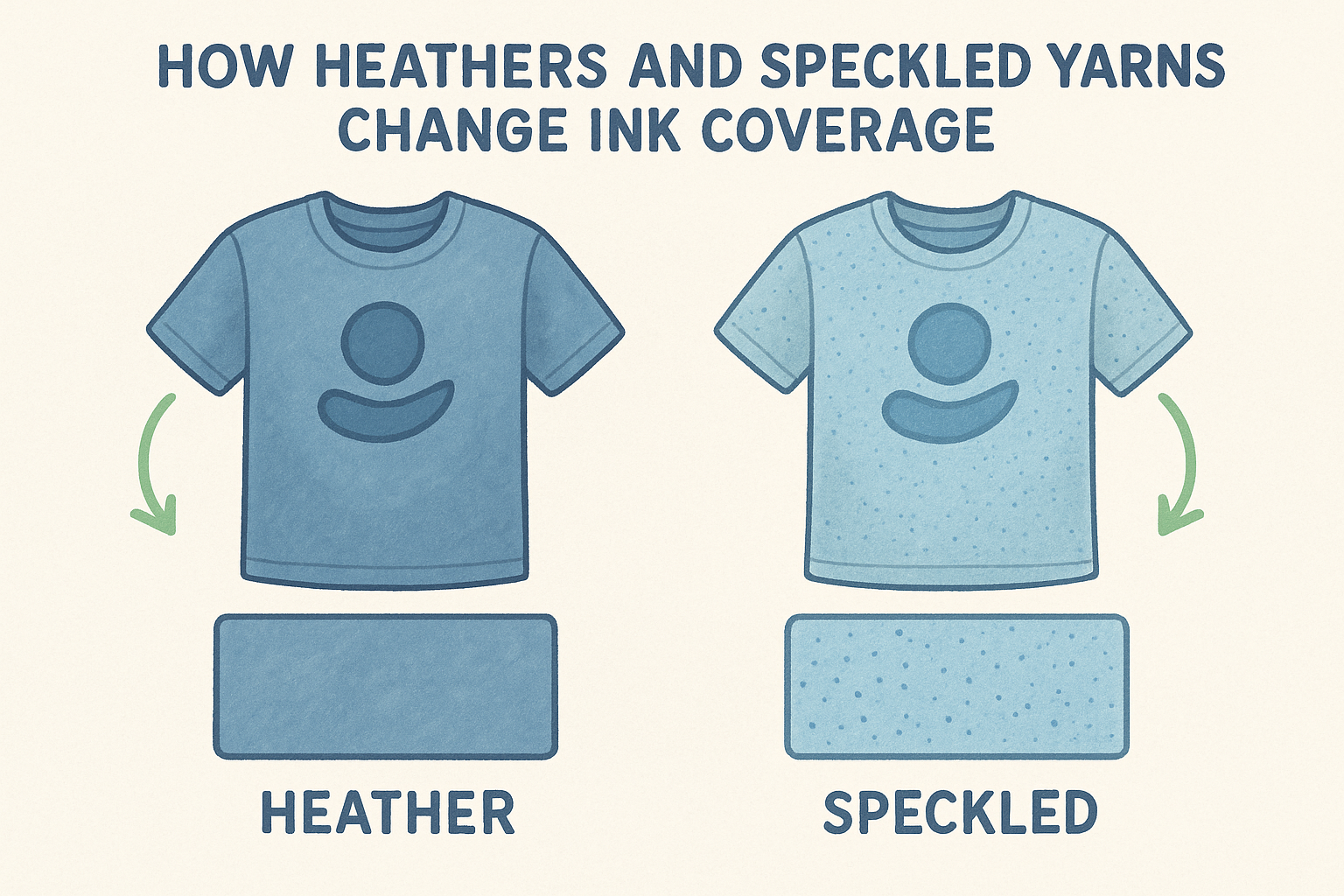
How heathers and speckled yarns change ink coverage
Heathered fabrics use blended or mixed yarns that create a subtle, textured appearance across the garment surface. That texture breaks up ink coverage in ways that solid fabrics don’t. Both brands offer heather options, but Bella+Canvas heathers tend to run slightly darker and more saturated, which means your ink deposit needs to be heavier or your underbase needs to be adjusted to maintain opacity across the garment. Next Level heathers are often lighter and more speckled, which can give finished prints a more worn, vintage look even with fresh ink.
Underbase and color-matching considerations
Any shirt darker than a light gray requires an underbase if you want your colors to read accurately rather than muting against the garment. This applies to both brands equally, but the heather and fabric texture differences between them mean your underbase coverage may need to be adjusted between jobs even when the shirt color appears similar. Custom ink color matching, which Dr. Tee’s offers in-house, becomes especially important on heathered styles where the yarn tone can shift the perceived hue of your printed color.
5. Shrinkage and wash wear affect long-term quality
Shrinkage is often treated as an afterthought, but it directly affects print alignment, garment dimensions, and customer satisfaction on reorders. Both Next Level and Bella+Canvas shrink after washing, but the degree and pattern of that shrinkage vary based on fiber content and fabric construction. Understanding how each brand behaves after the first few wash cycles helps you set the right expectations before your order ships.
What to expect after the first wash and dryer cycle
Next Level shirts, particularly the CVC-heavy styles, tend to show less shrinkage than 100% cotton alternatives because the polyester content resists heat-induced fiber contraction. You can typically expect 3 to 5 percent shrinkage on most Next Level styles after the first hot wash and dryer cycle. Bella+Canvas shirts built on their airlume combed cotton construction run closer to 5 to 7 percent shrinkage under the same conditions, which is expected for a quality cotton garment but worth accounting for when you send sizing recommendations to your customers.
If your customers plan to wash in hot water and tumble dry, recommend sizing up by one on 100% cotton Bella+Canvas styles to avoid a poor fit after the first laundering.
How shrinkage impacts multi-location sets and alignment
When you’re printing multi-location designs across front, back, and sleeve together, shrinkage after washing can shift prints out of their intended visual relationship with each other. A back print that sits 3 inches below the collar during production may creep closer after multiple wash cycles if the garment loses vertical length. This is especially relevant in the next level vs. bella+canvas decision when you’re building a uniform program where consistent placement across multiple wearers matters long after delivery.
Best practices to reduce surprises on customer reorders
Locking in your garment specs and approved placement measurements from the first sample gives you a reliable reference point for every future reorder. Always record the brand, style number, and colorway used on the original run because substituting one style for another mid-program can shift both sizing and shrinkage behavior in ways that catch customers off guard. Advising your end users to wash in cold water and tumble dry on low significantly reduces shrinkage variance and keeps prints looking clean through repeated laundering.
6. Pricing, availability, and size runs for ordering
Price and availability shape your ordering decisions just as much as fabric and fit do. When you’re working through a next level vs. bella+canvas decision for a production run, the cost per unit, stock consistency, and available size range all factor into whether your project stays on budget and on schedule.
Typical price tiers and where each brand fits
Both brands sit in the premium blank tier, but their wholesale price points differ enough to matter on larger orders. Bella+Canvas typically runs slightly higher per unit than Next Level across comparable styles, with the 3001 unisex tee landing a few cents above the Next Level 3600 at most wholesale distributors. That gap compounds quickly when you’re ordering 200 or more pieces across multiple colorways.
On a 500-piece run, even a $0.50 difference per shirt adds $250 in additional blank cost before decoration, so confirm current pricing with your distributor before finalizing your brand choice.
Stock consistency, backorders, and substitutions
Both brands carry strong distribution through major wholesale networks, but stock levels fluctuate seasonally, and popular colors in smaller or larger sizes are the first to go on backorder. Bella+Canvas moves high volume across its core styles, which means certain heather and seasonal colorways can drop out of stock quickly during peak ordering periods like spring and fall. Next Level experiences similar patterns, particularly on its fitted and women’s cuts.
Build your order timeline around a buffer of at least two weeks beyond your estimated production start date to account for potential substitution delays. If your decorator needs to swap one style for another due to a backorder, confirm that the substitute carries the same fabric weight and fit before approving the change, since even small construction differences can shift your placement specs.
Extended sizes, youth options, and specialty cuts
Bella+Canvas has invested heavily in extended sizing, offering the 3001 in sizes up to 4XL and building out women’s and youth cuts across several styles. Next Level matches this range on many of its core styles and goes up to 5XL on select unisex options, which gives you more flexibility when ordering for crews or teams with a wide range of body types. Both brands offer youth tees, but style availability in youth sizing is narrower than adult options, so confirm your needed youth styles are in stock before committing to a mixed-age order.
7. Tagging, relabeling, and brand perception
The label inside the collar is a small detail that carries real weight. Whether you’re building a retail brand, a uniform program, or a promotional run, the tagging construction of each blank determines how cleanly your brand can take over and how your end customer perceives the product they’re wearing.
Tear-away tags, printed labels, and rebrand readiness
Both Next Level and Bella+Canvas ship most of their core styles with tear-away tags or printed inside-neck labels, which removes the barrier to relabeling. Bella+Canvas uses a printed label on the 3001 that tears away cleanly without leaving a rough edge or adhesive residue. Next Level follows the same approach on the 3600 and most of its popular styles, giving you a clean canvas for heat-applied or screen-printed inside-neck branding without needing to remove a sewn tag first. If your project requires a fully branded interior, confirm with your decorator that they offer inside-neck printing, since not every shop runs this service in-house.
Relabeling adds a per-unit cost to your order, so factor that into your budget early if branded interiors are part of your program.
How customers perceive each brand on the neck label
When you leave the manufacturer label intact, brand recognition on the neck label matters more than most buyers expect. Bella+Canvas has built strong consumer recognition, particularly among retail-savvy buyers who associate the brand with premium softness and responsible production. Next Level carries solid recognition in the decorated apparel and promotional space, and many end customers respond positively to seeing either brand’s name on the interior. If your clients are retail-oriented or reselling finished goods, Bella+Canvas may carry a slight edge in perceived value at point of sale.
Sustainability and “made responsibly” questions buyers ask
Sustainability is showing up more frequently in purchasing decisions across corporate, nonprofit, and retail clients. In the next level vs. bella+canvas comparison, both brands have made commitments to responsible manufacturing. Bella+Canvas operates from a Los Angeles facility with documented efforts around waste reduction and sustainable sourcing. Next Level also holds certifications through recognized labor and environmental standards programs. When your clients ask about responsible production, both brands give you credible, factual answers to share without overpromising.
Wrap it up and choose confidently
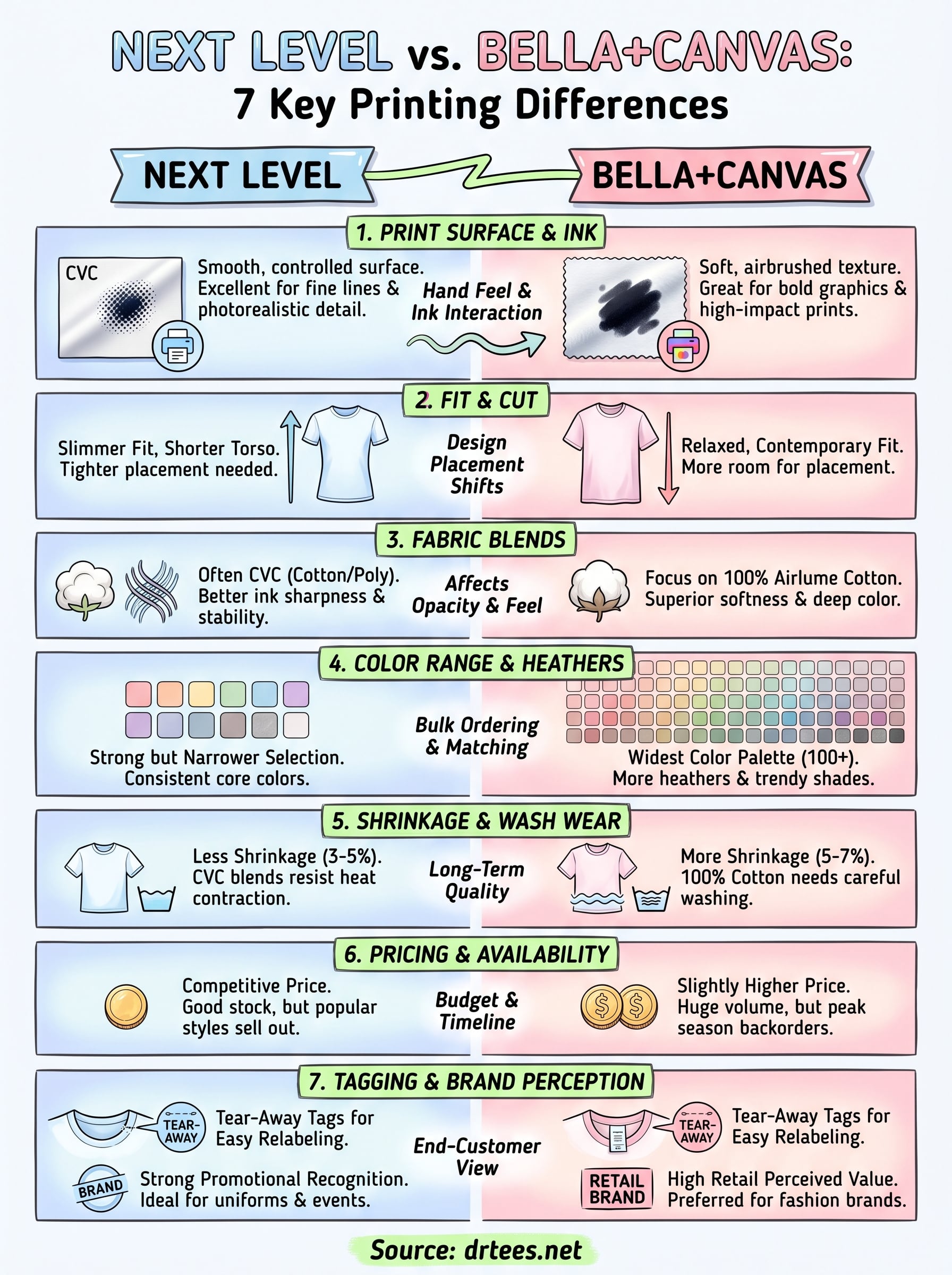
The next level vs. bella+canvas decision comes down to what your specific job demands, not which brand is universally better. Next Level gives you tighter construction, sharper ink detail, and a slimmer fit that works well for detailed artwork and fitted apparel programs. Bella+Canvas gives you a wider color range, a more relaxed silhouette, and stronger retail brand recognition that suits high-volume orders and consumer-facing products. Both brands print well, hold up through washing, and give your customers a finished product they’ll actually wear.
Your best move is to get samples of both brands in hand before committing to a large run. Feel the fabric, check the fit against your artwork, and confirm your decorator has experience running both. If you’re ready to start your order, get a custom quote from Dr. Tee’s Design & Screen Printing and we’ll help you pick the right blank for your job from the start.
