
If your crew works near traffic, on job sites, or in low-light conditions, the garments they wear aren’t just uniforms, they’re safety equipment. Max Apparel is one of the brands that focuses specifically on this need, manufacturing high-visibility workwear, custom headwear, and protective clothing built for industrial and trade environments.
Whether you’re sourcing safety vests for a roofing team or hi-vis polos for a landscaping company, knowing what Max Apparel offers, and how their catalog is structured, helps you make smarter purchasing decisions. This guide breaks down their product lines, wholesale options, and the types of garments they’re known for, so you can find exactly what fits your job site requirements and budget.
At Dr. Tee’s Design & Screen Printing, we work with Kansas City trade professionals and business owners every day, adding custom logos and branding to workwear just like this. We know the blank garment matters as much as the print on it. Below, we’ll walk you through everything you need to know about Max Apparel’s lineup, from their safety classifications to their headwear collection, so you can decide if it’s the right fit for your team.
What Max Apparel is and what it makes
Max Apparel is a wholesale blank apparel brand that focuses on high-visibility safety workwear, protective outerwear, and custom headwear. Unlike lifestyle-focused brands, their catalog is built for people working in demanding environments: construction crews, utility workers, traffic control staff, and trade professionals who need gear that meets safety standards while leaving room for custom branding.
The company background
The brand operates as a wholesale supplier, which means they sell primarily through distributors, decorators, and promotional product companies rather than directly to end consumers. Their product line is focused and intentional. Rather than trying to cover every apparel category, they concentrate on functional workwear and headwear, giving them real depth in areas like hi-vis vests, safety shirts, and structured caps. If you run a Kansas City-area business and want to source these garments at scale, you’ll typically access them through a print shop or distributor that carries Max Apparel blanks.
Wholesale brands like Max Apparel are designed to be customized, which means the logo or branding you add is just as much a part of the finished product as the garment itself.
Their core product categories
Max Apparel’s catalog breaks into four clear categories, and knowing what falls into each one helps you figure out what to order and why. Their lineup includes:
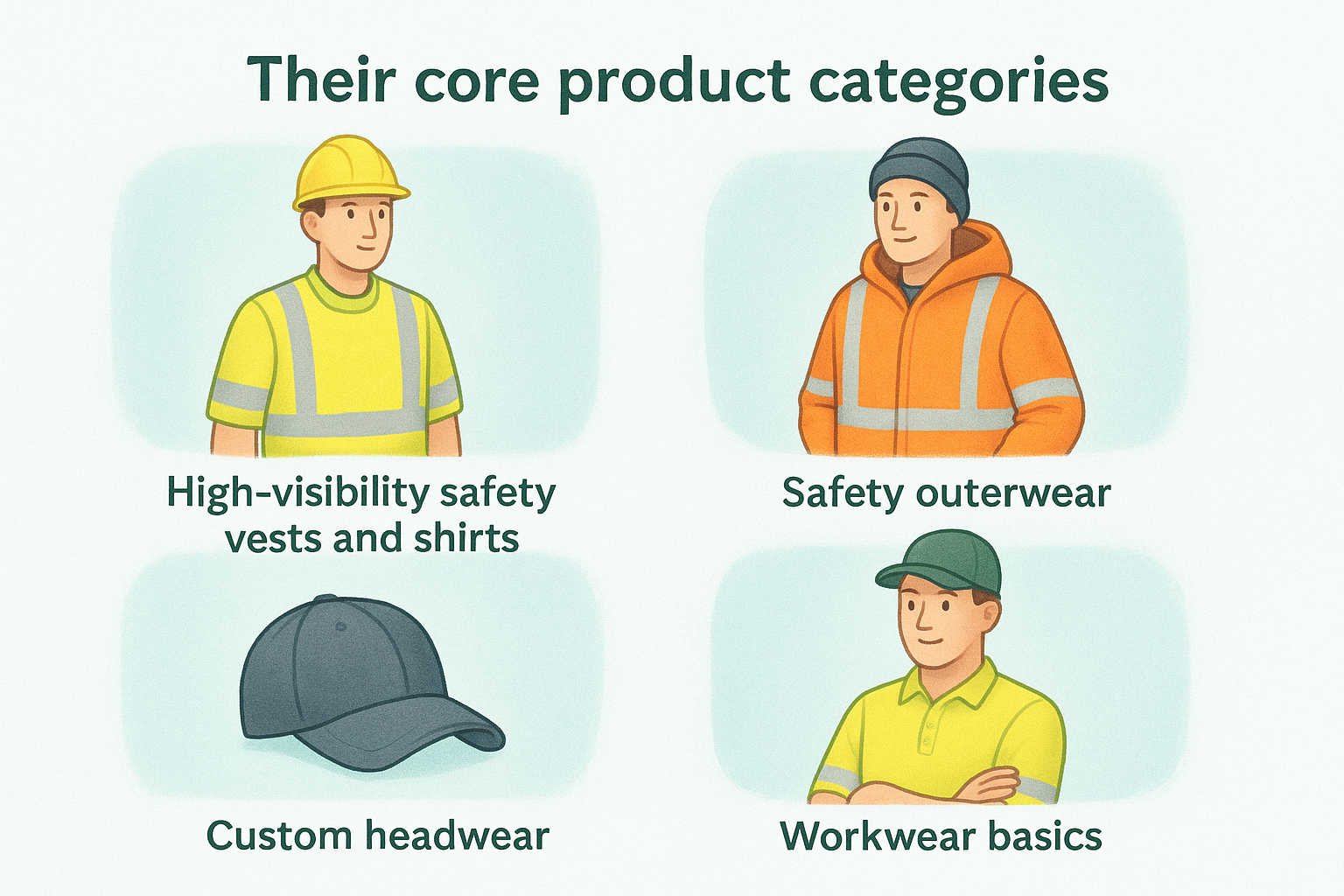
- High-visibility safety vests and shirts: Designed to meet ANSI Class 2 and Class 3 requirements, these are used by road crews, construction workers, and anyone working near vehicle traffic.
- Safety outerwear: Jackets and hoodies with reflective striping built for cold-weather job sites.
- Custom headwear: Structured and unstructured caps in a range of styles, popular for both branded giveaways and crew uniforming.
- Workwear basics: Polos, long sleeves, and t-shirts in high-visibility colorways designed for daily wear on active job sites.
Each category is built with durability and compliance in mind. The fabrics hold up to repeated washing, the reflective tape stays intact through regular use, and the cuts are designed for range of motion rather than fashion. For trade businesses that need garments their crew will actually wear every shift, that combination of function and durability separates this brand from general-purpose apparel options.
Why Max Apparel matters for safety and branding
When a garment has to perform double duty as both personal protective equipment and a branded company uniform, the brand behind the blank matters. Max Apparel sits in a specific lane where workplace safety standards and visual identity overlap, and that combination is exactly what trade businesses need.
Safety compliance is not optional
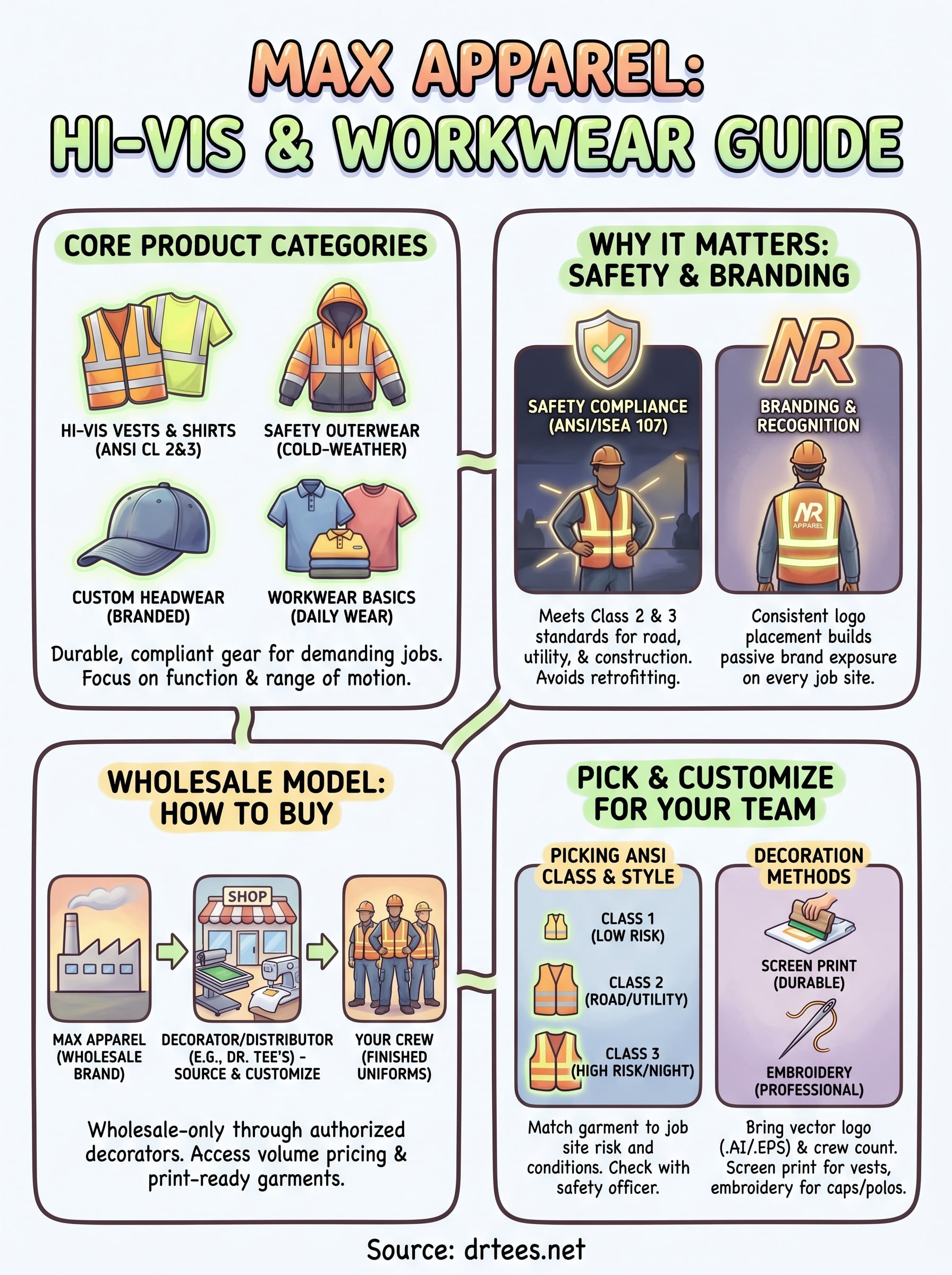
ANSI/ISEA standards for high-visibility clothing define specific requirements around fluorescent background material, reflective tape placement, and overall garment performance. If a vest or shirt doesn’t meet these requirements, workers wearing it may not be legally compliant on certain job sites. Max Apparel garments are built to meet Class 2 and Class 3 ratings, which cover the most common scenarios for road workers, utility crews, and construction professionals.
Choosing a garment that already meets ANSI compliance saves you from retrofitting tape or switching vendors after the order is placed.
Class 2 garments work for workers near traffic moving under 50 mph with some separation from the road. Class 3 gear applies to higher-risk environments where full visibility from 1,280 feet is required, including nighttime work zones and highway construction.
Branding on hi-vis gear builds recognition
Your crew wearing consistent, logo-branded safety vests does two things at once: it keeps them visible on the job and it puts your company name in front of every client, passerby, and potential customer who sees them working. For service businesses in Kansas City, that kind of passive brand exposure adds up fast across a full season of jobs. A clean logo on a bright yellow or orange garment is hard to miss, and that visibility transfers directly to your brand.
Where to buy Max Apparel and how wholesale works
Max Apparel operates as a wholesale-only brand, which means you won’t find their garments listed on a standard retail site or available for individual purchase. Their distribution model is built for volume buyers, screen printers, and promotional product companies who source blank garments and add decoration before delivering finished products to end clients.
How the wholesale model works
To access Max Apparel products, you need to go through an authorized distributor or blank apparel decorator. These are businesses with established wholesale accounts that let them purchase garments at volume pricing and pass savings along to their clients. The model exists because hi-vis and workwear garments are almost always customized before they’re worn, so selling direct to individual buyers doesn’t fit the product’s purpose.
Working through a decorator means your garments arrive print-ready and compliant, with no extra sourcing steps on your end.
Distributors typically require minimum order quantities, which vary by garment style and color. For safety vests and structured caps, those minimums are usually manageable for small crews.
Finding a decorator who carries Max Apparel
Your best path to these garments is a local screen printing or embroidery shop that already has wholesale accounts with major blank apparel suppliers. When you work with a shop like this, they handle sourcing, printing, and quality control under one roof. You bring your logo or brand artwork, and they handle the rest.
For Kansas City businesses, that means you can get ANSI-compliant hi-vis gear with your logo applied quickly, without managing multiple vendors or placing separate orders through unfamiliar wholesale portals.
How to pick the right hi-vis class and garments
Picking the wrong safety class can put your crew out of compliance, even if the garment looks the part. ANSI/ISEA 107 defines three performance classes for high-visibility clothing, and matching the right class to your specific work environment is the first decision you need to make before placing any order.
Understanding the three ANSI classes
Class 1 covers the lowest-risk environments, such as parking attendants or warehouse workers where vehicle speeds are low and workers have good separation from traffic. Class 2 steps up the requirements for workers near roads with faster-moving traffic, covering most construction, landscaping, and utility situations. Class 3 applies to the highest-risk conditions, including highway work zones and nighttime operations where maximum visibility from every angle is required.
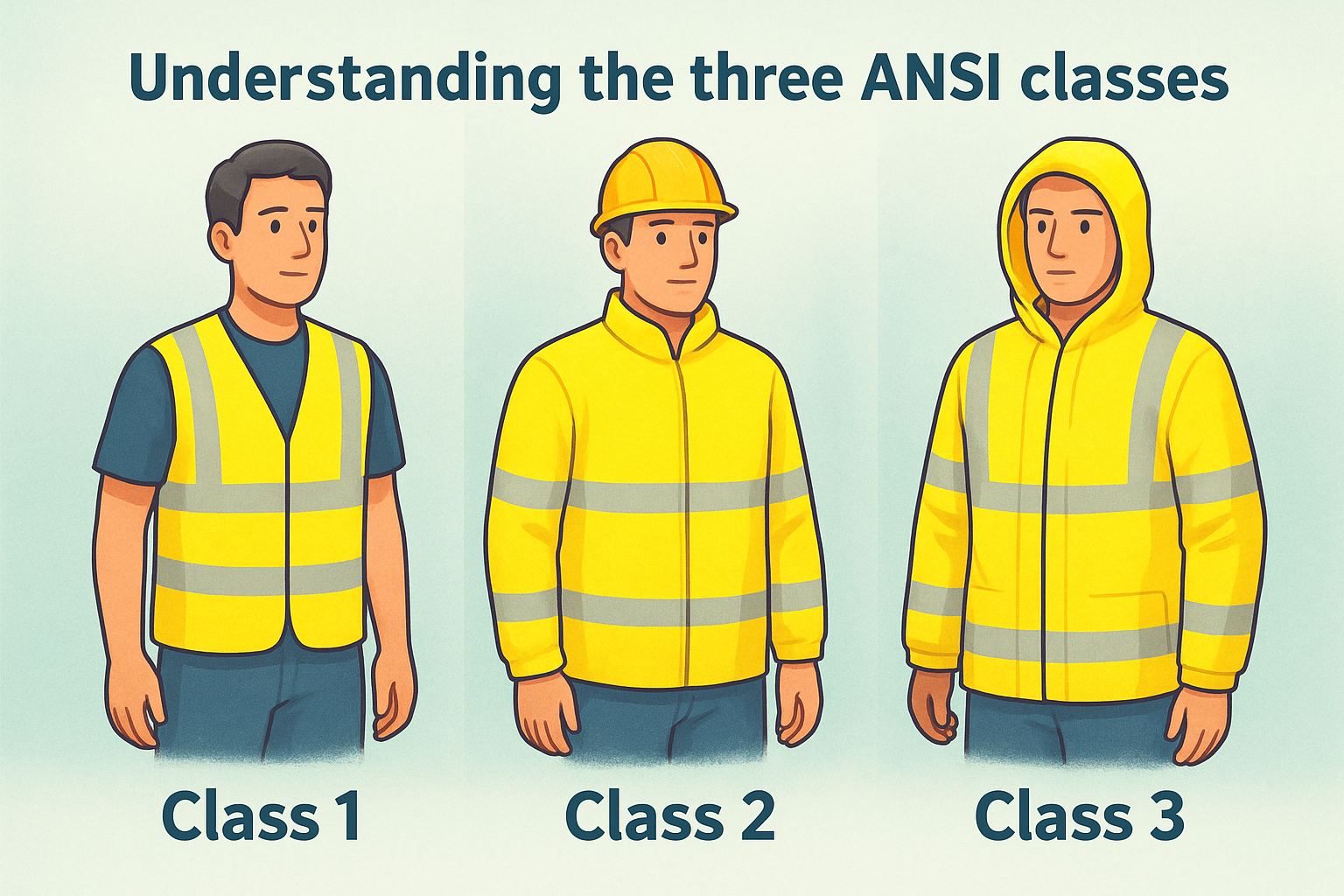
If you are unsure which class applies to your crew’s environment, check with your job site’s safety officer or the project’s general contractor before ordering.
Choosing the right garment style for the work
Once you know your required class, you need to match the garment style to actual job conditions. A vest works well in warm weather but offers no protection from cold or rain, so crews working year-round need safety jackets or hooded options to stay compliant across seasons. Structured caps from max apparel can round out the uniform without replacing required hi-vis pieces.
Your crew’s daily tasks also matter when selecting a cut and style. Workers who move constantly need garments with unrestricted arm movement, while those operating equipment may prioritize a closer, snag-resistant fit. Matching style to function keeps your team both safe and comfortable across a full shift.
How to customize Max Apparel for your team in KC
Adding your logo to workwear is straightforward when you work with a local shop that understands both decoration methods and garment compliance. Kansas City trade businesses have a real advantage here because they can walk in, review samples, and approve artwork before a single piece gets printed. That kind of hands-on process keeps errors out of your final order.
What decoration method works best on hi-vis garments
Screen printing is the most common method for adding logos to safety vests and hi-vis shirts because it holds up under repeated washing and stays sharp across a full season of job site use. For structured caps and polos, embroidery is often the better call since it creates a clean, professional look that works well for both field crews and customer-facing staff.
Avoid placing large graphic prints directly over reflective tape, since covering that material can affect how the garment performs in low-light conditions.
One practical rule: keep your logo placement simple and consistent across the whole order. A left-chest logo on vests and matching placement on caps creates a uniform look that reinforces your brand without overcomplicating the production process.
What to bring to your first order conversation
When you contact a local decorator about max apparel blanks, bring your logo file in a vector format such as .AI or .EPS if you have one. If your artwork only exists as a low-resolution image, a shop like Dr. Tee’s can help you rebuild it into a print-ready file before the order goes into production. Knowing your crew size and required ANSI class ahead of time also speeds up the quoting process considerably.
Next steps for your workwear order
You now have a clear picture of what max apparel offers, how the wholesale model works, and what safety classes apply to your crew’s environment. The logical next step is putting that knowledge into an actual order. Start by confirming the ANSI class your job sites require, then decide which garment styles fit your team’s daily work conditions. Having those two details ready before you contact a decorator cuts your quoting time significantly.
From there, pull together your logo file and crew count so the conversation moves straight to pricing and timelines rather than back-and-forth on basics. At Dr. Tee’s Design & Screen Printing, we work with Kansas City trade businesses on exactly this type of project, from sourcing compliant blanks to applying clean, durable logos that hold up through a full season of job site use. Get a quote and start your workwear order today.
