
Your crew needs gear that keeps them visible and safe on the job site, not just any hi-vis stuff pulled off a shelf, but Kishigo workwear built to handle real conditions. Kishigo has been manufacturing high-visibility safety apparel for decades, and their lineup of vests, jackets, and flame-resistant shirts remains a go-to for contractors, road crews, and trades professionals who can’t afford to cut corners on PPE compliance.
But picking the right piece from their catalog isn’t always straightforward. Between ANSI class ratings, fabric weights, and FR certifications, there’s a lot to sort through, especially when you’re outfitting an entire crew and need consistency across the board. That’s where this list comes in. We’ve pulled together seven of the best Kishigo options worth considering for team use.
At Dr. Tee’s Design & Screen Printing, we work with Kansas City trade companies and service businesses daily, screen printing and embroidering logos onto the exact kind of workwear covered here. So we know these garments inside and out, how they hold up, how they print, and which ones crews actually want to wear. Below, you’ll find our picks broken down by type, along with what makes each one worth your attention.
1. Custom-branded Kishigo workwear from Dr. Tee’s
Dr. Tee’s adds company logos and employee names to Kishigo workwear for Kansas City trade crews, contractors, and service businesses. Whether you need ten vests for a small plumbing operation or 500 pieces for a large construction company, the process is straightforward and the results are built to hold up on the job.
What you can customize on Kishigo gear
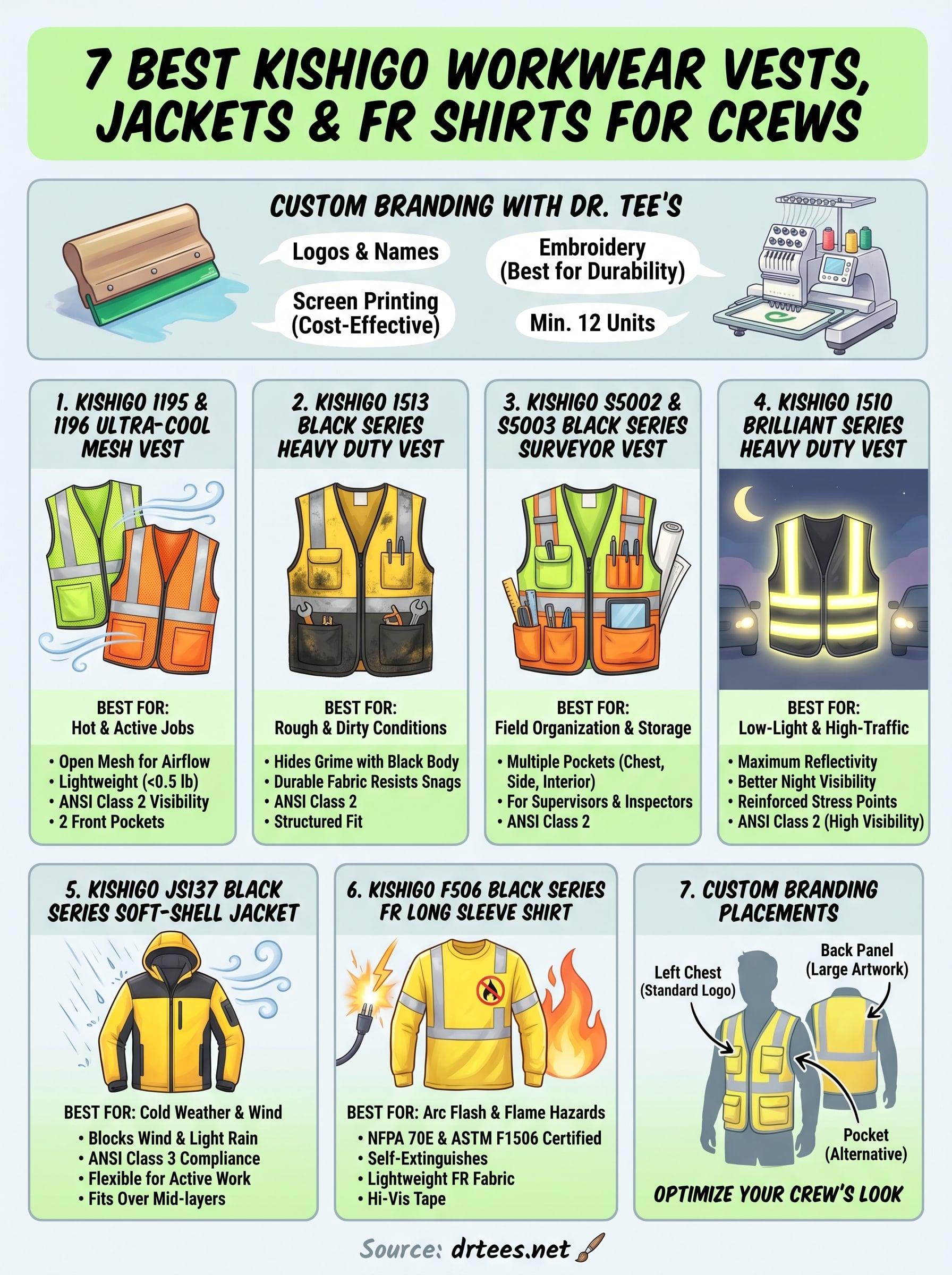
Screen printing and embroidery are both available for Kishigo hi-vis vests, jackets, and shirts. Common placements include the left chest, back panel, and front pockets. You can add a company name, logo, tagline, or individual employee names depending on how your crew needs to be identified on site.
Best Kishigo items to brand for crews
The most popular choices at Dr. Tee’s are safety vests and soft-shell jackets, which give you large, flat decoration areas that hold branding well. FR shirts work best with embroidery on the chest. Black Series and Brilliant Series vests are consistent sellers for crews that need a polished, consistent look.
Printing vs embroidery for safety apparel
Embroidery holds up better on high-wear garments and survives repeated industrial washing without cracking or fading. Screen printing costs less per unit on larger runs and works well on the flat back panels of vests. For most hi-vis vests, left-chest embroidery remains the standard choice.
Embroidery is generally the smarter pick for safety apparel because it survives harsh wash cycles without losing definition.
What you need to provide to start an order
Bring a vector file of your logo in AI, EPS, or PDF format if you have one. If you don’t have print-ready artwork, Dr. Tee’s graphic design team can build it for you. You’ll also need to confirm garment style, color, and sizing before production begins.
Minimum quantities, sizing, and fit planning
Dr. Tee’s requires a minimum of 12 units per order, which covers most small trade crews without forcing you to over-order. Kishigo offers sizing from S through 5XL across most styles, so you can fit every person on a large team. Confirm sizes in advance to avoid production delays.
Typical pricing factors for custom Kishigo orders
Garment style, decoration method, and total quantity all affect your final per-unit cost. Larger orders bring the cost per piece down significantly. Embroidery pricing is based on stitch count, while screen printing varies by the number of ink colors in your design.
2. Kishigo 1195 and 1196 Ultra-Cool mesh vest
The 1195 and 1196 are among the most widely used Kishigo workwear vests for crews working outdoors in warmer conditions. The 1195 comes in lime and the 1196 in orange, both sitting at ANSI Class 2.
Why this vest works for hot, active jobs
Open mesh fabric lets air move through constantly, which keeps your crew cooler during physical work. At under half a pound, the vest adds almost no burden, and workers are far more likely to keep it on throughout a full shift.
Visibility, tape layout, and compliance basics
Both vests meet ANSI/ISEA 107 Class 2 standards with horizontal and vertical reflective tape stripes for 360-degree coverage. This rating satisfies most road, utilities, and construction site requirements without needing an upgrade.
Confirm Class 2 is sufficient with your safety officer before ordering if your crew works near high-speed traffic lanes.
Pocket layout and everyday usability
The vest provides two front pockets for phones, pens, and small items. The simple layout avoids bulk, which is exactly what active crews need when moving constantly on site.
Fit, sizing, and layering notes
Sizing runs S through 5XL, and the mesh construction makes layering over a long sleeve comfortable without trapping heat. The unisex cut works across most crew compositions without fit issues.
Best customization placements for logos
The left chest is the standard decoration spot for a company logo, while the back panel gives you more real estate for larger artwork or company names. Both placements hold up well with embroidery.
Typical price range and what affects it
These vests typically run $10 to $18 per unit before decoration. Your final cost per piece shifts based on quantity ordered, decoration method, and stitch count for embroidered artwork.
3. Kishigo 1513 Black Series heavy duty vest
The 1513 Black Series is a heavy duty hi-vis vest built for job sites where a lightweight mesh option simply won’t cut it. This piece of Kishigo workwear gives crews a more substantial construction with a black contrast body that hides grime while keeping the reflective tape visible.
What makes the Black Series different on-site
The black body panels set this vest apart from standard all-yellow or all-orange options. Most hi-vis vests show every scuff and stain after a week of real work, but the dark contrast fabric on the 1513 keeps it looking presentable much longer between washes.
The black body also helps crews look more professional in client-facing environments like commercial construction sites.
When crews should pick heavy duty over mesh
If your crew works in rougher conditions, including demolition, heavy equipment operation, or environments with sharp edges and debris, the heavier fabric resists snags and tears better than open mesh. Cooler months are another reason to choose this vest, since the solid fabric adds a layer of warmth over a base layer.
Pocket layout for tools, radios, and tablets
The 1513 includes multiple front pockets sized to handle phones, radios, and basic hand tools without bulk. A mic tab keeps communication gear accessible throughout a shift.
Visibility in dirty work environments
ANSI Class 2 compliance means the reflective tape layout meets standard site requirements even when the black panels get dusty or muddy.
Fit notes and who it suits best
Sizing runs S through 5XL, which covers most large crews. The structured fit works well for workers who need a vest that stays in place during active movement.
Typical price range and what affects it
Expect to pay roughly $20 to $30 per unit before decoration. Quantity and decoration method are the two biggest cost drivers on bulk orders.
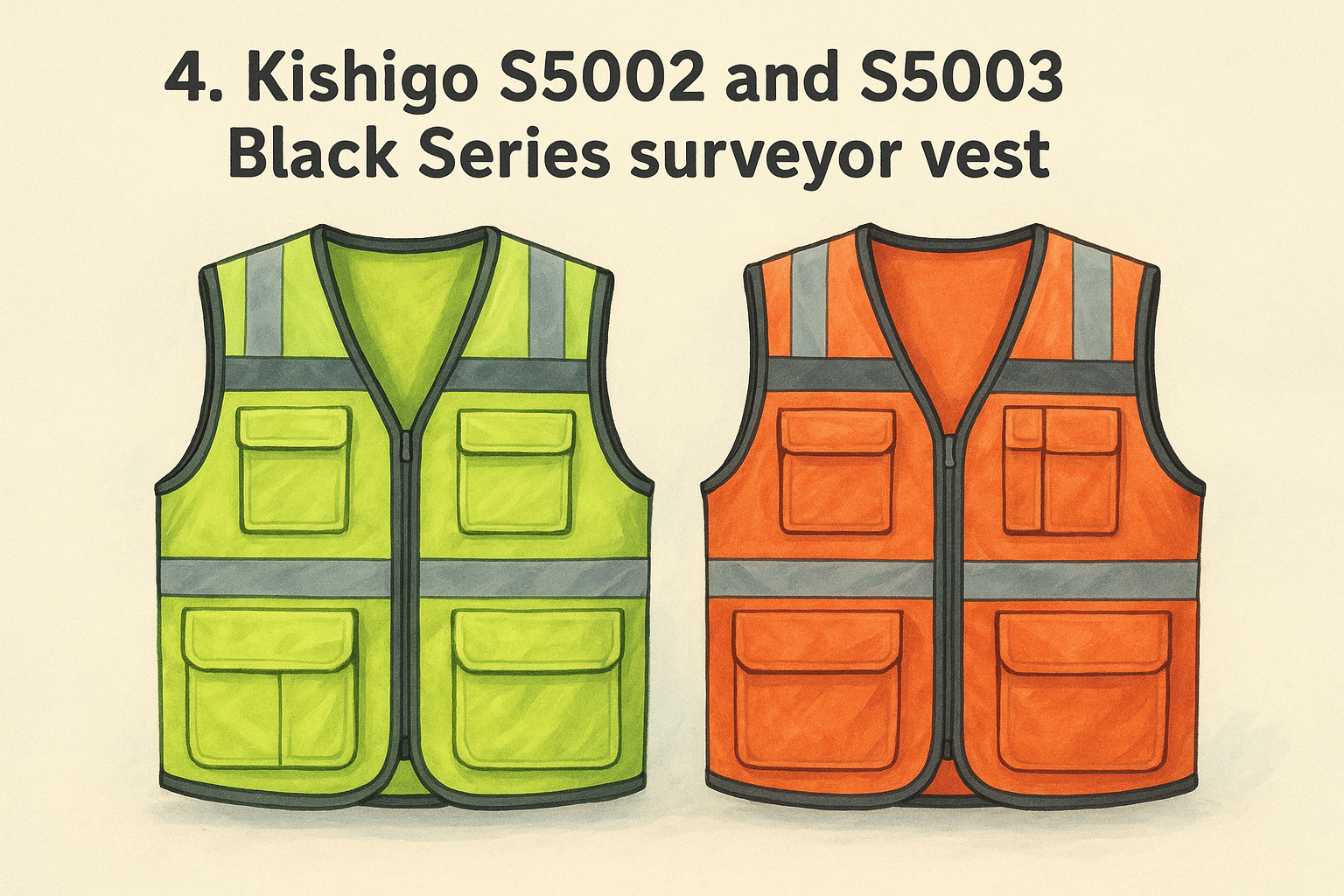
4. Kishigo S5002 and S5003 Black Series surveyor vest
The S5002 and S5003 take everything useful about a standard safety vest and add serious storage capacity on top. This Kishigo workwear option is built for field workers who carry more than just a phone, including those who need to manage paperwork, tools, and devices throughout a shift.
What "surveyor" vests do better than basics
Surveyor-style vests have far more pockets than a standard Class 2 vest, which makes them the right call for crew members who need gear organized and accessible at all times. The S5002 comes in lime green while the S5003 comes in orange, both meeting ANSI Class 2 requirements.
Storage and organization for field crews
These vests include multiple chest pockets, side pockets, and interior compartments designed to hold phones, tablets, pens, measuring tools, and notepads. Your crew spends less time digging through bags when everything has a dedicated pocket.
Field supervisors and inspectors tend to get the most value from surveyor vests because they carry more documentation on the job.
Color options and job role visibility
Lime and orange options let you differentiate crew roles visually at a glance, which helps on busy sites with multiple contractors working in the same space.
Fit, mobility, and comfort notes
Sizing runs S through 5XL, and the vest is cut to allow full arm movement even when all pockets are loaded.
Logo decoration considerations with many pockets
Left chest placement is the cleanest spot for a company logo since pocket flaps on other areas can interfere with consistent embroidery results.
Typical price range and what affects it
These vests typically cost $25 to $40 per unit before decoration, with quantity and embroidery stitch count being the primary cost factors.
5. Kishigo 1510 Brilliant Series heavy duty vest
The 1510 Brilliant Series steps up the reflectivity beyond a standard Class 2 vest, making it the right pick for crews who regularly work in low-light or high-traffic conditions where maximum visibility is non-negotiable.
When extra reflectivity makes a real difference
Crews working near active roadways, highways, or night construction zones need more than minimum tape coverage. The 1510 adds extra reflective striping that catches headlights and equipment lights at greater distances than a basic Class 2 vest provides.
The added tape coverage can be the difference between a driver seeing your crew with enough reaction time and not seeing them at all.
Better visibility at night and in bad weather
Rain, dust, and low ambient light all reduce how visible a standard vest makes your crew. The Brilliant Series tape and fabric combination maintains contrast in these conditions, which is exactly when visibility matters most on your job site.
Pocket and reinforcement features to look for
The 1510 includes front pockets for basic gear storage along with reinforced stress points that hold up under daily movement and loading throughout a full shift.
Who this vest fits best by job type
Road construction crews, utility workers, and flaggers working near traffic get the most direct benefit from this vest. Anyone in environments where a driver or equipment operator needs maximum warning time should make this their go-to Kishigo workwear choice.
Logo placement tips to avoid reflective tape
Left chest embroidery clears the tape layout cleanly on most configurations. Avoid placing large artwork over the horizontal tape band on the back, as the uneven surface affects embroidery quality.
Typical price range and what affects it
Expect to pay roughly $25 to $35 per unit before decoration. Order quantity and stitch count on your logo are the two primary cost variables for bulk orders.
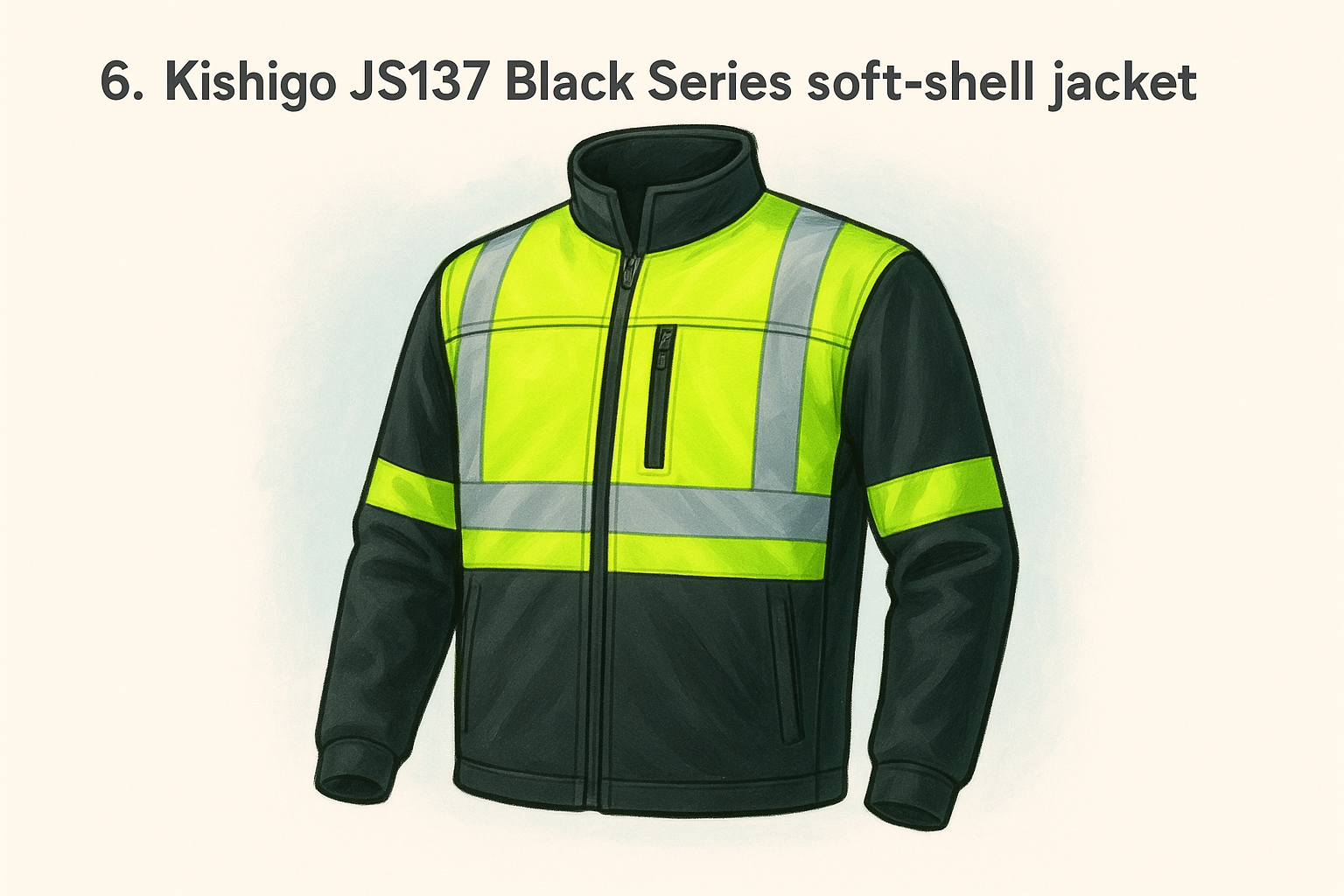
6. Kishigo JS137 Black Series soft-shell jacket
The JS137 gives your crew a layer built for colder shifts without sacrificing the visibility your job site demands. This Kishigo workwear jacket combines Black Series contrast styling with hi-vis panels and reflective tape in one piece.
When a soft-shell beats a hoodie or windbreaker
A soft-shell jacket blocks wind and light rain while staying flexible enough for active, physical work. Hoodies and windbreakers lack the ANSI-compliant visibility your crew needs near traffic or heavy equipment, making the JS137 a smarter choice for cold-weather site work.
Weather protection and breathability expectations
The soft-shell fabric handles wind and drizzle without trapping body heat the way a waterproof shell would. Your crew stays dry and comfortable during moderate weather, though heavy rain will still require an additional outer layer.
Visibility and reflective details to check
ANSI Class 3 compliance on the JS137 provides reflective tape coverage across the chest, shoulders, and back. This rating covers most road and traffic-adjacent environments where a vest alone falls short during cold conditions.
Class 3 is required for many highway and flagging roles, so confirm your site requirements before placing an order.
Fit and layering notes for colder shifts
The JS137 fits over a mid-layer comfortably without restricting arm movement. Sizing runs S through 5XL, giving you flexibility when outfitting a crew with varying build types across a full team.
Best ways to add names and company logos
Left chest embroidery is the cleanest placement on the JS137. The solid black front panels provide a stable, flat surface that holds logo detail well through repeated industrial washing.
Typical price range and what affects it
These jackets typically run $60 to $90 per unit before decoration. Order quantity and embroidery stitch count are the main cost variables when outfitting a full crew.
7. Kishigo F506 Black Series FR long sleeve shirt
The F506 fills a specific gap in your crew’s gear list. When your team works near arc flash hazards or open flames, a standard hi-vis shirt won’t meet the safety requirements your site demands, and this shirt closes that gap directly.
What FR means and when you need it
FR stands for flame-resistant, which means the fabric self-extinguishes rather than continuing to burn after a heat source is removed. Your crew needs FR-rated apparel on sites with electrical arc risk, welding operations, or petrochemical exposure.
Compliance labels and what to verify before buying
Check the NFPA 70E or ASTM F1506 certification label before placing any order. Confirm the HRC rating matches your specific job site requirements so your crew stays compliant under whatever safety program governs the work.
Comfort, weight, and heat management on the job
The F506 uses a lightweight FR fabric blend that manages heat better than heavier FR options. Your crew stays cooler and more compliant throughout a full shift because the shirt doesn’t become uncomfortable enough to take off.
FR shirts that feel too hot get removed, which defeats the purpose entirely.
Visibility and tape layout considerations
Hi-vis tape runs along the chest and shoulders on this Kishigo workwear shirt, keeping your crew visible while satisfying FR site requirements at the same time.
Care and wash rules that protect FR performance
Never bleach or use fabric softener on FR garments. Both products degrade the flame-resistant treatment, reducing protection over time and potentially voiding compliance ratings.
Typical price range and what affects it
These shirts typically run $45 to $70 per unit before decoration. Order quantity and embroidery stitch count are the two main cost drivers on bulk crew orders.
Wrap-up and next steps
Every piece of Kishigo workwear on this list solves a different problem, from heat management on summer job sites to FR compliance near electrical hazards. Your best choice depends on the conditions your crew faces, how much storage they need, and whether cold weather or low-light exposure plays a consistent role in their daily work.
Once you know which Kishigo style fits your team, the next step is getting your company logo or employee names applied before your crew hits the job site. At Dr. Tee’s, we handle screen printing and embroidery on safety apparel for Kansas City trade businesses of all sizes, with minimums starting at just 12 units. You can get a quote and start your order directly on our site, or reach out if you need help choosing between styles before committing to a full crew run.
