
Getting jersey numbering right matters more than most people realize. A number that’s too small won’t be readable from the stands. A number placed incorrectly can get your team flagged during inspection. And a number printed on the wrong type of fabric? That’s a cracked, peeling mess after a few washes.
Whether you’re ordering jerseys for a school team, a recreational league, or a corporate softball squad, understanding the rules and specs behind jersey numbers saves you time, money, and headaches. Each sport has its own requirements for number size, placement, and font style, and those requirements vary between youth and adult levels. Knowing what’s expected before you place an order means fewer surprises when the uniforms show up.
At Dr. Tee’s Design & Screen Printing, we’ve spent over 20 years screen printing custom jerseys and team apparel right here in Kansas City. We’ve handled numbering for every sport you can think of, from high school football to church league basketball. This guide breaks down the official rules, standard sizing specs, placement guidelines, and practical tips so you can make informed decisions about your next jersey order.
Why jersey numbering matters
Jersey numbers aren’t just a cosmetic detail. They serve a functional role on the field, court, or diamond, and getting them wrong creates real problems for your team. From official game eligibility to basic readability from the bleachers, the specifics of jersey numbering affect nearly every aspect of how your uniforms perform in a real game environment. Understanding why these details matter helps you make smarter decisions before you ever place an order.
Visibility and performance on the field
When a referee needs to spot a number in a split second, size and contrast are critical. A number printed too small, in a color that blends into the jersey fabric, or placed in an awkward position makes that job significantly harder. For officials, scorekeepers, and fans alike, readable numbers are the baseline expectation for any organized game. Poor visibility doesn’t just frustrate people in the stands; it can directly affect calls made during live play, which puts your players at a disadvantage they shouldn’t have to deal with.
Numbers that are difficult to read slow down official decisions and increase the chance of incorrect calls being made against your players.
Your choice of print method also plays a significant role in long-term visibility. Screen-printed numbers hold up well through repeated washing when applied correctly to the right fabric, while iron-on transfers tend to crack and peel after a full season of heavy use. If your team plays multiple times a week, investing in properly applied numbering from the start saves you from ordering replacements mid-season and keeps your uniforms looking sharp throughout the year.
Compliance and team eligibility
Most organized leagues and school athletic programs require jerseys to meet specific numbering standards before a team is cleared to compete. Those standards cover number height, placement on the garment, and sometimes even font style or color contrast requirements. If your jerseys don’t pass an official inspection, your team could face delays, penalties, or disqualification before the opening whistle even blows.
Youth leagues often follow their own local guidelines, while high school and collegiate programs typically align with the rules set by their governing bodies. Even recreational adult leagues usually enforce baseline requirements around number placement and sizing. Checking the specific requirements for your league before placing an order prevents expensive reprints and eliminates stressful last-minute fixes on game day.
Jersey number rules by sport and league
Every sport has its own standards, and jersey numbering rules vary more than most people expect. Before you finalize your order, check the specific guidelines for your league and level of play. What works for a youth recreational league may not satisfy the requirements of a high school athletic association.
Football
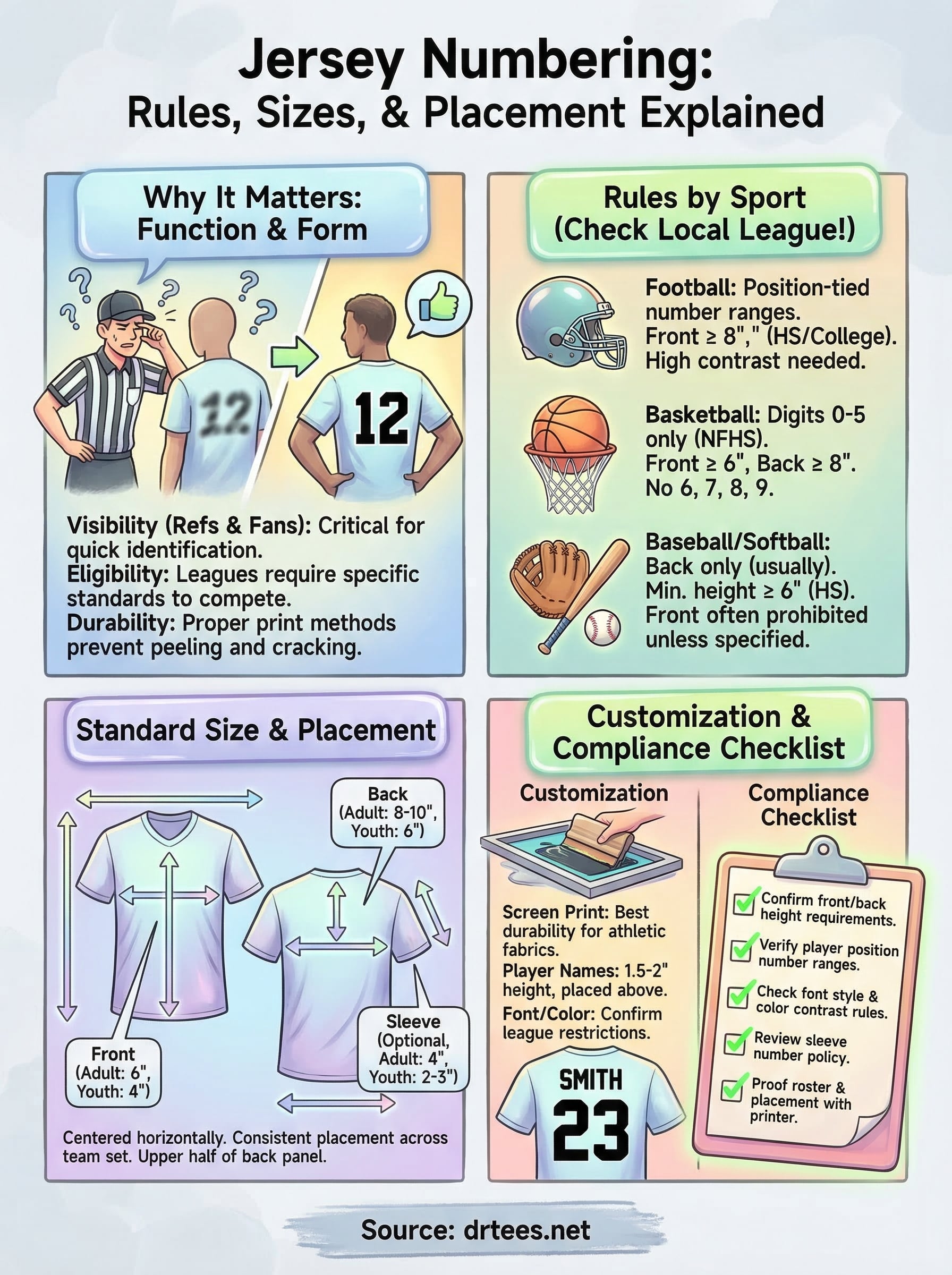
In football, number ranges are tied directly to player positions, which makes compliance non-negotiable at the high school and collegiate levels. The National Federation of State High School Associations (NFHS) requires front numbers to be at least 8 inches tall and back numbers at least 10 inches tall. Numbers must also contrast clearly with the jersey color so officials can identify players without hesitation during fast-moving plays.
Assigning a player a number outside their position’s approved range can result in a penalty or the player being ruled ineligible for that down.
Basketball
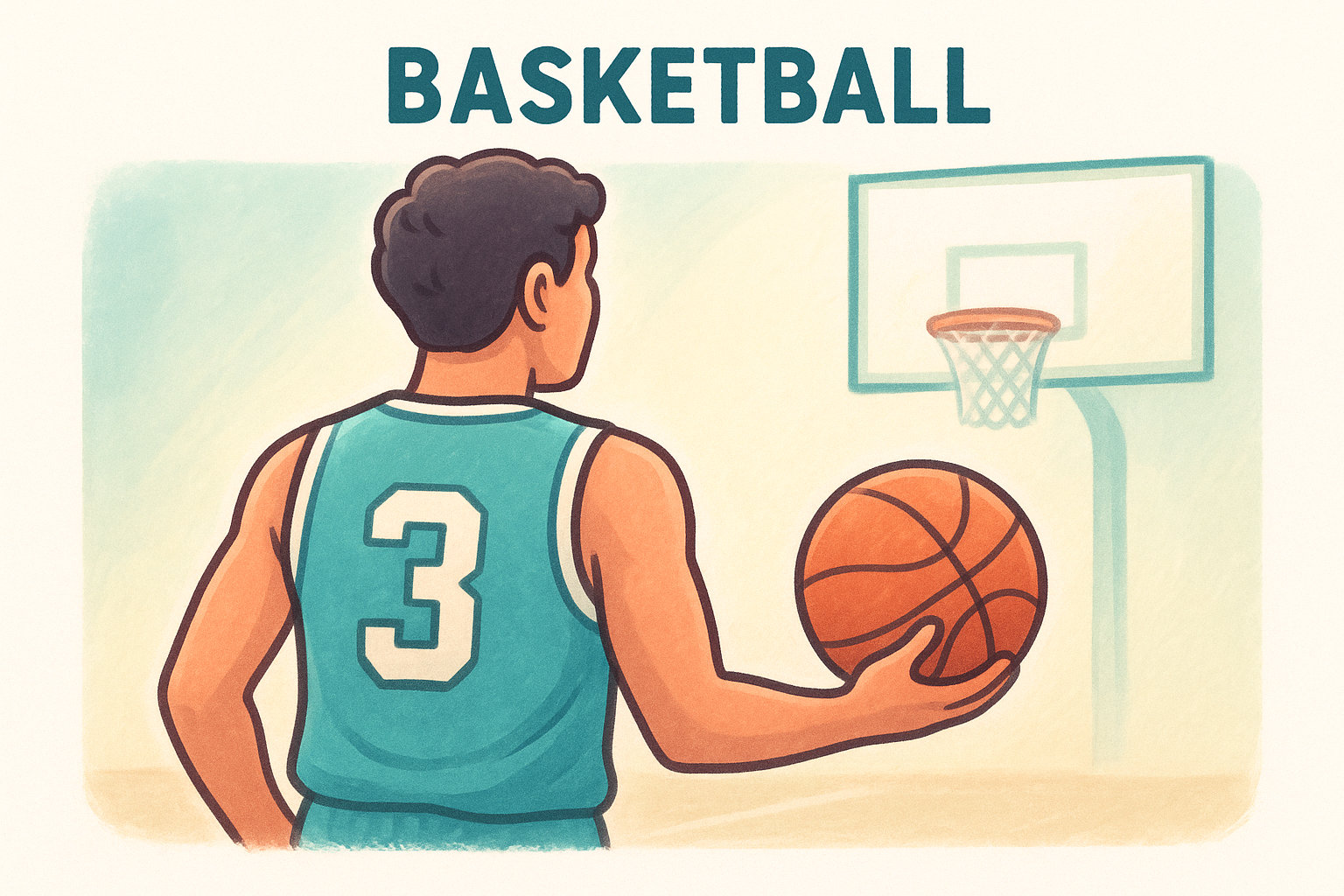
Basketball has some of the strictest jersey numbering rules of any sport. The NFHS limits legal numbers to combinations using only the digits 0 through 5, because referees signal fouls using their fingers. Numbers like 6, 7, 8, or 9 are not permitted at the high school level. Front numbers must be at least 6 inches tall, and back numbers must be at least 8 inches tall.
Baseball and Softball
Baseball and softball rules focus more on placement and readability than on specific number ranges. Numbers are typically required on the back of the jersey only, with a minimum height of 6 inches at the high school level per NFHS guidelines. Many leagues also prohibit numbers on the front of the jersey unless your uniform design specifically calls for it.
Standard number sizes and placement
Understanding number sizing and placement gives you a concrete starting point when designing your uniforms, even before you know which sport’s rulebook applies. Most sports share common measurement conventions, and knowing these defaults helps you communicate clearly with your printer and avoid costly revisions.
Number height by garment location
Number height requirements differ depending on where the number appears on the jersey. Front numbers are almost always smaller than back numbers, since scorekeepers and officials primarily use the back number for identification during active play. The table below shows the most widely accepted standard heights across sports.
| Location | Youth | High School/Adult |
|---|---|---|
| Front | 4 inches | 6 inches |
| Back | 6 inches | 8-10 inches |
| Sleeve (optional) | 2-3 inches | 4 inches |
Sleeve numbers are optional in most sports, but when included, they typically need to match the front number.
Placement guidelines for front and back
For the back of the jersey, the number is centered horizontally and placed in the upper half of the back panel, typically starting 2 to 4 inches below the collar. Centering keeps the number visible whether a player is standing upright or crouched in an athletic position. Consistent placement across all jerseys in a set makes your uniforms look professional and prevents numbers from drifting toward the shoulder on some shirts and toward the waist on others.
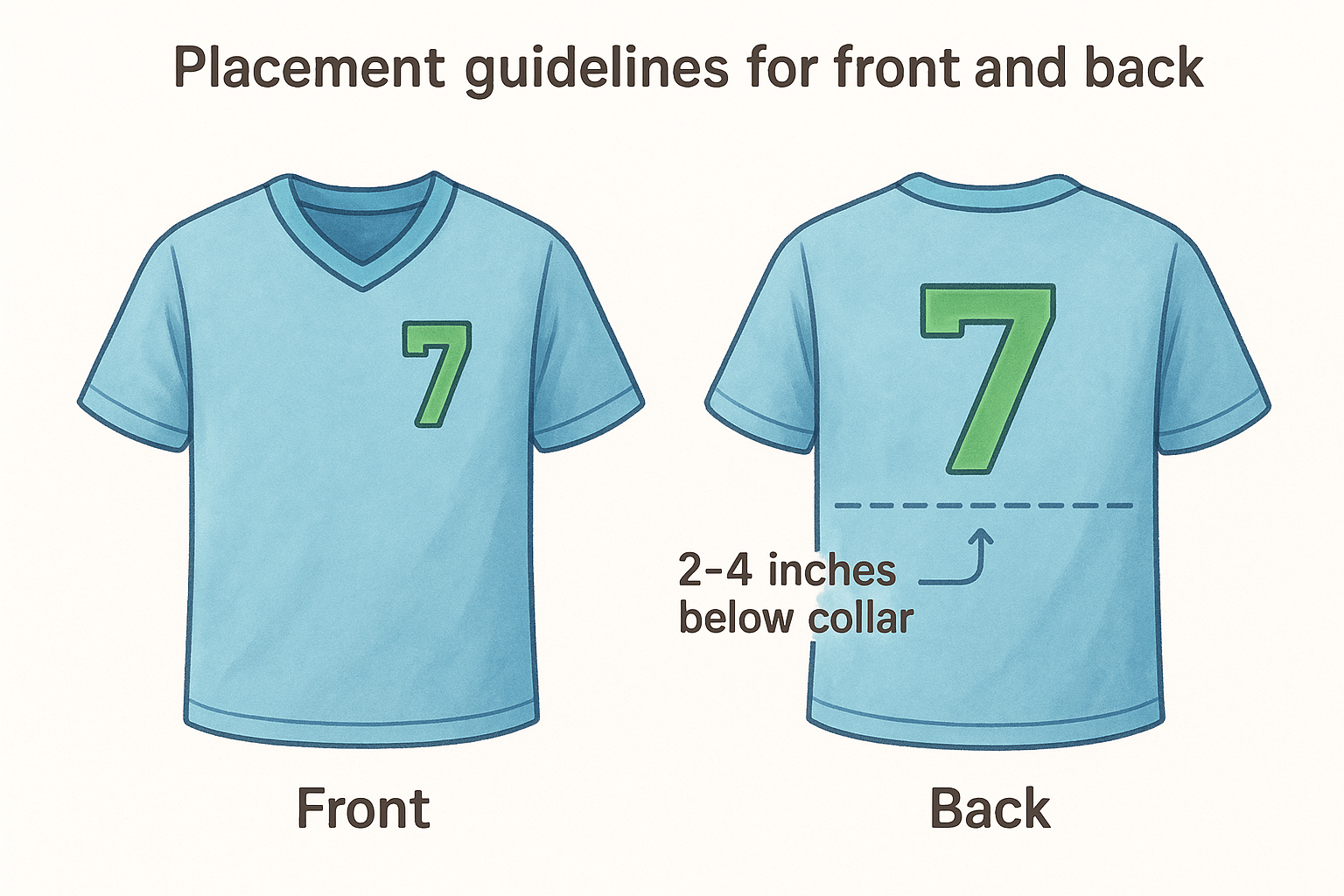
Front jersey numbering typically sits on the left chest for some sports, but many leagues center it across the full front panel. Always confirm your league’s preferred front placement before printing, since reprinting an entire set over a placement error is an expense you can easily avoid.
How to customize numbers and names on jerseys
Customizing jerseys goes beyond picking a font and calling it a day. Print method, material type, and color selection all affect how your finished numbers look and how long they last through a full season of washing and wear. Making smart choices at this stage saves you from dealing with cracked ink or peeling transfers three games into the schedule.
Choosing your print method
Screen printing is the most durable option for jersey numbering, especially when you’re ordering sets of 12 or more. The ink bonds directly to the fabric and holds up through repeated high-heat washing. Heat-applied transfers work for small orders, but they tend to separate from stretch fabrics over time, which is a problem for athletic jerseys that see consistent movement and washing. If your league requires a specific number finish, check those requirements before selecting a method.
Screen printing on performance polyester requires a special ink formula to prevent dye migration, so always confirm your printer has experience with athletic fabrics.
Adding player names and lettering
Player names on the back of a jersey follow similar sizing conventions to numbers, typically running 1.5 to 2 inches in letter height directly above the number. You have options ranging from block lettering to arched nameplate styles, depending on the sport and your team’s uniform design. Some leagues restrict nameplate fonts or require all lettering to match in style across the entire roster. Confirm those details with your league coordinator before you finalize the artwork, and provide your printer with a complete roster list early so there’s enough time to proof every name before production begins.
Common mistakes and a quick compliance checklist
Even experienced team managers run into avoidable problems with jersey numbering. The most common issues come down to skipping the verification step before placing an order, and they tend to surface at the worst possible time, right before a game. Catching these errors early keeps your team competition-ready without scrambling for last-minute fixes.
Most frequent numbering errors
The single biggest mistake teams make is ordering jerseys based on last year’s rules without confirming whether guidelines have changed. Leagues update their standards periodically, and what passed inspection two seasons ago may not pass this year. A close second is ordering the wrong number height for the garment location, particularly undersizing back numbers on youth jerseys where the required minimums still apply.
Printing numbers on performance polyester without confirming your printer uses the correct ink formula leads to cracking and color bleed within just a few washes.
Font choice is another area where teams get caught off guard. Some leagues restrict number fonts to a standard block style and reject decorative or outlined designs that do not meet contrast requirements.
Pre-order compliance checklist
Run through this checklist before you send your final order to the printer.
- Confirm front and back number height requirements for your specific league and age division
- Verify that your assigned player numbers fall within the allowed range for each position
- Check whether your league restricts font styles or requires a minimum color contrast ratio
- Confirm whether sleeve numbers are required, optional, or prohibited
- Review placement measurements with your printer before production starts
Catching one item on this list before printing is worth more than fixing the entire set after delivery.
Next steps for a clean, compliant jersey set
You now have everything you need to approach jersey numbering with confidence. You know the rules by sport, the standard size and placement specs, the right print methods for athletic fabrics, and the most common mistakes teams make before placing an order. That knowledge puts you ahead of most team managers who skip the research and deal with the consequences on game day.
Your next move is to confirm your league’s current requirements, build your roster list, and get your artwork ready before you reach out to a printer. Starting that process early gives you time to catch errors, proof every name and number, and make adjustments without rushing. Dr. Tee’s Design & Screen Printing has handled custom jersey orders for Kansas City teams across every sport and budget level for over 20 years. Start your jersey order today and get a set your team can wear with confidence.
