
Ordering custom t-shirts online sounds simple enough, until you realize you’re not 100% sure what size to pick. Knowing how to measure for a t-shirt correctly is the difference between a shirt that fits great and one that ends up in the back of a drawer. Whether you’re ordering for yourself, outfitting a crew of 50 employees, or building a size chart for your team, accurate measurements save time, money, and returns.
At Dr. Tee’s Design & Screen Printing, we’ve spent over 20 years helping Kansas City businesses and organizations get the right custom apparel. And after printing thousands of orders, we can tell you that sizing questions come up on nearly every job. That’s exactly why we put this guide together, so you can measure with confidence before you place your next order.
Below, we’ll walk you through two straightforward methods: measuring your body directly and measuring a t-shirt that already fits you well. Both take about five minutes, and either one will give you the info you need to pick the right size across brands like Bella Canvas, Next Level, Gildan, and more. Grab a flexible tape measure, and let’s get started.
What you need and how t-shirt sizing works
Before you start measuring, get two things ready: a soft, flexible tape measure (the kind used for sewing or body measurements) and a flat, hard surface if you plan to measure an existing shirt. A standard metal tape measure from a toolbox won’t work here because it can’t wrap around your body accurately. If you don’t own a flexible tape measure, most dollar stores carry them, and a piece of string plus a ruler works in a pinch.
What to grab before you start
You only need a few items to get accurate measurements. Having them ready before you start saves time and prevents mistakes mid-measurement.
- Flexible tape measure (cloth or vinyl, at least 60 inches long)
- A pen or your phone to record your numbers as you go
- A flat surface like a table or hardwood floor if you’re measuring a shirt
- A friend or partner if you’re measuring your own chest or back width
Trying to hold the tape measure in place and read it at the same time is how most people end up with inaccurate numbers, so a second set of hands makes a real difference.
How t-shirt sizing actually works
Most brands size t-shirts using two key measurements: chest width and body length. Some brands also factor in sleeve length and shoulder width, but chest and length are the two numbers that matter most in everyday sizing decisions. Knowing this upfront means you know exactly which measurements to focus on when you learn how to measure for a t shirt.
Brand sizing charts vary more than most people expect. A medium from Gildan runs noticeably wider than a medium from Bella Canvas, which tends to have a slimmer, more fitted cut. That’s why taking your own measurements, rather than relying on a general size label, is always the smarter move.
Measure your body for a t-shirt
Measuring your body directly gives you the most accurate, personalized fit data available. Stand in a relaxed posture and wear a thin layer or nothing on top so the tape sits against your actual body, not over bulky fabric.
Chest measurement
Wrap the tape around the fullest part of your chest, just under your armpits and across your shoulder blades. Keep the tape parallel to the floor and snug without pulling it tight enough to compress your skin. Follow these steps exactly:
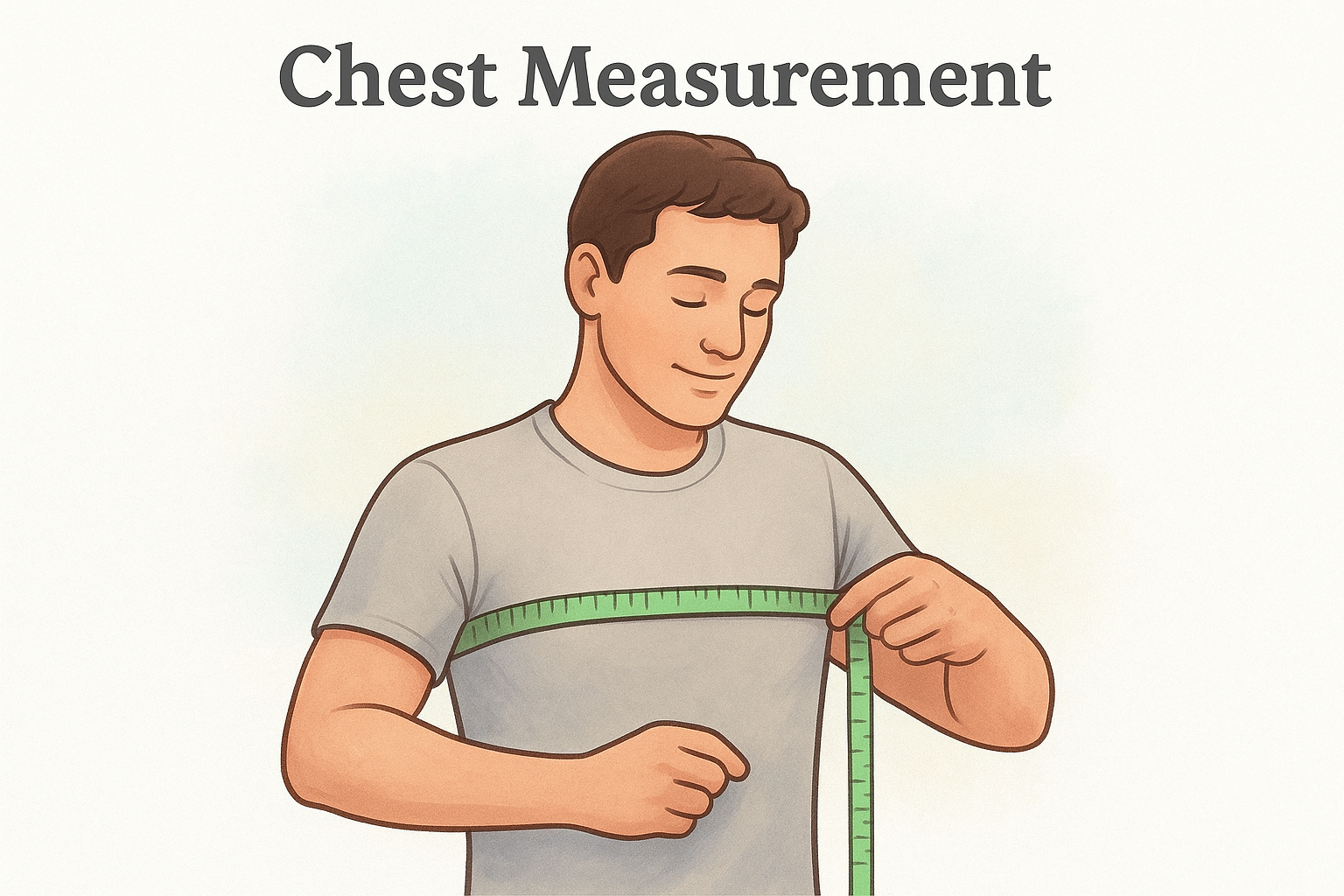
- Lift your arms slightly to slide the tape into position.
- Lower your arms naturally to your sides.
- Breathe normally, then read the number where the tape overlaps.
Add 1 to 2 inches to your chest number if you prefer a roomier fit, or use the exact measurement if you like a fitted look.
Body length measurement
To complete how to measure for a t shirt, place the tape at the top of your shoulder where the seam sits and run it straight down to your preferred hem point, usually your hip or mid-thigh. Record both numbers before moving on to any size chart.
Your two final figures will be a chest circumference and a body length, both in inches. Most brand size charts list these exact figures, so you can match directly without guessing.
Measure a t-shirt that already fits you
If you already own a shirt that fits the way you want your new one to, measuring that garment directly is the fastest and most reliable method. Lay the shirt flat on a hard surface like a table, smooth out any wrinkles, and make sure the seams are properly aligned before you start. This approach works especially well when you’re building a size chart for a group order and need a consistent reference for how to measure for a t shirt across different body types.
Chest width
Lay the shirt face-up and flat, then run the tape measure straight across the chest from one armhole seam to the other, just below where the sleeves attach. Double that number to get the full chest circumference, since you’re only measuring half the shirt.
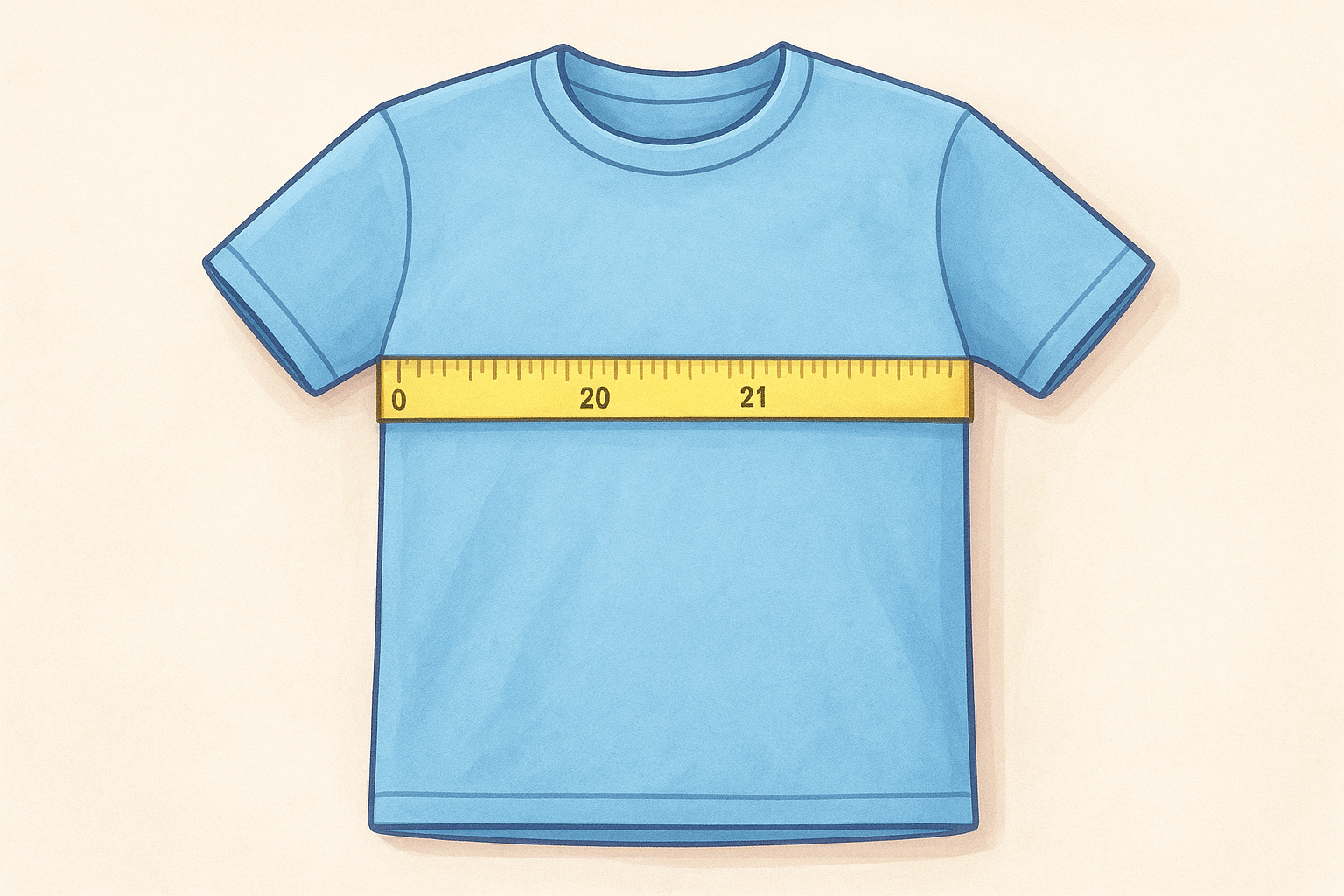
For example, if your tape reads 20 inches across the chest, your full chest measurement is 40 inches.
Before you write down your number, run through this quick checklist:
- Keep the tape taut but not stretched
- Measure from seam to seam, not from edge to edge
- Confirm the shirt is lying flat so bunched fabric doesn’t throw off your reading
Body length
Place the start of your tape at the highest point of the shoulder seam, right where it meets the collar, and run it straight down to the bottom hem. Record this number in inches and keep it beside your chest figure so both measurements are ready when you open any brand size chart.
Turn measurements into a size for any brand
Once you have your chest and length measurements in hand, the next step is matching those numbers to a specific size on a brand’s chart. Different brands use different sizing standards, so your chest measurement does the heavy lifting here when you’re figuring out how to measure for a t shirt across multiple labels.
Read a size chart correctly
Most brand size charts list chest measurements as a range, not a single number. If your chest measures 40 inches, find the row where 40 falls within the listed range rather than rounding to the nearest label. Body length is a secondary check, and if your length doesn’t align with the brand’s listed figure for your size, a longer or shorter cut may work better.
Always verify measurements on the specific product page, not just a brand’s general size guide, since fit can vary between styles within the same brand.
The table below shows how chest sizing compares across three brands available at Dr. Tee’s:
| Size | Gildan (inches) | Bella Canvas (inches) | Next Level (inches) |
|---|---|---|---|
| S | 34-36 | 33-35 | 34-36 |
| M | 38-40 | 37-39 | 38-40 |
| L | 42-44 | 41-43 | 42-44 |
| XL | 46-48 | 45-47 | 46-48 |
When your measurement falls between two sizes
Pick the larger size for a relaxed, comfortable fit. Choose the smaller size if you prefer something more fitted and the difference is one inch or less. For group orders, always round up to reduce complaints from your team.
Fix common measuring errors and fit issues
Even a small mistake when measuring can push you into the wrong size. The three most common errors people make when figuring out how to measure for a t shirt are holding the tape too tight, measuring over thick clothing, and rounding numbers up instead of recording the exact figure.
Pulling the tape measure too tight is the single most frequent mistake, and it almost always results in ordering a size too small.
Measuring mistakes to avoid
These specific errors show up repeatedly in group orders and cause the most returns:
- Measuring over a hoodie or thick shirt instead of a thin layer or bare skin
- Starting the body length from the collar edge instead of the shoulder seam
- Reading the tape at an angle, which adds false length to your measurement
- Forgetting to double the chest width when measuring a flat shirt
How to fix a size that doesn’t fit right
If your shirt arrives and the chest feels tight, size up one step and use your actual chest measurement to reorder. If the body length runs too short, check whether the brand offers a tall version of that style. For group orders, collect measurements from each person individually rather than letting people self-report, since self-reported sizes are almost always inconsistent.
Quick recap and next steps
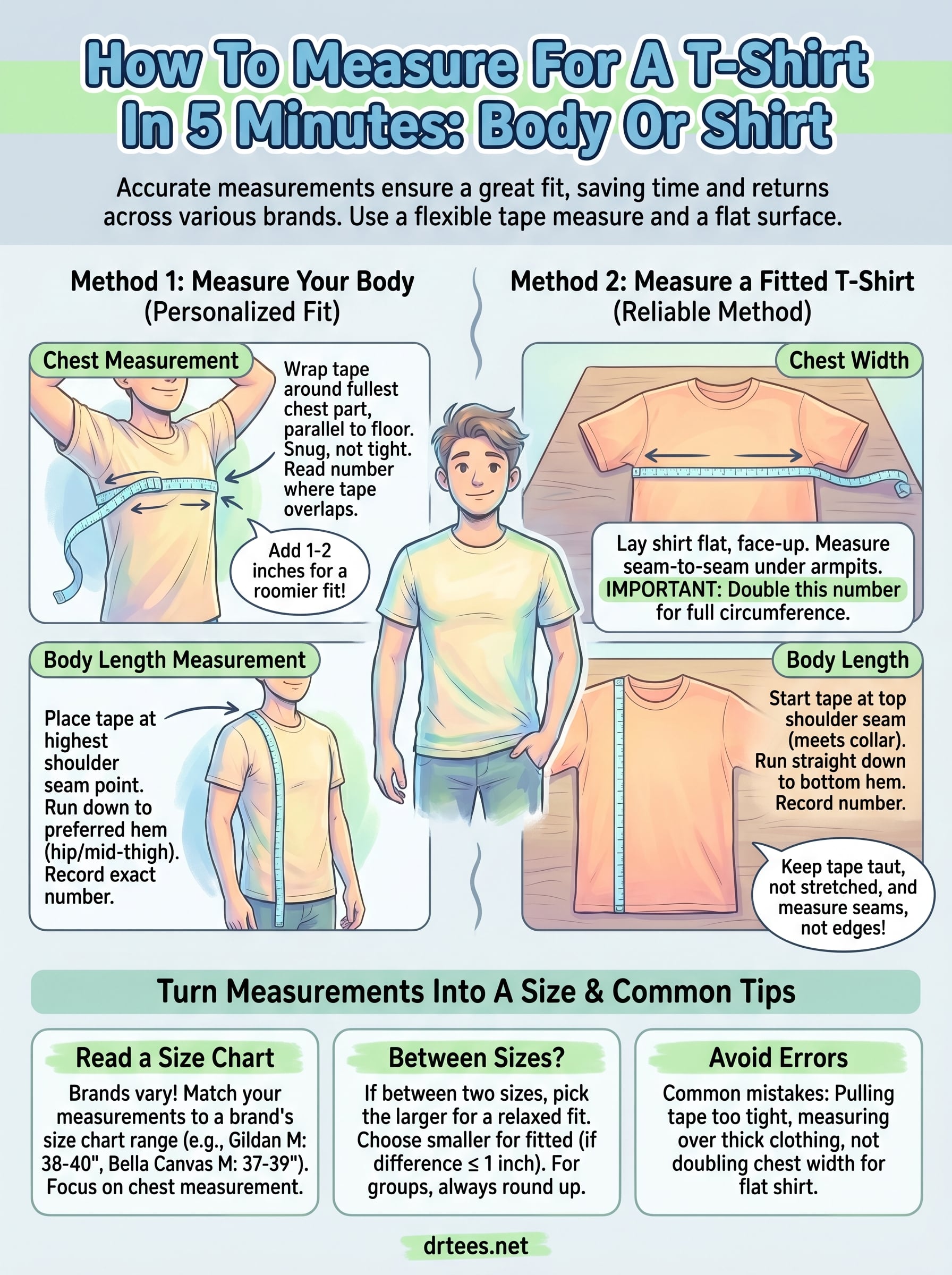
Knowing how to measure for a t shirt comes down to two solid methods: measuring your body directly or measuring a shirt you already like. Either way, you need chest circumference and body length to match any brand’s size chart accurately. Measure over a thin layer, keep the tape parallel to the floor, and always double the chest width when you measure a flat garment.
From there, match your numbers to the brand’s specific size range rather than guessing by label alone. When you fall between sizes, round up for a relaxed fit and round down only if you prefer something more fitted. For group orders, collect individual measurements from each person rather than relying on self-reported sizes.
Once your measurements are ready, Dr. Tee’s makes the rest straightforward. Start your custom order today and let our team help you get the right fit across every garment in your order.
