
You just invested in custom printed shirts for your crew or your business. They look sharp. But the question hits pretty fast: how long does screen printing last on shirts, and will these designs hold up after months of washing and daily wear? It’s a fair concern, especially when you’re spending real money on branded apparel that represents your company.
The short answer is that a properly screen-printed shirt can last 50 or more washes without noticeable fading or cracking. Some hold up for years. But that number depends on several factors, the ink type, the curing process, the garment fabric, and how you care for it at home. Cut corners on any of those, and you’ll see prints peeling after a handful of washes.
At Dr. Tee’s Design & Screen Printing, we’ve been producing custom screen-printed apparel in Kansas City for over 20 years. We’ve seen firsthand what makes prints last and what causes them to fail early. This article breaks down the real lifespan of screen printing, what affects durability, and exactly how to keep your shirts looking fresh wash after wash.
Why screen printing durability varies so much
Not every screen-printed shirt ages the same way. Two shirts that look identical on day one can look completely different after 30 washes, and the reason almost always comes down to decisions made before the ink ever touched the fabric. The print process has several variables, and each one has a direct impact on how long the design holds up. Understanding those variables helps you ask the right questions when ordering custom apparel for your team or business.
The ink type makes a big difference
The most common ink used in screen printing is plastisol ink, which sits on top of the fabric rather than soaking into the fibers. When cured correctly, plastisol creates a thick, flexible layer that resists cracking and fading for a long time. Water-based inks are the other major option. They absorb into the fabric and produce a softer, more breathable feel, but they require a very precise curing process to bond properly. If water-based ink is under-cured, it fades fast.
The ink you choose sets the ceiling for how long a print can last, but the curing process determines whether you actually reach that ceiling.
Discharge inks are a third type used primarily on dark fabrics. They chemically remove the existing dye from the fabric and replace it with a new color, so the result feels like part of the shirt itself. That quality makes discharge prints popular for retail-style apparel. However, because the color lives inside the fiber rather than on top of it, discharge prints can fade faster than plastisol over many washes.
How curing temperature and time affect bond strength
Curing is the step where heat locks the ink permanently into place. For plastisol ink, the industry standard cure temperature is around 320°F (160°C). If the ink doesn’t reach that temperature all the way through, the molecules don’t fully cross-link, and the print starts to crack or peel within a few washes. This is one of the most common reasons a shirt fails early, and it’s almost always a shop-side problem, not something the customer caused.
Time matters just as much as temperature. Running shirts through a conveyor dryer too quickly means the core of the ink layer never reaches the right heat, even if the surface looks fine. A professional shop with properly calibrated equipment catches this problem before the shirts leave the facility. Cheaper operations often skip this quality control step entirely.
The fabric underneath the print
The shirt itself plays a direct role in how well the ink bonds and how long the design holds. 100% cotton is the most reliable fabric for screen printing because it accepts ink cleanly and holds up to repeated washing without degrading the print. Polyester and poly-blend fabrics can cause issues because synthetic fibers resist ink adhesion and are prone to dye migration, where the fabric’s own dye bleeds up into the print layer, causing color shifts and a faded appearance over time.
Ring-spun cotton produces a smoother surface than open-end cotton, which means the ink sits more evenly and wears more consistently. If longevity is a priority for your order, the fabric choice matters just as much as the printing process itself.
How long screen printing lasts in washes and years
If you’re wondering how long does screen printing last on shirts, the most honest answer involves two measurements: wash count and calendar time. Both matter because some shirts get washed twice a week while others go through light use for months. Understanding both gives you a realistic picture of what your investment will actually hold up through before you start seeing any real wear.
What to expect in terms of wash count
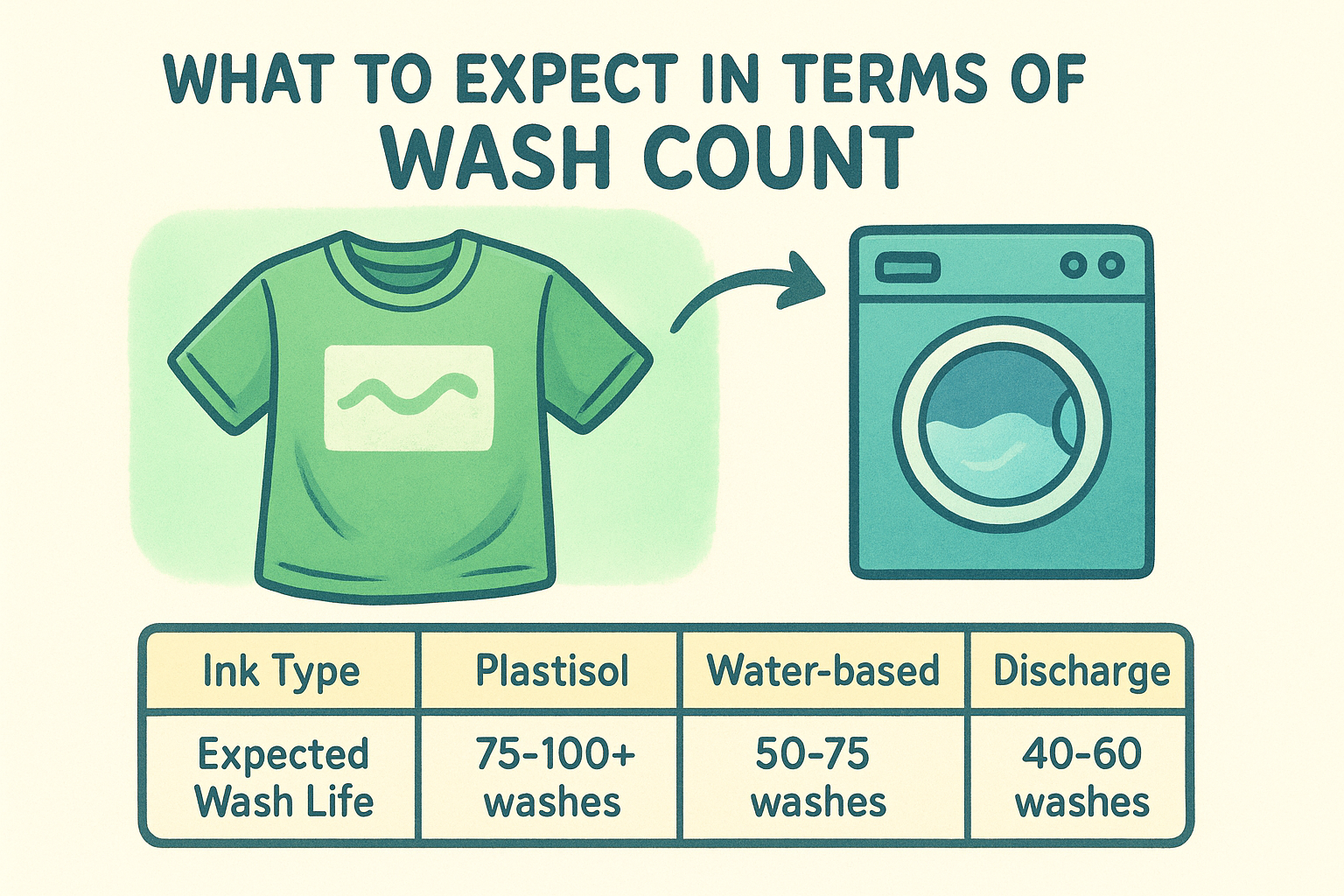
A quality screen print from a reputable shop holds up for 50 to 100 washes before you notice any significant fading or cracking. Plastisol ink on a 100% cotton shirt sits at the higher end of that range, while water-based ink on a poly-blend fabric may start showing wear closer to the 40 to 50 wash mark. These aren’t hard limits, but they’re the ranges you should plan around when evaluating quality.
A shirt washed inside-out in cold water consistently outperforms one tossed in hot water right-side out, often by 20 or more washes before visible degradation appears.
Here’s a quick reference for what to expect based on ink type and fabric:
| Ink Type | Fabric | Expected Wash Life |
|---|---|---|
| Plastisol | 100% Cotton | 75-100+ washes |
| Plastisol | Poly-blend | 50-75 washes |
| Water-based | 100% Cotton | 50-75 washes |
| Discharge | 100% Cotton | 40-60 washes |
What to expect over years of use
For most businesses ordering work uniforms or branded shirts, a quality screen-printed garment lasts two to four years under regular use. That assumes weekly washing and normal wear. Shirts used for occasional events, promotions, or trade shows can easily last five or more years because they simply spend less time in the washer and dryer.
The fabric often wears out before the print does on a well-made shirt. If you start seeing holes, thinning, or collar wear before the design fades, that’s a sign the print was executed correctly. Reaching that point is the goal, and it’s completely achievable when the shop uses proper curing practices and quality inks from the start.
What affects how long a screen print lasts
Beyond the ink type and fabric covered earlier, several practical factors directly determine the lifespan of your design. If you’re ordering branded shirts for a business and want to know how long does screen printing last on shirts under real working conditions, these are the details that shape that answer most consistently.
Where the print sits on the garment
Print placement changes how much friction and stress the design absorbs during daily use. A chest or upper-back print sees relatively little wear because those areas don’t stretch much and stay away from waistbands, tool belts, and seat backs. Prints placed on the lower back, sleeves, or collar area experience more repeated stretching and surface abrasion, which breaks down the ink bond faster over time. If your team works in a physically demanding environment, placement strategy is worth discussing with your printer before you finalize the order.
A print centered on the chest or upper back typically outlasts the same design placed near a hem or cuff by a noticeable margin.
The number of ink colors in your design
More ink colors mean more layers of ink sitting on the fabric. Each additional layer adds thickness, which generally improves opacity and initial visual impact. But thick ink stacks are also more prone to cracking at the edges, especially on flexible fabrics. Simple, bold designs with one to three colors tend to hold up the longest because the ink layer is thinner and more flexible. If your logo has fine detail lines or a lot of color transitions, ask your printer how they’re building the color separations to keep the print from cracking at stress points.
How the shirt gets washed at home
This factor is entirely in your hands after the shirts leave the shop. Hot water and high-heat drying cycles break down ink bonds significantly faster than cold-water washes with low or no heat drying. Washing shirts inside-out reduces direct friction on the print surface, which is one of the simplest things you can do to extend the life of the design without changing anything about the shirt itself.
How to make a screen-printed shirt last longer
If you’ve ordered custom shirts for your business, getting the most out of that investment starts the moment the shirts come out of the box. The printing shop controls the quality of the ink and curing, but once those shirts are in your hands, every wash and dry cycle is your responsibility. A few consistent habits can add dozens of extra washes to the lifespan of your designs without any extra cost.
Wash in cold water and use low heat drying
Heat is the biggest enemy of a screen-printed design after the shirt leaves the shop. Hot water weakens the ink bond over time by causing the fabric fibers to expand and contract more aggressively with each cycle, which stresses the ink layer from underneath. Cold water washes put far less strain on the print and still clean the fabric effectively for standard workwear and branded apparel.
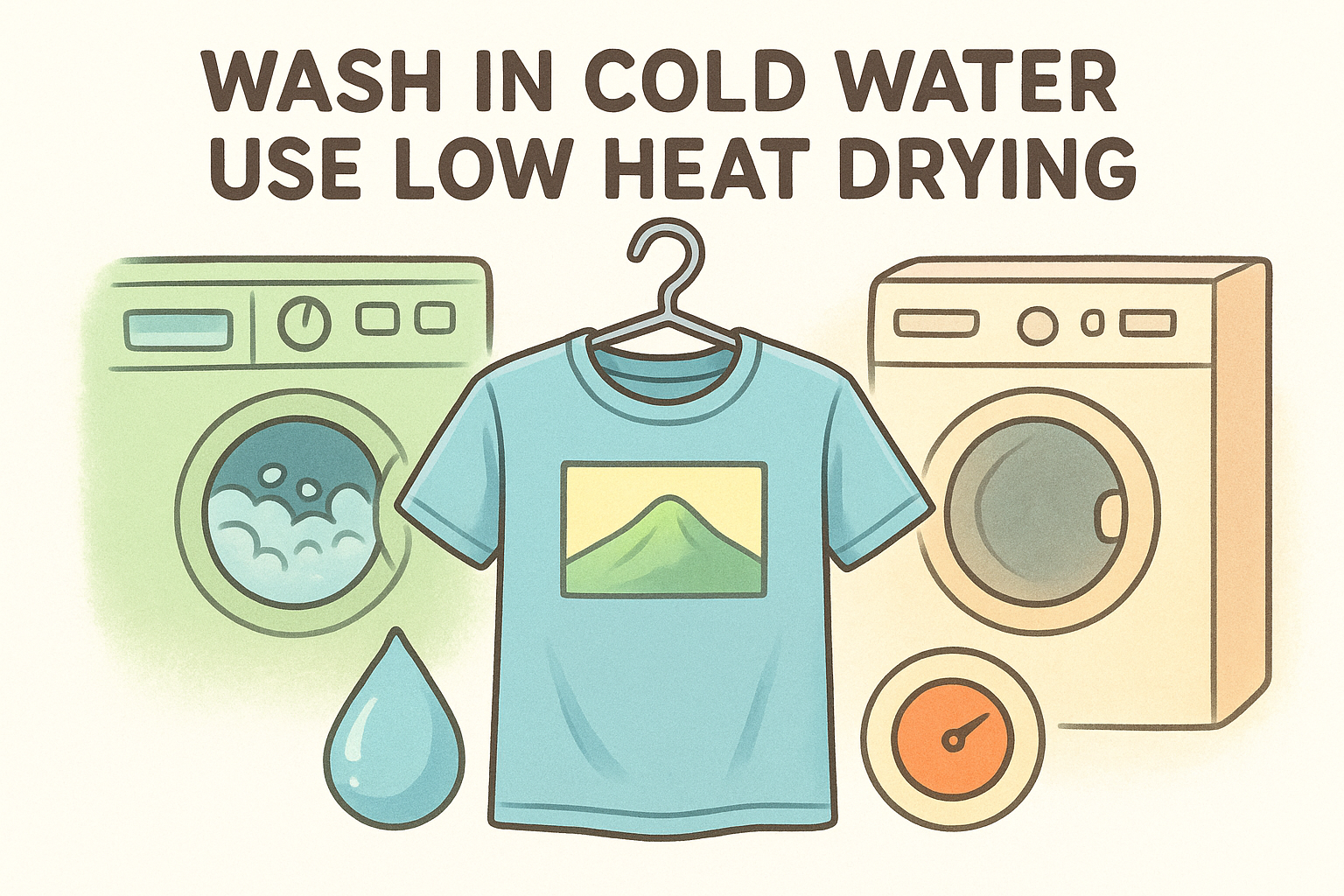
The dryer causes similar damage. High heat settings can partially re-melt plastisol ink, which makes it brittle once it cools. If you need to use a dryer, select the lowest heat setting available or pull the shirts out while still slightly damp and let them air dry the rest of the way.
Switching from hot to cold water alone can extend how long screen printing lasts on shirts by 20 or more wash cycles.
Turn shirts inside out before washing
This one step costs you nothing and protects the print surface from direct friction against the drum of the washer. When shirts tumble right-side out, the design repeatedly rubs against other garments and the machine interior, which wears down the ink edges over time. Turning the shirt inside out also reduces color fading from direct agitation and UV exposure if you air dry outside.
Skip fabric softener on printed areas
Fabric softener coats fibers with a conditioning layer that sounds harmless but actually interferes with how the ink bonds to the fabric with repeated use. Standard detergent on a gentle or normal cycle is all you need. Avoid bleach entirely, even color-safe versions, as it degrades both the ink and the fabric simultaneously.
Screen printing vs DTG, DTF, vinyl, and sublimation
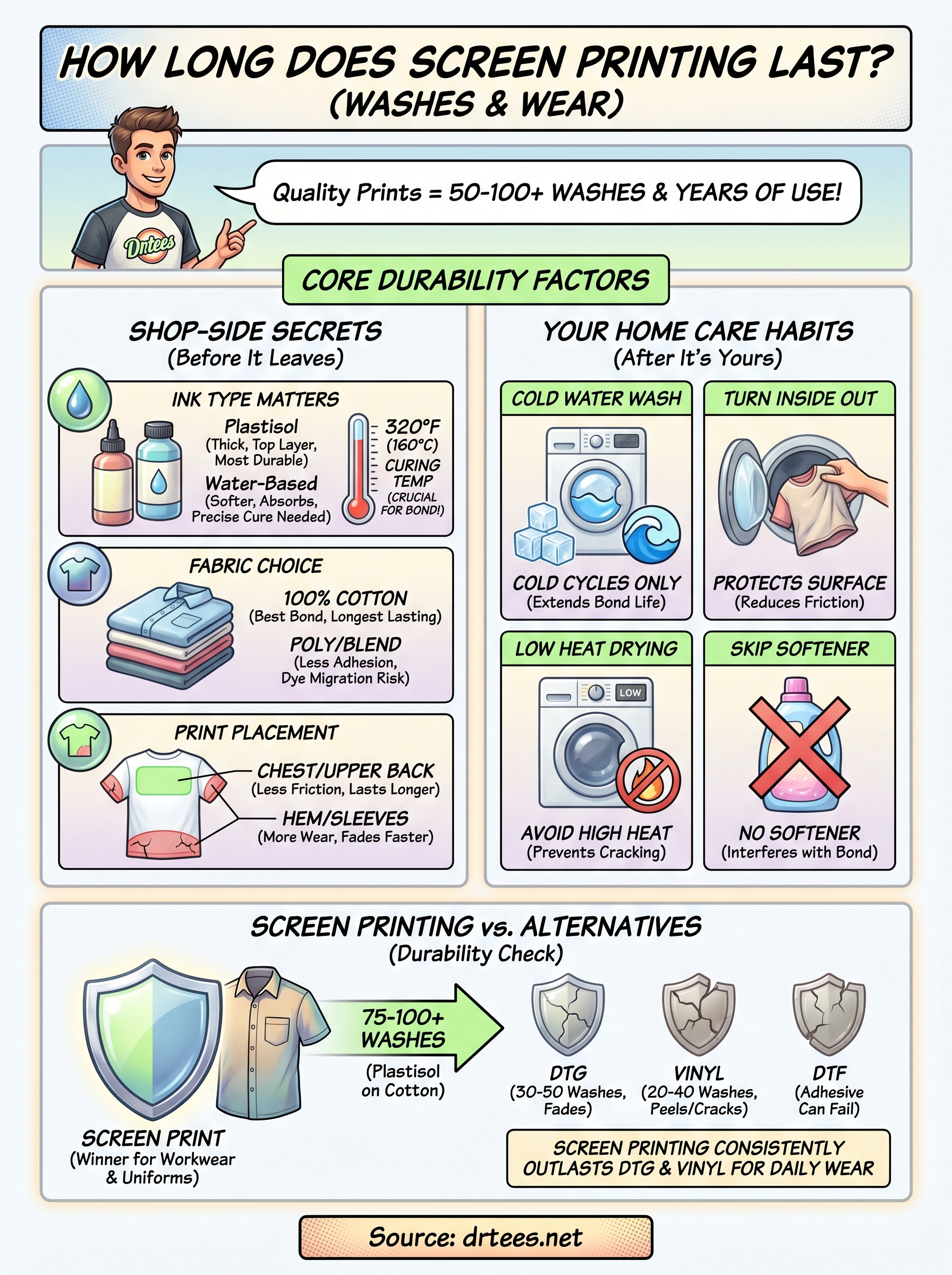
When you’re comparing print methods, durability is usually the deciding factor. Screen printing consistently ranks among the longest-lasting options available, which is a big reason businesses order it for uniforms and branded workwear that see regular use. But it helps to understand where other methods fall short or pull ahead depending on your specific application.
How DTG and DTF compare
Direct-to-garment (DTG) printing sprays ink directly onto the fabric using an inkjet-style printer. The results look great out of the machine, but the prints typically last 30 to 50 washes before noticeable fading begins, which is shorter than a quality screen print. DTG also struggles on dark fabrics without a pretreatment layer, which adds another variable to the durability equation.
If you’re asking how long does screen printing last on shirts compared to DTG, screen printing wins on wash count by a significant margin for standard bulk orders.
Direct-to-film (DTF) printing transfers a printed film layer onto the shirt using heat and adhesive. DTF handles more fabric types than DTG and works well for short runs with complex artwork, but the adhesive layer can peel or crack at the edges over time, especially with frequent washing at higher temperatures. It simply doesn’t match screen printing for long-term durability on daily workwear.
How vinyl and sublimation compare
Heat transfer vinyl (HTV) is common for individual customization and small quantities. The vinyl layer sits entirely on top of the fabric, which means peeling and cracking are real risks after 20 to 40 washes, particularly at the edges and corners of the design. It works fine for one-off pieces but not when you need shirts that hold up for years of regular use.
Sublimation bonds dye directly into the fabric fibers and produces prints that resist fading extremely well over time. For the right application, sublimation is highly durable. However, it requires 100% polyester fabric and doesn’t work on cotton, which limits its usefulness for most standard business apparel needs.
Final takeaways
How long does screen printing last on shirts comes down to a chain of decisions that starts at the shop and ends in your laundry room. A quality plastisol print on 100% cotton, cured at the right temperature and washed in cold water inside-out, can last 75 to 100 washes or more. Cut corners on any part of that chain and you’ll see cracking and fading well before that.
Screen printing holds a clear durability advantage over DTG, DTF, vinyl, and most other print methods for regular-use workwear and branded apparel. The fabric, ink type, curing process, and your washing habits are the four variables that determine how long your designs actually hold up.
If you’re ready to order custom shirts that are built to last, start your order with Dr. Tee’s Design & Screen Printing and get professional results backed by over 20 years of experience in Kansas City.
