
You’ve got a design ready and a deadline approaching, but now you’re stuck choosing a printing method. The debate around heat transfer printing vs screen printing comes up constantly, and for good reason. Each method handles color, detail, durability, and cost differently, and picking the wrong one can mean wasted money or a finished product that doesn’t hold up.
The right choice depends on your specific project. A run of 500 crew neck tees for a company rebrand calls for a different approach than a dozen full-color jerseys for a weekend tournament. Factors like order size, fabric type, and how long you need the print to last all play a role. Without a clear understanding of both methods, it’s easy to overspend or end up with results that fall short.
At Dr. Tee’s Design & Screen Printing, we’ve spent over 20 years producing custom apparel in Kansas City, so we’ve seen firsthand where each method shines and where it doesn’t. This article breaks down both printing processes side by side, covering cost, durability, design flexibility, and ideal use cases so you can make a confident decision for your next order.
Why the print method choice matters
The method you choose affects more than how your shirts look on day one. It shapes how much you spend per unit, how many washes the design survives, and whether the finished product matches what you pictured. When comparing heat transfer printing vs screen printing, these differences show up in your budget, your timeline, and how your brand looks after months of regular use.
Cost per unit adds up fast
Pricing in custom apparel is rarely flat. Setup costs, ink layers, and production time all vary depending on the method. Screen printing requires physical screens for each color in your design, which means higher upfront setup fees. Those fees spread more easily across a large run, but on a small order, they can push your per-unit cost well above what heat transfer would charge for the same job.
The more units you order, the less setup cost matters per shirt, which is why screen printing becomes the cost-efficient choice at higher quantities.
Heat transfer pricing stays more consistent regardless of how many pieces you need. That predictability makes it attractive for short runs, but it also means you lose the bulk savings that screen printing offers at scale.
Durability changes how people see your brand
A shirt with a cracked or peeling print after ten washes sends the wrong message. Screen-printed designs bond directly with the fabric through ink cured under heat, which typically produces longer-lasting results on cotton and cotton-blend garments. For uniforms, workwear, or anything worn repeatedly, that durability matters.
Heat transfer prints sit more on top of the fabric surface rather than bonding into the fibers. They hold up well under normal use, but they can crack or peel faster when garments face heavy washing or rough daily conditions. If your end users work outdoors in physically demanding roles, the print method you choose directly affects how long your brand stays visible on that shirt.
Order size drives the decision more than anything else
Your order quantity is the most practical factor in this decision. Screen printing requires screen setup for each color, making it economical only once you reach a certain volume. Most custom apparel professionals recommend screen printing for orders of 24 pieces or more where the same design runs consistently across the batch. Below that threshold, heat transfer typically delivers better value per unit without a significant drop in quality.
If you’re ordering small batches of 12 to 20 shirts with detailed or multicolor artwork, heat transfer gives you more flexibility without the cost burden of multiple screen setups. Once your numbers climb and your design uses fewer colors, screen printing starts to pull ahead on both cost and finish quality.
How heat transfer printing works and when to use it
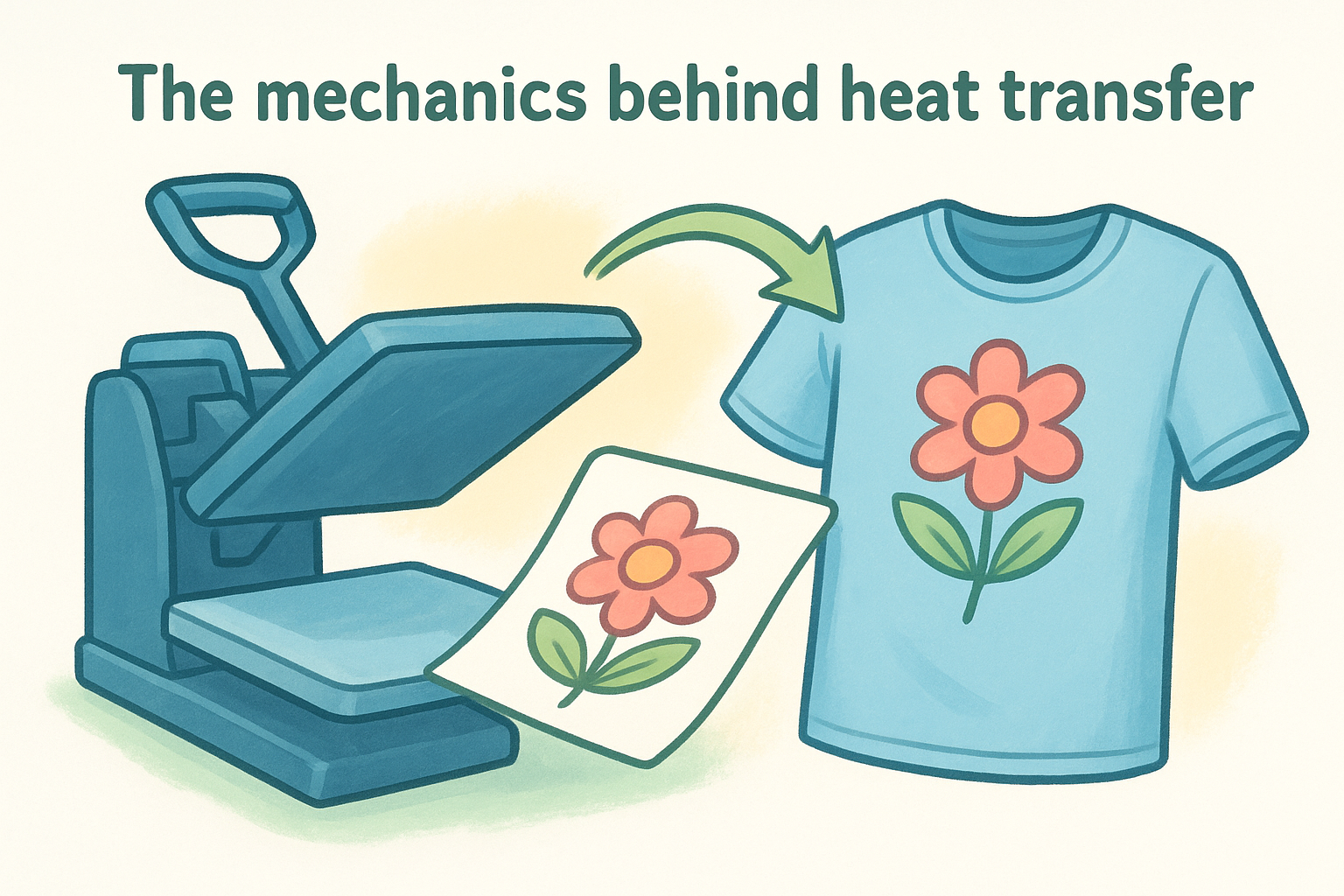
Heat transfer printing uses heat and pressure to bond a design onto fabric. The design gets printed onto a special transfer paper or film using inkjet, laser, or sublimation inks, then a heat press machine applies precise temperature and pressure to transfer the image permanently onto the garment. The process requires minimal setup and runs quickly, keeping turnaround times short for smaller jobs.
The mechanics behind heat transfer
The design sits on the transfer medium until the heat press drives it into or onto the fabric fibers. The ink either fuses with polyester fibers through sublimation or bonds to the garment surface through a heat-activated adhesive layer, depending on the transfer type you use. Choosing the wrong transfer for your fabric directly affects both the appearance and how long the print holds up. Common transfer types include:
- Sublimation: works best on polyester; produces vibrant, soft results with no surface texture
- Vinyl (HTV): performs well on cotton and blends; suited for simple, bold graphics
- Plastisol transfers: handles cotton and blends; delivers a feel similar to screen printing
Best situations for heat transfer
When comparing heat transfer printing vs screen printing, heat transfer wins on design flexibility. It handles full-color photographic artwork without additional cost per color, making it the right call for detailed designs that would require multiple screens in a screen printing setup. Your price stays consistent whether the design uses two colors or twenty.
Heat transfer is the stronger choice for small orders, one-off pieces, or designs that include gradients, photos, or detailed artwork.
Small businesses ordering 12 to 20 branded shirts get strong value here because there are no per-color screen fees spread across a limited run. If you need personalized jerseys with individual names and numbers, heat transfer handles that variable data without driving your cost up significantly.
How screen printing works and when to use it
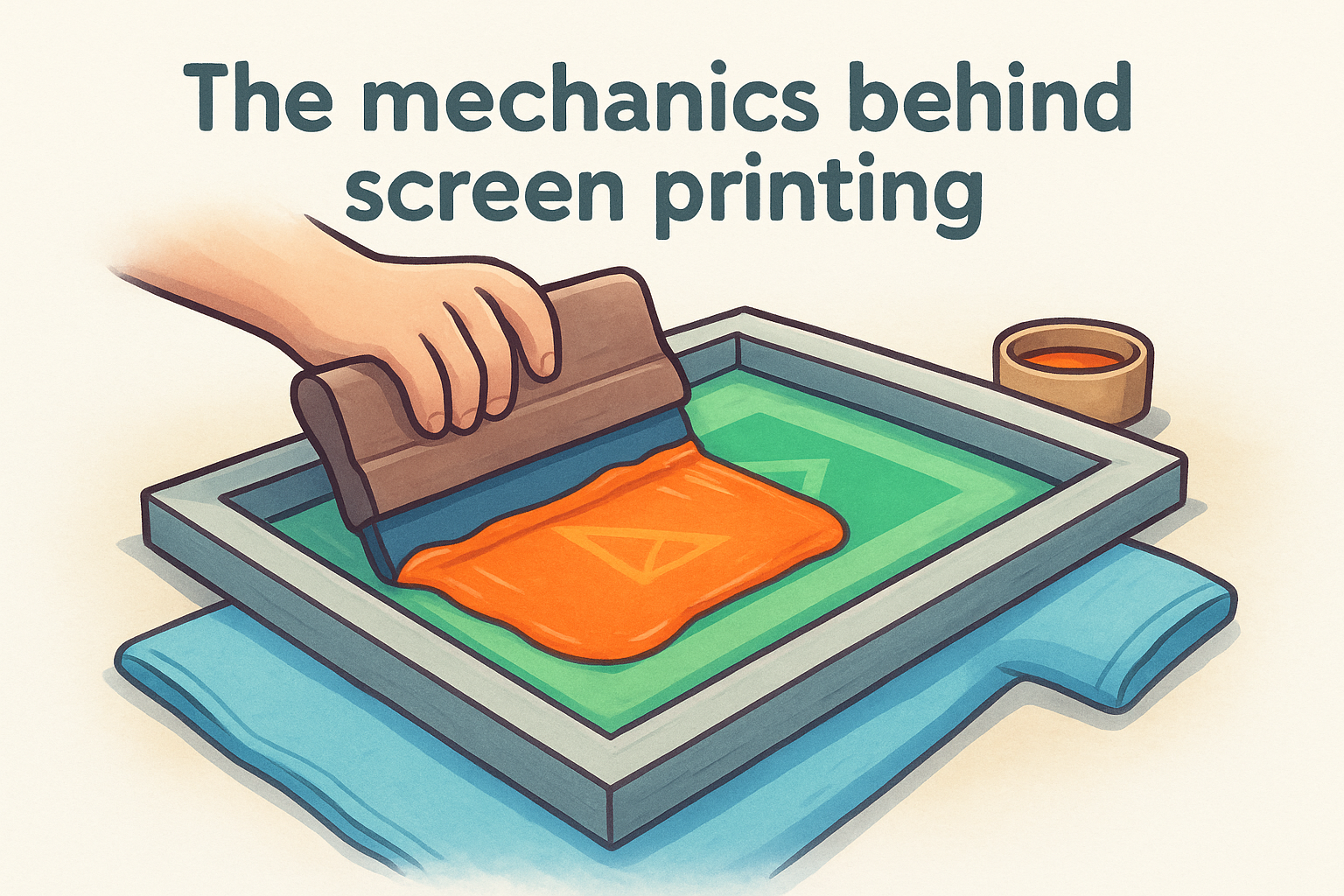
Screen printing pushes ink directly through a mesh stencil onto the fabric. Each color in your design requires its own screen, and each screen gets coated with a light-sensitive emulsion, exposed to your artwork, then washed out to create the stencil. A squeegee forces ink through the open areas of the mesh and onto the garment below, layer by layer, until the full design appears. The ink then cures under heat to bond with the fibers permanently.
The mechanics behind screen printing
The process demands more upfront preparation than heat transfer, but that setup pays off during a long production run. Once your screens are ready, the press moves fast and outputs consistent prints across every single piece in the batch. The ink sits into the fabric fibers, not just on top of them, which is why screen-printed garments routinely survive years of hard use and regular washing. Common ink types used include:
- Plastisol: the most common; sits on top of fabric with a slightly raised texture
- Water-based ink: absorbs into fibers; produces a softer hand feel
- Discharge ink: removes fabric dye and replaces it with color; works on dark cotton
Best situations for screen printing
When comparing heat transfer printing vs screen printing, screen printing delivers the best cost-per-unit value on larger orders. If you’re ordering 24 pieces or more and your design uses six colors or fewer, screen printing consistently outperforms heat transfer on both price and print longevity. Workwear, staff uniforms, event shirts, and branded merchandise that see repeated washing are all strong fits.
Screen printing is the better long-term investment for high-volume orders where durability and brand consistency matter most.
Your design also holds its color better over time with screen printing because the cured ink resists fading through repeated wash cycles in a way that surface-bonded transfers simply don’t match.
Heat transfer vs screen printing side-by-side
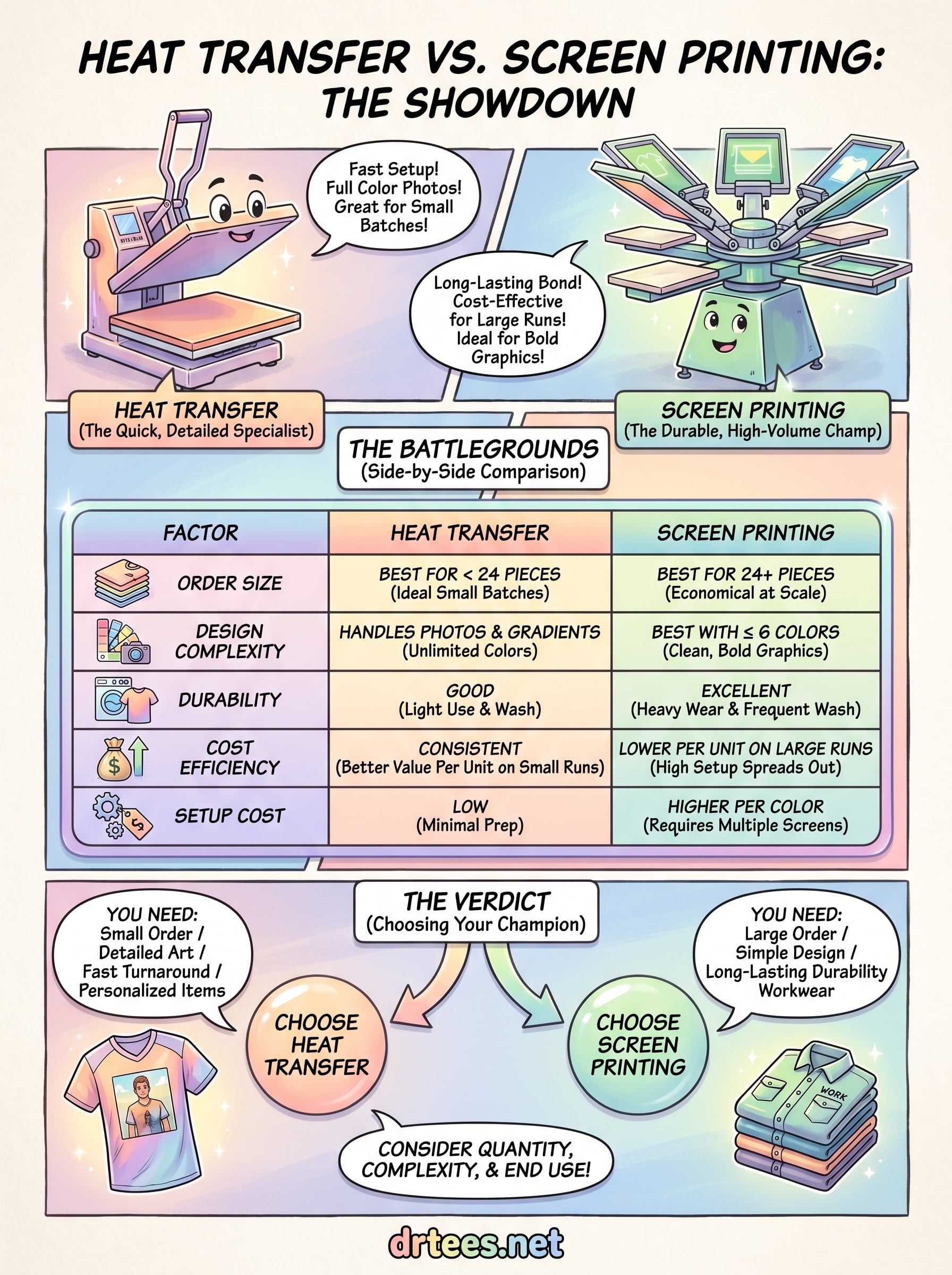
When you put heat transfer printing vs screen printing next to each other, the differences become much easier to act on. No single method wins in every category. The better choice depends on which factors matter most for your specific order, whether that’s print durability, upfront cost, or design complexity.
| Factor | Heat Transfer | Screen Printing |
|---|---|---|
| Best order size | 12-20 pieces | 24+ pieces |
| Setup cost | Low | Higher per color |
| Design complexity | Handles photos and gradients | Best with 6 colors or fewer |
| Durability | Good under light use | Excellent for heavy wear |
| Fabric compatibility | Polyester, cotton, blends | Cotton and cotton blends |
| Turnaround speed | Fast | Moderate |
| Cost efficiency | Small runs | Large runs |
Where each method falls short
Both methods carry real limitations you should factor into your decision. Heat transfer prints can crack or peel under heavy washing conditions, which makes them a poor fit for workwear that faces daily outdoor use. The surface-level bond simply does not hold as well as ink cured directly into fabric fibers over hundreds of wash cycles.
Screen printing struggles with small orders and multicolor designs where setup costs outweigh the per-unit savings.
Screen printing requires a separate screen for every color in your design, so a six-color logo means six screen fees before a single shirt gets printed. That cost structure hits small runs hard. If your order sits below 24 pieces or your artwork includes photographic detail, you’ll likely spend more with screen printing than the quality difference justifies.
How to choose the best option for your order
Choosing between heat transfer printing vs screen printing comes down to three practical questions: how many pieces you need, what your design looks like, and how hard the finished shirt will get used. Answering those questions honestly before you place an order saves you from overspending on setup costs or ending up with prints that crack after a few months of regular washing.
Start with your order size and budget
If you need fewer than 24 pieces, heat transfer is almost always the smarter financial move. You avoid screen setup fees entirely, and the per-unit cost stays predictable regardless of how many colors your design includes. Once your order climbs to 24 or more pieces with a consistent design, screen printing starts delivering better value per shirt and stronger durability across the full batch. The savings compound as your quantity grows.
Your order size is the single fastest filter for narrowing down which method fits your project.
Factor in your design and end use
Your artwork complexity matters as much as your order size. If your design includes photographic detail, color gradients, or more than six colors, heat transfer handles that without adding cost per color. Screen printing performs best with clean, bold graphics that use a limited color palette, since each additional color adds a separate screen fee to your setup total.
Think about how the garment gets used after it leaves the printer. Workwear, uniforms, and event shirts worn repeatedly need the wash durability that screen printing provides. The ink bonds into the fabric and holds up through hundreds of wash cycles. For giveaways, short-run promotional items, or personalized pieces like jerseys with individual names, heat transfer gives you the flexibility and turnaround speed your order requires without unnecessary cost.
Wrap up and what to do next
Choosing between heat transfer printing vs screen printing does not have to be complicated once you understand what each method does well. Your order size, design complexity, and how the garment gets used are the three practical filters that point you toward the right answer. Small runs with detailed artwork lean toward heat transfer. Large runs with bold, consistent designs lean toward screen printing. Neither method is universally better; the right one is simply the one that fits your specific project.
At Dr. Tee’s Design & Screen Printing, we have spent over 20 years helping Kansas City businesses get this decision right the first time. We can walk you through your options, review your artwork, and recommend the method that fits your budget and timeline. Get a quote and start your order today, and we will make sure your finished shirts look exactly the way you need them to.
