
You just pulled your favorite custom printed tee out of the dryer and something feels off, it’s tighter than you remember. So, does polyester shrink in the wash? The short answer: polyester is one of the most shrink-resistant fabrics you can buy, but it’s not completely immune to heat damage and improper care routines.
At Dr. Tee’s Design & Screen Printing, we work with polyester and poly-blend garments daily across our screen printing and embroidery projects here in Kansas City. With over 20 years of experience handling fabrics like performance polyester, cotton-poly blends, and tri-blends, we’ve learned exactly how these materials behave, before and after they leave our shop. That hands-on knowledge is what drives the advice in this guide.
Below, we’ll break down what causes polyester to shrink, how to wash and dry it safely, and, for those who actually want a snugger fit, how to shrink polyester on purpose. We’ll also cover care tips that protect both the fabric and your custom prints or embroidery so they last as long as possible.
Why polyester can shrink in the wash
Polyester is more resistant to shrinkage than cotton, but it does have one real weak point: heat. Whether you’re asking does polyester shrink in the wash because of a recent laundry mishap or you just want to avoid one, the answer comes down to how the fiber reacts to temperature. Water alone rarely causes polyester to shrink. The actual risk shows up when heat enters the process, and that can happen in both the washer and the dryer.
What polyester is made of and why it matters
At its core, polyester is a synthetic fiber derived from polyethylene terephthalate (PET), a plastic-based polymer. During manufacturing, polyester threads are stretched and pulled under controlled heat, which locks the fibers into a longer, extended structure. This process, called heat-setting, is what gives polyester its wrinkle resistance, durability, and dimensional stability straight off the production line.
Because polyester fibers are heat-set during production, re-exposing them to high heat can reverse that stability and cause the fabric to contract.
The fibers are thermoplastic, which means they can be reshaped when heat is applied again. Once you push the temperature past what the fiber can handle, those stretched, locked-in structures start to relax and pull back toward a shorter, tighter configuration. That’s where size loss comes from, not the water soaking the fabric, but the energy that heat delivers directly to the fibers themselves.
How the washer and dryer each contribute to shrinkage
Your washing machine is lower risk than your dryer, but it’s not entirely off the hook. Washing polyester on a hot cycle, with water temperatures above roughly 140°F (60°C), can begin to stress the fibers. Most home washers don’t reach that threshold on a standard warm setting, but commercial machines and hot-cycle settings can push water temperatures high enough to trigger gradual shrinkage over repeated washes.
The dryer is the bigger threat in most laundry routines. High heat dryer settings can push temperatures well above 135°F (57°C), which is enough to begin deforming polyester fibers, especially in thinner or performance-style garments. The combination of heat and tumbling creates friction that compounds the stress on the material. Repeated high-heat drying cycles accumulate over time, gradually tightening the fabric even when no single session causes an obvious change in fit.
How much polyester shrinks and what affects it
Pure polyester, under normal washing conditions, shrinks very little if at all. Most people asking does polyester shrink in the wash are dealing with a garment that saw repeated high-heat cycles rather than a single bad wash. When shrinkage does occur, you’re typically looking at a 1 to 5 percent reduction in size, which may sound small but can translate to a noticeably tighter fit across the chest or shoulders of a shirt.
How much shrinkage you can actually expect
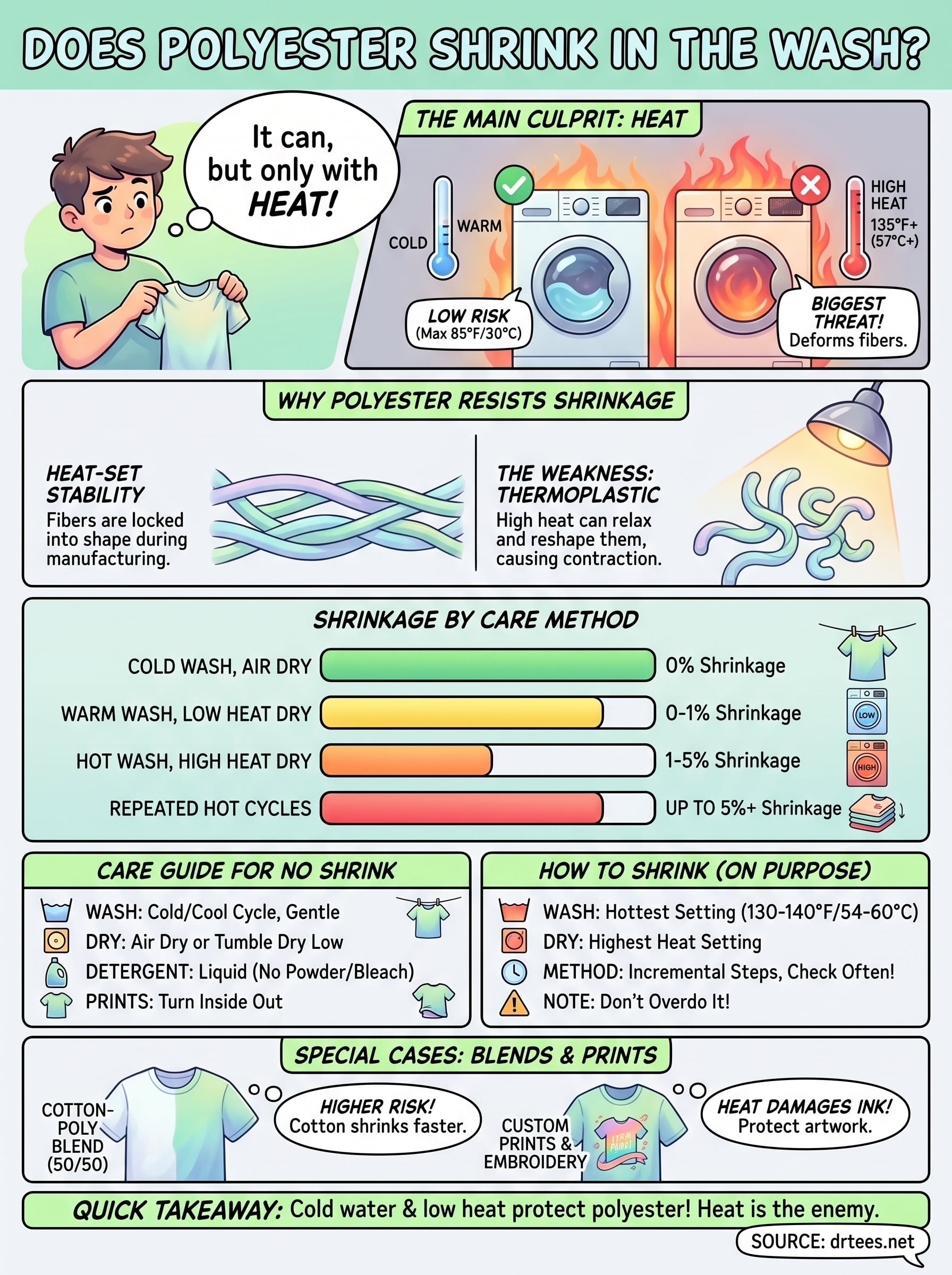
Most 100 percent polyester garments shrink less than 5 percent even when exposed to excessive heat, and many show no measurable change at all when cared for correctly. Performance fabrics like athletic jerseys or moisture-wicking shirts are especially vulnerable because they’re often thinner and more sensitive to temperature extremes than heavier-weight polyester. The table below shows general shrinkage ranges by care method:
Repeated exposure to high heat causes more cumulative damage than any single wash session, so consistent care habits matter more than occasional slip-ups.
| Care Method | Expected Shrinkage |
|---|---|
| Cold wash, air dry | 0% |
| Warm wash, low heat dry | 0-1% |
| Hot wash, high heat dry | 1-5% |
| Repeated hot cycles | Up to 5%+ |
Factors that increase your shrinkage risk
Several variables determine how much a polyester garment shrinks, and fabric weight and weave construction are two of the biggest. Thinner, lightweight polyester has less mass to distribute heat stress across, so it responds more dramatically to temperature spikes than heavier-weight or tightly woven polyester does.
Garment age also plays a role. Older polyester fabrics that have been washed many times may have already experienced minor fiber relaxation, making them slightly more vulnerable to further shrinkage than a brand-new shirt straight from production.
How to wash and dry polyester without shrinking it
Keeping polyester in its original shape is straightforward once you know the right settings to use. Cold or warm water in the washing machine combined with low or no heat in the dryer will protect your garment through hundreds of wash cycles without any noticeable size change. This applies whether you’re caring for a plain performance tee or a custom screen-printed shirt.
Washer settings that protect polyester
When you ask does polyester shrink in the wash, the answer almost always points back to water temperature. Set your machine to a cold or cool cycle, ideally at or below 85°F (30°C), and choose a gentle or delicate cycle to reduce mechanical friction on the fibers. Turning the garment inside out before washing also protects any printed or embroidered designs on the surface.
Cold water washing is one of the easiest ways to extend the life of both your polyester fabric and any custom artwork on it.
Using liquid detergent rather than powder helps too, since powder can leave residue that stiffens fabric over time. Avoid bleach entirely, as it degrades polyester fibers at the molecular level and accelerates long-term wear.
Dryer settings and better alternatives
Your dryer is the biggest shrinkage risk in the entire laundry process, so treat it accordingly. If you use a dryer, select the lowest heat setting available, typically labeled “delicate” or “tumble dry low,” and remove the garment while it still feels slightly damp rather than completely dry.

Air drying is the safest option overall. Lay the garment flat or hang it on a drying rack away from direct sunlight, which can fade printed colors and break down polyester fibers over time with repeated exposure.
How to shrink polyester on purpose without ruining it
Sometimes a shirt fits too loosely and you actually want it to shrink down a size. Intentional shrinkage is possible with polyester, but it requires controlled heat application so you don’t overshoot and end up with a garment that’s too tight or permanently warped. If you’ve been wondering whether does polyester shrink in the wash intentionally, the answer is yes, with the right method.
Using hot water to shrink polyester
The washing machine gives you a reliable way to apply heat evenly across the entire garment. Set your washer to the hottest water setting available, which on most home machines runs between 130°F and 140°F (54°C to 60°C). Run the garment through a full hot cycle, then check the fit before moving to the dryer. One hot wash cycle typically produces a small but noticeable reduction in size.
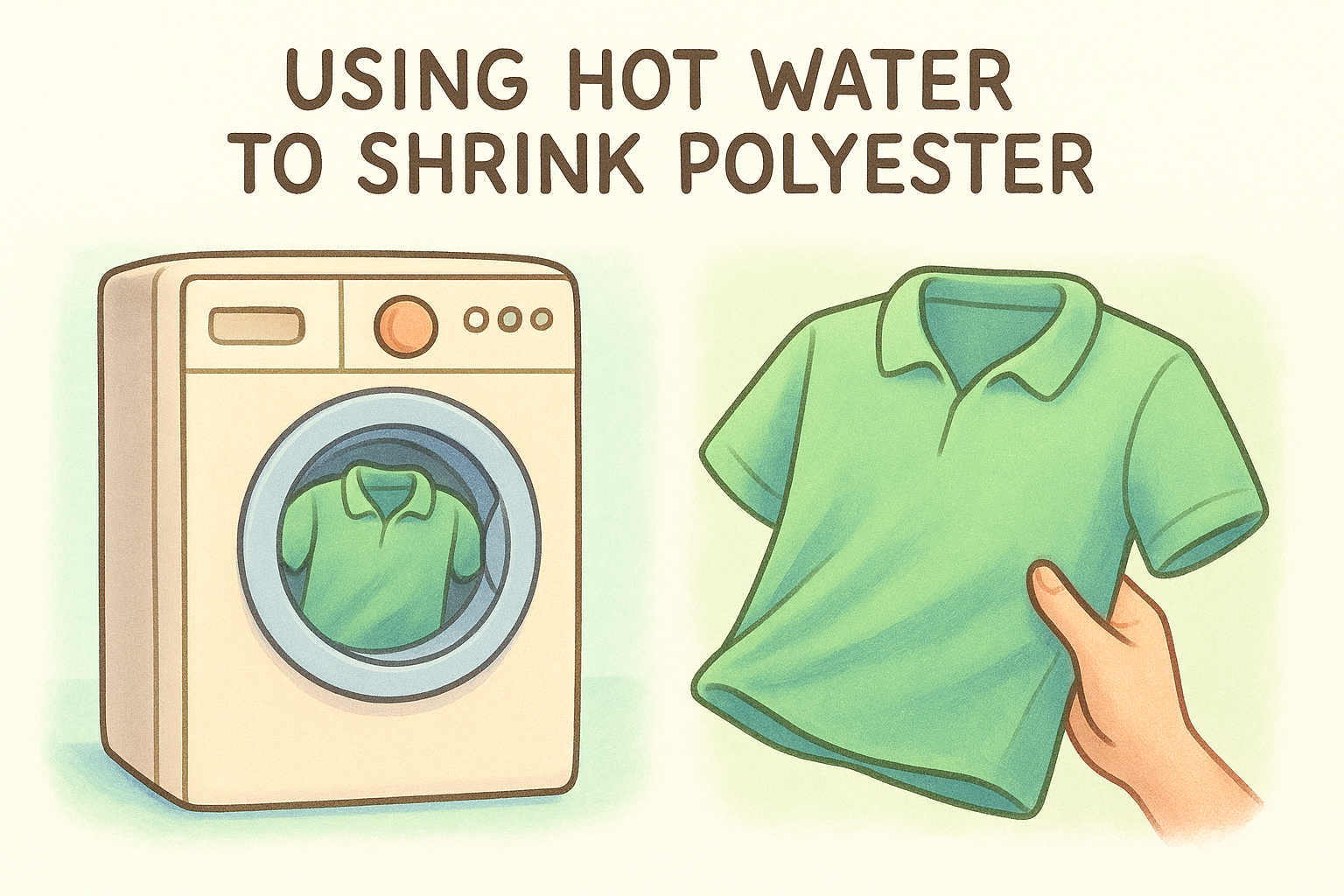
One hot cycle followed by a fit check gives you the most control, since you can stop the process once the garment feels right.
If the first cycle isn’t enough, repeat it rather than jumping straight to maximum dryer heat. Incremental steps prevent you from over-shrinking the garment beyond what you intended.
Using a dryer to shrink polyester carefully
Your dryer delivers more intense heat than the washer and produces faster, more concentrated results if you want a more significant size reduction. Tumble dry on the highest heat setting and check the fit every 10 minutes to avoid overdoing it. Removing the garment before it’s completely dry and letting it air finish gives you a natural stopping point.
Avoid pressing or ironing polyester on high heat immediately after drying. Direct iron contact on a hot setting can create permanent creases or shiny spots that no amount of rewashing will correct.
Polyester blends, prints, and other special cases
Pure polyester and polyester blends behave differently in the wash, and the cotton or rayon content in a blend changes your shrinkage risk significantly. When someone asks does polyester shrink in the wash, the answer shifts depending on what else is in the fabric. A 50/50 cotton-poly shirt carries more shrinkage risk than a 100 percent polyester garment because the cotton component responds to heat the way natural fibers always do.
Cotton-poly and tri-blend fabrics
A cotton-polyester blend combines the comfort of natural fiber with the durability of synthetic, but the tradeoff is that cotton shrinks at lower temperatures than polyester does. If you wash a 60/40 cotton-poly shirt on a hot cycle, the cotton fibers contract while the polyester holds its shape, which can cause the fabric to pucker, warp, or feel uneven after drying. Tri-blends, which typically mix cotton, polyester, and rayon, carry even more risk because rayon is especially sensitive to heat and agitation.
Treating any blend the same way you’d treat pure cotton will prevent the shrinkage that catches most people off guard.
The higher the cotton or rayon percentage in your blend, the more you need to treat the garment like a natural fiber fabric rather than a synthetic one. Cold water washing and air drying are the safest defaults for any blended garment.
Protecting screen prints and embroidery
If your polyester or poly-blend garment carries custom screen printing or embroidery, heat exposure creates an additional concern beyond just fabric shrinkage. High dryer temperatures can crack plastisol ink, fade water-based prints, and cause embroidery thread to pucker as the base fabric contracts underneath it. Turning the garment inside out before every wash cycle reduces direct friction against the print surface and keeps the artwork looking sharp longer.
Quick takeaways
Does polyester shrink in the wash? It can, but only when heat gets involved. Pure polyester holds its shape well under normal conditions, while blends with cotton or rayon carry a higher risk because those natural fibers respond to heat faster than synthetic ones do. Cold water washing and low-heat or air drying are the two habits that protect your garments through hundreds of cycles without any noticeable size loss. If you want to shrink polyester on purpose, use hot wash cycles in small, controlled increments and check the fit as you go rather than committing to maximum heat all at once. For custom screen-printed or embroidered garments, always turn them inside out before washing to protect the artwork on the surface.
If you’re ordering custom printed polyester or poly-blend apparel for your team or business in Kansas City, get a quote from Dr. Tee’s Design & Screen Printing and we’ll help you choose the right fabric from the start.
