
You just pulled your favorite polyester shirt out of the dryer and something feels off, it’s tighter across the chest, shorter in the torso, or both. So now you’re asking: do polyester shirts shrink? The short answer is that polyester is one of the most shrink-resistant fabrics you can buy, but it’s not completely immune. High heat is the main culprit, and how you wash and dry your polyester garments makes all the difference between a shirt that holds its shape and one that doesn’t.
At Dr. Tee’s Design & Screen Printing, we work with polyester and poly-blend fabrics every day across our screen printing and embroidery projects here in Kansas City. With over 20 years in the custom apparel industry, we’ve handled everything from 100% polyester performance tees to cotton-poly blends, and we’ve seen firsthand what happens when customers don’t know how to care for their garments after printing. A shrunken shirt doesn’t just feel uncomfortable; it can distort a printed design or embroidered logo, which defeats the purpose of investing in quality branded apparel.
This article breaks down exactly how and why polyester shrinks, what conditions cause it, and how to prevent it from happening to your shirts. We’ll also cover step-by-step methods for intentionally shrinking a polyester shirt that runs too large, because sometimes you need to size down without buying a replacement. Whether you’re caring for a single shirt or managing branded uniforms for your entire crew, you’ll walk away knowing how to keep your polyester looking and fitting the way it should.
What shrinkage looks like in polyester shirts
Shrinkage in polyester looks different from what you’d see in a cotton shirt. With cotton, a shirt can shrink uniformly all over after just one hot wash. Polyester behaves more selectively. Because the fibers are synthetic and heat-sensitive, shrinkage tends to show up in specific areas first rather than pulling the entire garment down in size at once. You might notice a shirt fits fine through the body but suddenly feels shorter, or the neckline starts to feel tighter while the sleeves stay the same length.
How much can a polyester shirt actually shrink?
A 100% polyester shirt typically won’t shrink more than 2 to 5 percent under normal washing conditions, even if you push the heat higher than recommended. That’s a fairly small amount compared to cotton, which can shrink 10 to 20 percent or more with the wrong care. For a standard medium-sized shirt with a chest width of 20 inches, a 5 percent shrink translates to about one inch of lost width. That might not sound like much, but across multiple hot washes, those inches add up.
If you ask "do polyester shirts shrink" expecting a dramatic size change, the answer is usually no, but repeated heat exposure causes cumulative damage that tightens the fit over time.
On a screen-printed or embroidered shirt, even minor shrinkage creates a real problem. The fabric pulls inward, but the printed ink or embroidered thread doesn’t move with it. This causes the design to pucker, crack, or look distorted, which is exactly why garment care matters beyond just fit.
Where shrinkage shows up first on a polyester shirt
The areas that see the most contact with drum heat in a dryer are the collar, cuffs, and side seams. These spots have less mass and surface area than the main body panels, so they absorb and respond to heat faster. You’ll often notice the collar ribbing tightening before the torso shrinks noticeably. Side seams can pull slightly inward, making the shirt feel narrower through the chest even when the back panel hasn’t changed.
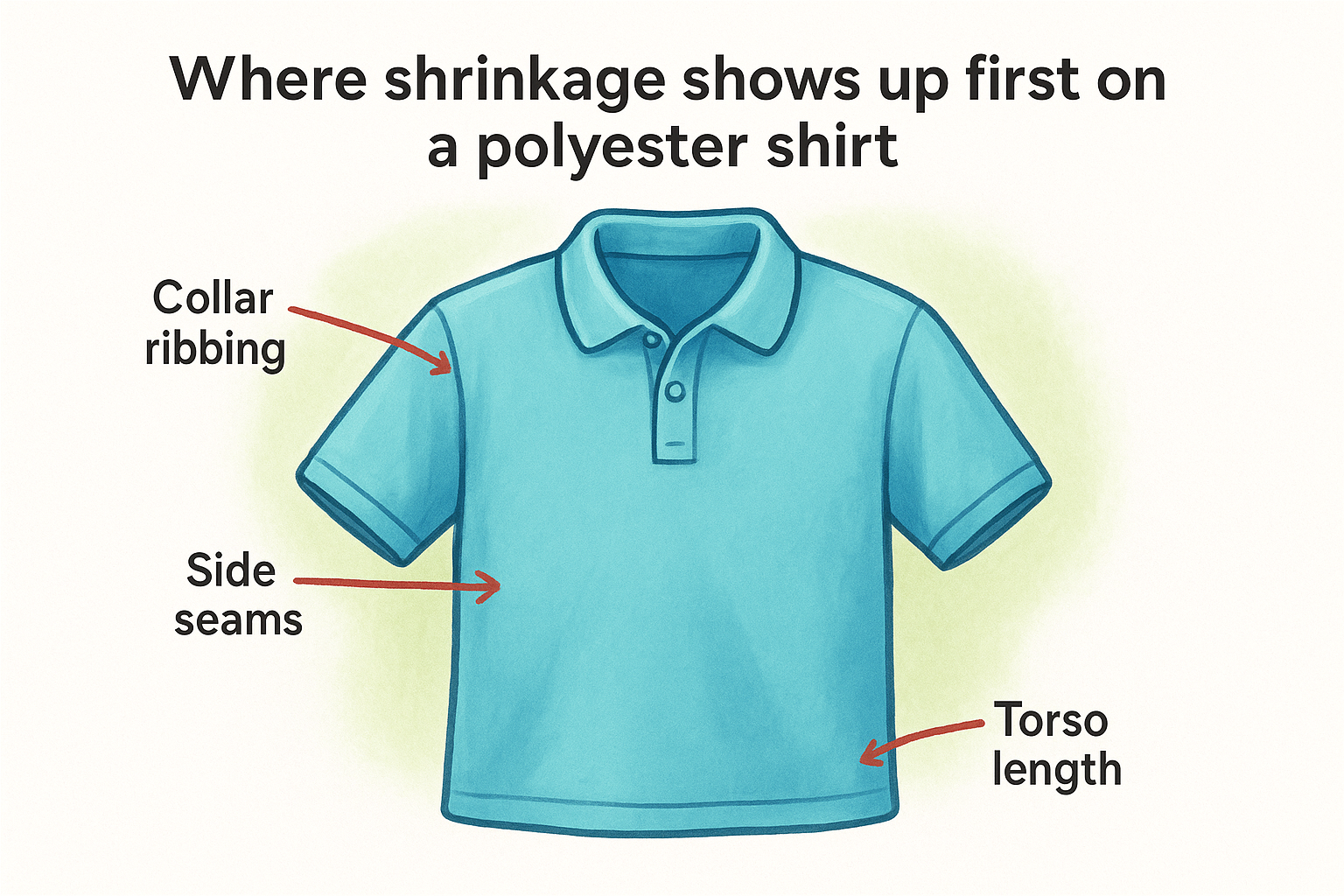
The torso length is another area that shows changes early. Performance polyester shirts, the kind used for athletic wear or moisture-wicking workwear, are cut with a specific drape in mind. When the length pulls up by even a half inch, it throws off how the shirt sits at the hip and changes the overall silhouette. For branded uniforms, that inconsistency across a team or crew stands out immediately and looks unprofessional.
Why polyester shrinks in heat
Polyester is a synthetic plastic-based fiber made from polyethylene terephthalate, commonly called PET. During manufacturing, these fibers are stretched and locked into shape under controlled heat. That process gives polyester its signature properties: it’s lightweight, wrinkle-resistant, and holds its shape under normal conditions. The problem starts when you expose the fabric to heat higher than what was used during manufacturing, because the fibers begin to relax back toward their original, unstretched state.
How fiber memory causes shrinkage
Every polyester fiber carries what textile manufacturers call fiber memory, which is the tendency to revert toward the shape it held before it was stretched during production. When enough heat reaches the fibers, the molecular bonds that hold them in their elongated position start to loosen. The fibers contract, and the fabric pulls inward across its weave. This is the same basic mechanism behind why people intentionally shrink polyester shirts, which we’ll cover in a later section.
The hotter and longer the heat exposure, the more fiber memory gets triggered, which is why one high-heat dryer cycle can do more damage than a dozen warm-water washes.
Why dryers cause more damage than washing machines
Washing machines use water, which transfers heat less aggressively than direct air contact. A dryer’s tumbling drum blasts consistent dry heat directly against the fabric for an extended period, which is far more effective at activating fiber memory. Most residential dryers run their high-heat settings between 135°F and 150°F. Polyester fibers start responding to heat around 120°F to 130°F, so high-heat drying pushes the fabric right past its safe threshold. This is why people who ask do polyester shirts shrink often notice the problem after drying, not washing.
How to prevent polyester from shrinking
Preventing shrinkage in polyester comes down to one simple rule: keep the heat low. Since fiber memory is the mechanism behind shrinkage, your goal is to avoid the temperature range that triggers it. This applies to both washing and drying. If you ask yourself do polyester shirts shrink and want to make sure the answer is never, consistent low-heat care habits are all it takes to protect the fit and the print over the long term.
Wash settings that protect polyester
Cold or warm water is all you need for washing polyester shirts. Hot water settings, typically above 130°F, put you in the danger zone where fiber memory starts to activate, even before the dryer comes into play. Set your machine to a cold or warm cycle and use a gentle setting to reduce mechanical stress on the fabric. Most detergents work just as effectively in cold water, so you’re not sacrificing clean for protection.
Washing in cold water also helps preserve screen-printed designs and embroidered logos by reducing ink breakdown and thread stress over time.
Drying methods that keep the fit intact
The dryer is where most polyester damage actually happens, so your drying choices matter more than your wash settings. Here are the best options for keeping your shirts in shape:
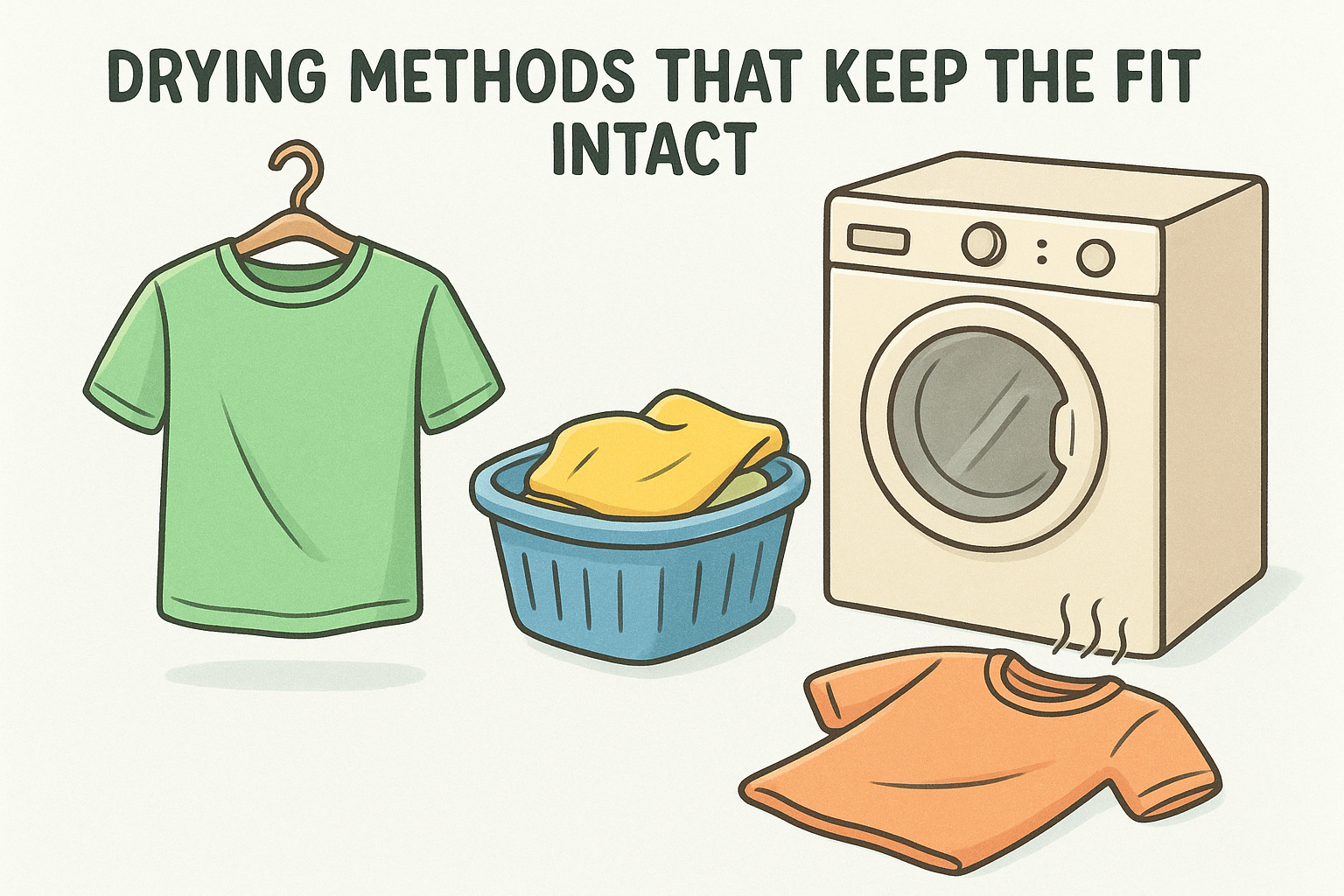
- Air dry flat or on a hanger whenever possible, this eliminates heat exposure entirely
- If you use a dryer, select the lowest heat or air-fluff setting available on your machine
- Remove shirts while they’re slightly damp and hang them to finish drying
- Avoid leaving polyester shirts sitting in a hot dryer after the cycle ends, because residual heat inside the drum continues affecting the fibers even after tumbling stops
Following these steps consistently extends the life of the garment and keeps your branded apparel looking sharp.
How to shrink a polyester shirt on purpose
Sometimes a shirt runs large and returning it isn’t an option. If you need to size down a polyester shirt intentionally, controlled heat exposure is your tool. The same fiber memory that makes polyester prone to accidental shrinkage becomes useful here. The key is applying heat gradually and deliberately so you get a controlled size reduction without damaging the fabric or distorting a print.
The washing machine and dryer method
This is the most straightforward approach for intentional shrinkage. Wash the shirt on the hottest water setting your machine offers, then transfer it directly to the dryer on high heat. Run a full cycle and check the fit when it’s done. If you need more reduction, repeat the process, but understand that each cycle adds cumulative wear on the fabric. Check the fit between cycles rather than running several back-to-back, since polyester won’t shrink more than a few percent before the fibers reach their limit.
This method works best on 100% polyester shirts; blended fabrics will behave differently depending on how much cotton or other fibers are in the mix.
The boiling water method
For more precise control, boiling water gives you targeted heat without committing to a full machine cycle. Bring a pot of water to a boil, submerge the shirt fully, and let it soak for 20 to 30 minutes. The sustained high heat activates fiber memory across the entire garment. After soaking, wring it out carefully and either air dry it to stop further shrinkage or place it in a hot dryer if you still need more reduction. This directly answers the question of whether do polyester shirts shrink on command: yes, but only within the fabric’s physical limits, so don’t expect a dramatic size change.
Blends, prints, and care label red flags
Not all polyester shirts behave the same way in the wash, and the care label tells you more than most people bother to read. Fabric composition and existing print or embroidery work both change how you should approach laundering, and ignoring either one is how garments get ruined.
How blended fabrics change the shrinkage equation
If you’re asking do polyester shirts shrink and your shirt is a poly-cotton blend, the answer shifts significantly. Cotton fibers shrink much more aggressively than polyester, so a 50/50 blend shirt can shrink considerably more than a 100% polyester garment under the same heat conditions. The higher the cotton percentage, the more shrinkage risk you’re dealing with. A 60% cotton, 40% polyester blend will behave closer to a cotton shirt than a polyester one, which means you should treat it with the same low-heat caution you’d apply to an all-cotton tee.
Tri-blend shirts that combine cotton, polyester, and rayon are even more unpredictable because each fiber reacts to heat differently, and the weakest fiber in the mix sets the ceiling for how much damage one hot cycle can do.
What heat does to screen-printed and embroidered designs
Shrinkage doesn’t just change the fit; it changes how your screen print or embroidered logo looks. When the fabric contracts but the ink or thread doesn’t, the design distorts. Cracking, puckering, and warping around the print edges are all signs that the fabric shrank while the design held its position. For branded workwear, a distorted logo reflects poorly on your business and wastes the investment you made in quality apparel.
Care label red flags to check before washing
Your care label gives you the fastest guide to safe laundering. Watch for these warning signs before you run a cycle:
- "Wash cold only" means the fabric is vulnerable to heat at any stage
- "Do not tumble dry" is a hard limit, air dry only
- "Low heat only" applies to both wash and dry settings
- No care label at all means you should default to cold wash and air dry to stay safe
Final takeaways
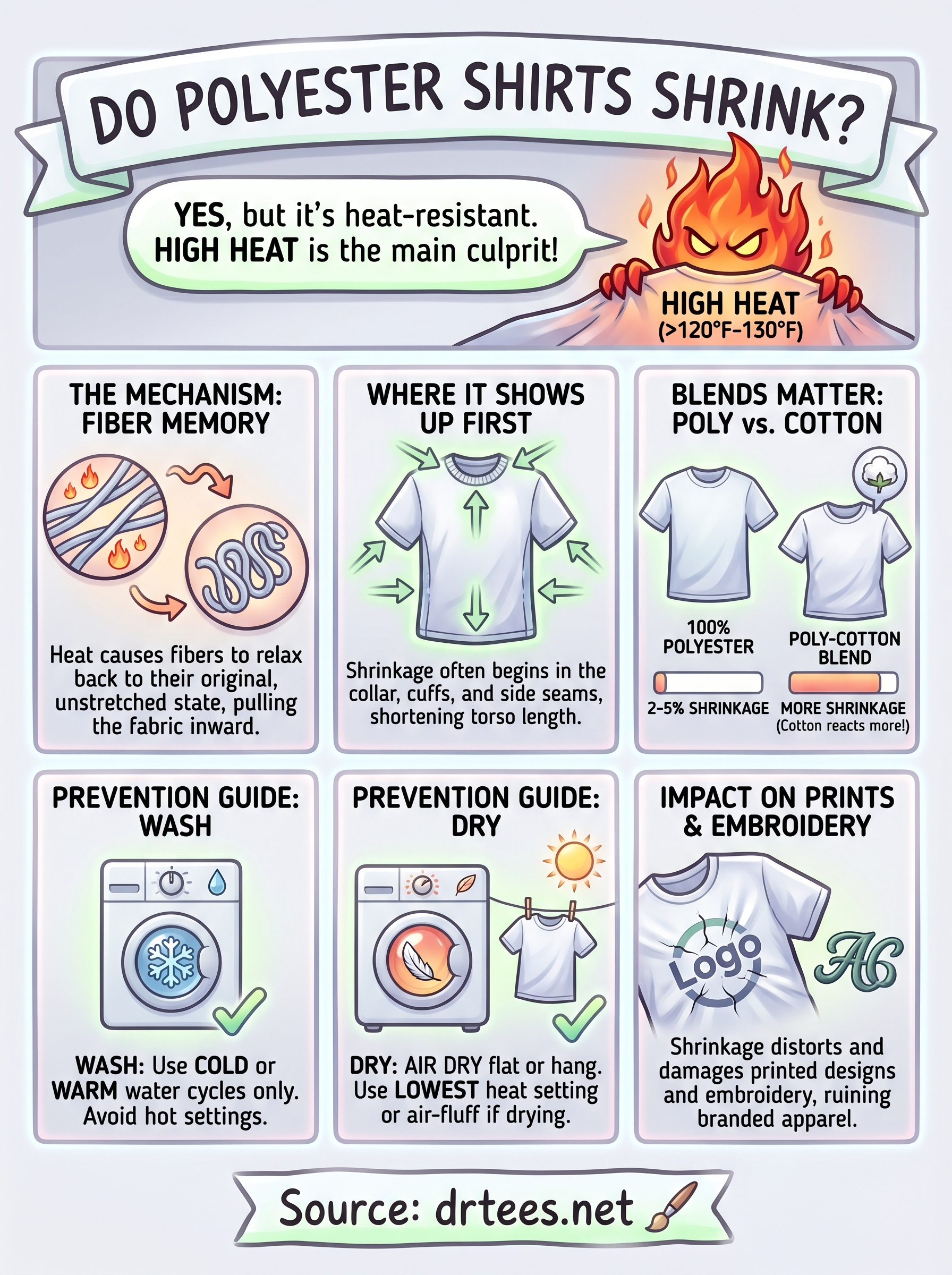
So, do polyester shirts shrink? Yes, but only under specific conditions. High heat is the trigger, and avoiding it keeps your shirts fitting exactly the way they should. Cold or warm washing, low-heat or air drying, and reading your care label before every cycle are the three habits that protect your garments long-term. Poly-cotton blends need extra attention because the cotton in the mix reacts to heat far more aggressively than the polyester fibers do.
For branded workwear, uniforms, or any shirt carrying a screen-printed design or embroidered logo, shrinkage isn’t just a comfort issue. A distorted print or puckered embroidery reflects directly on your business and wastes the investment you made in quality apparel. Choosing the right fabric from the start and caring for it properly keeps your branded apparel looking sharp for the long haul. If you’re ready to order custom shirts your team will actually want to wear, get a quote from Dr. Tee’s Design & Screen Printing today.
