
If you’ve ever searched for custom apparel meaning, the short answer is simple: it’s clothing that’s been personalized or produced to match specific design requirements. But that one-line definition barely scratches the surface. Custom apparel covers everything from screen-printed work shirts for a roofing crew to embroidered polos for a dental office, and the methods, materials, and end results vary widely depending on what you need.
At Dr. Tee’s Design & Screen Printing, we’ve spent over 20 years helping Kansas City businesses and organizations turn blank garments into branded gear. That hands-on experience has given us a clear picture of what custom apparel actually involves, and, just as importantly, what separates a quality custom product from a cheap, forgettable one. Whether you’re ordering your first batch of printed t-shirts or exploring embroidery for employee uniforms, understanding the fundamentals helps you make better decisions and get more value from your investment.
This article breaks down what custom apparel is, how it differs from standard off-the-rack clothing, the most common customization methods (including screen printing and embroidery), and the practical benefits for businesses and individuals. By the end, you’ll have a solid understanding of your options, and a clear idea of which approach fits your goals.
What custom apparel means and what it includes
At its core, custom apparel meaning comes down to one idea: a garment that’s been modified or produced to carry a specific design, logo, or message that wouldn’t appear on a standard store-bought item. The customization can happen to the garment itself (cut, fit, and fabric choice) or to the surface of a finished blank garment through printing, embroidering, or applying a design. Most businesses and organizations work with the second approach, which is faster, more affordable, and doesn’t require manufacturing clothing from scratch.
What counts as custom apparel
Custom apparel covers a wide range of products. A screen-printed t-shirt with your company logo qualifies. So does an embroidered polo with your employee’s name and title stitched above the chest pocket. What connects all of these is that someone made a deliberate decision to add something to a blank garment, whether that’s a brand mark, a team name, an event date, or a custom color combination.
The key distinction is intent: custom apparel starts with a specific design goal, not a rack of pre-made options.
You don’t need to be a large company to use custom apparel. Small businesses, sports teams, schools, and nonprofits all order custom garments regularly, and the minimums at most reputable shops are low enough to make it practical for groups as small as 12 people.
The garments and items it covers
Custom apparel isn’t limited to t-shirts. The term includes hoodies, sweatshirts, polo shirts, tank tops, hats, and tote bags, and the available options continue to grow as more blank product choices enter the market. Each garment type serves a different purpose, and the right choice depends on your audience, your use case, and your budget.
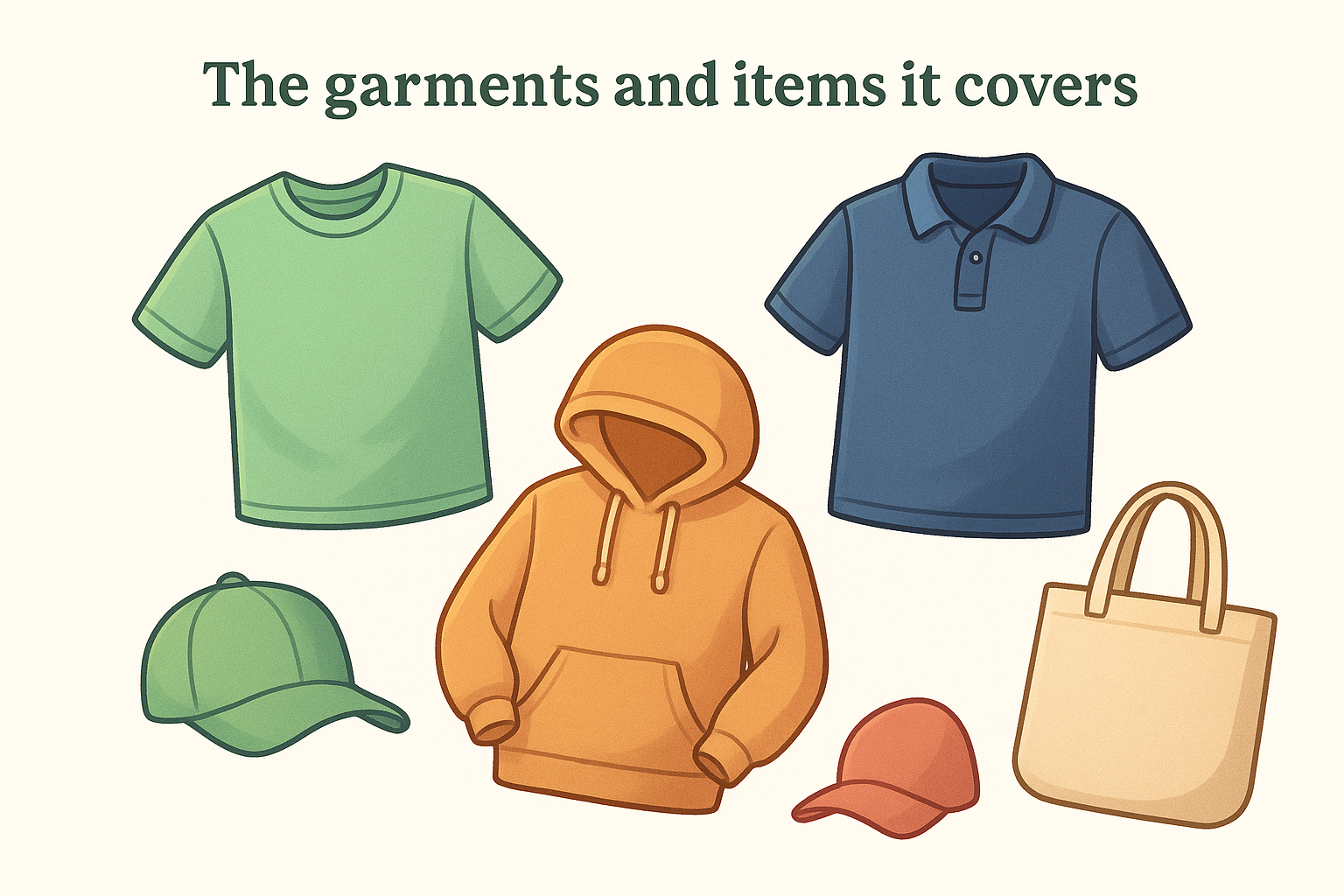
Here’s a quick look at common garment categories:
- T-shirts: The most common choice for events, promotions, and casual uniforms
- Polo shirts: Popular for professional environments like offices, real estate teams, and healthcare settings
- Hoodies and sweatshirts: Frequently used for school spirit wear, athletic programs, and cold-weather work crews
- Hats: A strong branding option that pairs well with other uniform pieces
- Tote bags: Often used for events, trade shows, and retail giveaways
Your choice of garment shapes how the final product looks and how long it lasts. A high-quality blank from a brand like Bella Canvas or Next Level will hold a printed design better and feel noticeably better on the wearer than a low-thread-count alternative. That difference matters when you’re handing out branded apparel as part of a professional impression, whether that’s a uniform, a team kit, or a promotional item at an event.
Custom apparel vs custom clothing and ready-to-wear
These two terms get used interchangeably, but they don’t mean the same thing. Custom clothing typically refers to garments built from scratch, cut and sewn to fit a specific person’s measurements. Custom apparel, as most businesses use the term, means taking a finished blank garment and applying a design to it through printing, embroidery, or another decoration method. The distinction matters when you’re budgeting and planning an order.
What “custom clothing” usually means
When a tailor makes a suit to your exact measurements, that’s custom clothing. The garment is constructed from raw materials based on specifications you provide, and it’s a labor-intensive process that comes with a higher price tag and longer turnaround time. For businesses ordering branded uniforms or team gear, this level of customization is rarely necessary and often impractical at any meaningful scale.
Most organizations get far more value from decorated blank apparel than from made-to-measure garments, especially when ordering 12 to several hundred pieces.
Tailored clothing has its place for specific professional or ceremonial needs, but it’s not what most people mean when they ask about custom apparel meaning for their business or event.
How ready-to-wear fits in
Ready-to-wear apparel is what fills every store shelf: standardized sizes, pre-made designs, no customization. You grab it off the rack and wear it as-is. The trade-off is straightforward: you get no control over the branding, colors, or messaging on the garment. For a business trying to project a consistent brand image, ready-to-wear falls short.
Custom apparel sits between these two categories. You start with a quality blank garment in standard sizing, then add your design, logo, or text through a decoration process. You get the speed and affordability of a pre-made garment combined with the brand control that off-the-rack options simply can’t offer.
Common customization methods and when to use them
Understanding the decoration method that fits your project is one of the most practical parts of understanding custom apparel meaning. Each technique produces a different look, holds up differently through repeated washing, and suits different garment types and design styles. Choosing the wrong method can cost you money or deliver a result that doesn’t match your expectations.
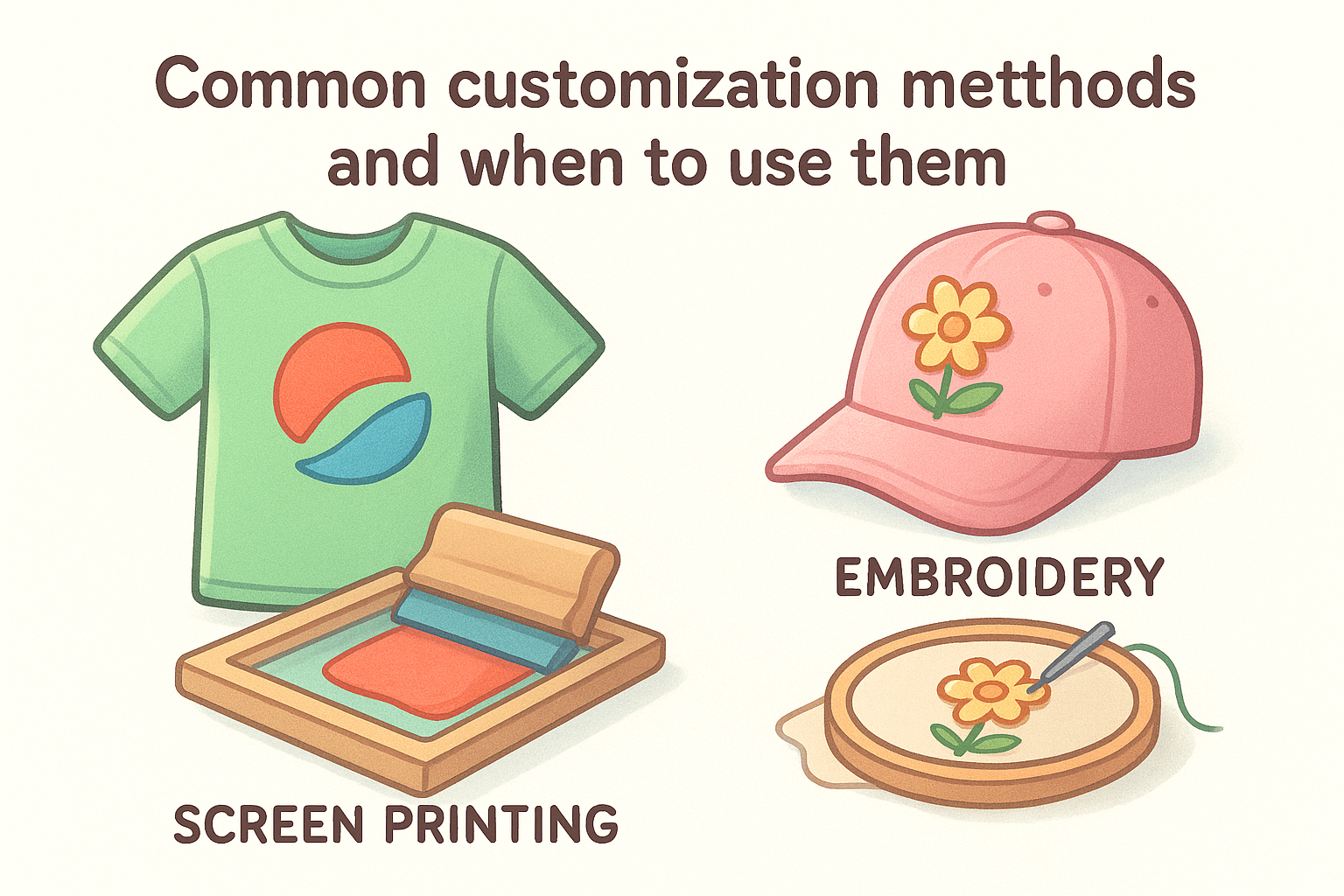
Screen printing
Screen printing is the most widely used method for custom apparel, and it’s the right choice for most businesses ordering bulk quantities of t-shirts, hoodies, or tank tops. The process pushes ink through a mesh screen directly onto the fabric, creating a clean, durable print that holds its color through hundreds of washes when applied correctly.
Screen printing delivers the best cost-per-unit value when you’re ordering 12 or more pieces with the same design.
Each color in your design requires a separate screen, so simpler designs with fewer colors cost less to produce. If your logo is a two-color mark, screen printing is almost always your most affordable and effective path forward.
Embroidery
Embroidery uses thread instead of ink, stitching your design directly into the fabric. The result is a textured, professional finish that works exceptionally well on polo shirts, hats, and structured garments where you want a clean, upscale appearance. Embroidery holds up well in demanding work environments, making it a strong choice for uniforms in industries like landscaping, construction, and healthcare.
The trade-off is detail: embroidery handles bold logos and clear text well, but very fine lines or small fonts can lose clarity in the stitching process. If your design includes intricate details or gradients, screen printing or direct-to-garment printing typically produces a sharper, more accurate result.
Benefits for teams, events, and businesses
Once you understand custom apparel meaning in practice, the benefits become easy to see. Branded garments do real work for you whether you’re running a business, coordinating a team, or organizing an event. The return on a well-executed custom apparel order goes well beyond the cost per shirt.
Building a consistent brand identity
Your brand shows up everywhere your employees go, and what they wear contributes directly to how clients and customers perceive you. A landscaping crew showing up in matching branded t-shirts looks more professional than one in mixed street clothes, even if the quality of the work is identical. That consistency builds immediate trust and recognition before anyone says a word.
Branded apparel turns every job site, office, or public appearance into a low-effort marketing opportunity.
Businesses that outfit their teams in coordinated, logo-bearing garments create a stronger visual identity than those relying on verbal introductions alone. For service businesses in particular, that first visual impression often determines whether a new customer feels confident moving forward.
Strengthening team cohesion
Matching gear signals to your team that they’re part of something unified and intentional. Whether you’re outfitting a youth sports roster or a construction crew, wearing the same branded apparel removes the invisible divide between members and builds a shared sense of identity. Teams that feel connected tend to communicate better and take more ownership of their work.
Making events more memorable
Custom apparel gives your event a physical presence that outlasts the day itself. Attendees who leave with a well-made branded shirt or hoodie carry your message with them every time they wear it. For fundraisers, corporate outings, school spirit days, or community runs, custom garments serve as lasting proof that the event happened, and they keep your name visible long after the crowd goes home.
How to plan and order custom apparel
Knowing the custom apparel meaning for your specific project helps you avoid the most common ordering mistakes. Before you contact a printer, take time to answer a few basic questions: what garment type you need, how many pieces you’re ordering, and what your design looks like. Getting clear on these details upfront saves time and prevents costly revisions later.
Define your quantity and budget first
Your order quantity directly affects your per-unit cost, so nail this down before anything else. Most shops start at a minimum of 12 pieces, but pricing typically improves as your quantity increases. Knowing your budget before you start shopping for garments keeps you from falling in love with a premium blank that blows your numbers.
The more accurate your quantity estimate is upfront, the easier it is for your printer to give you a reliable quote.
Prepare your artwork before you order
Print-ready artwork speeds up your order and reduces the chance of surprises. If you already have a logo, supply it as a vector file (AI or EPS format) when possible. If you don’t have existing artwork, work with a printer that offers in-house design services so you’re not hunting for a separate designer and adding delays to your timeline. Providing clean files upfront often shortens your turnaround by a full day or more.
Confirm garment specs and print placement
Once your design is ready, select your garment style, color, and sizing breakdown. Ask your printer to confirm the print placement before production begins. A left-chest logo sits differently on a polo than on a t-shirt, and small placement errors are far easier to fix on a proof than after 50 shirts have already run through the press. Your printer should also walk you through ink color options to make sure the final product matches your brand standards. Reviewing a digital mockup before approving the job is a standard step that protects both your time and your budget.
Quick Recap and Next Steps
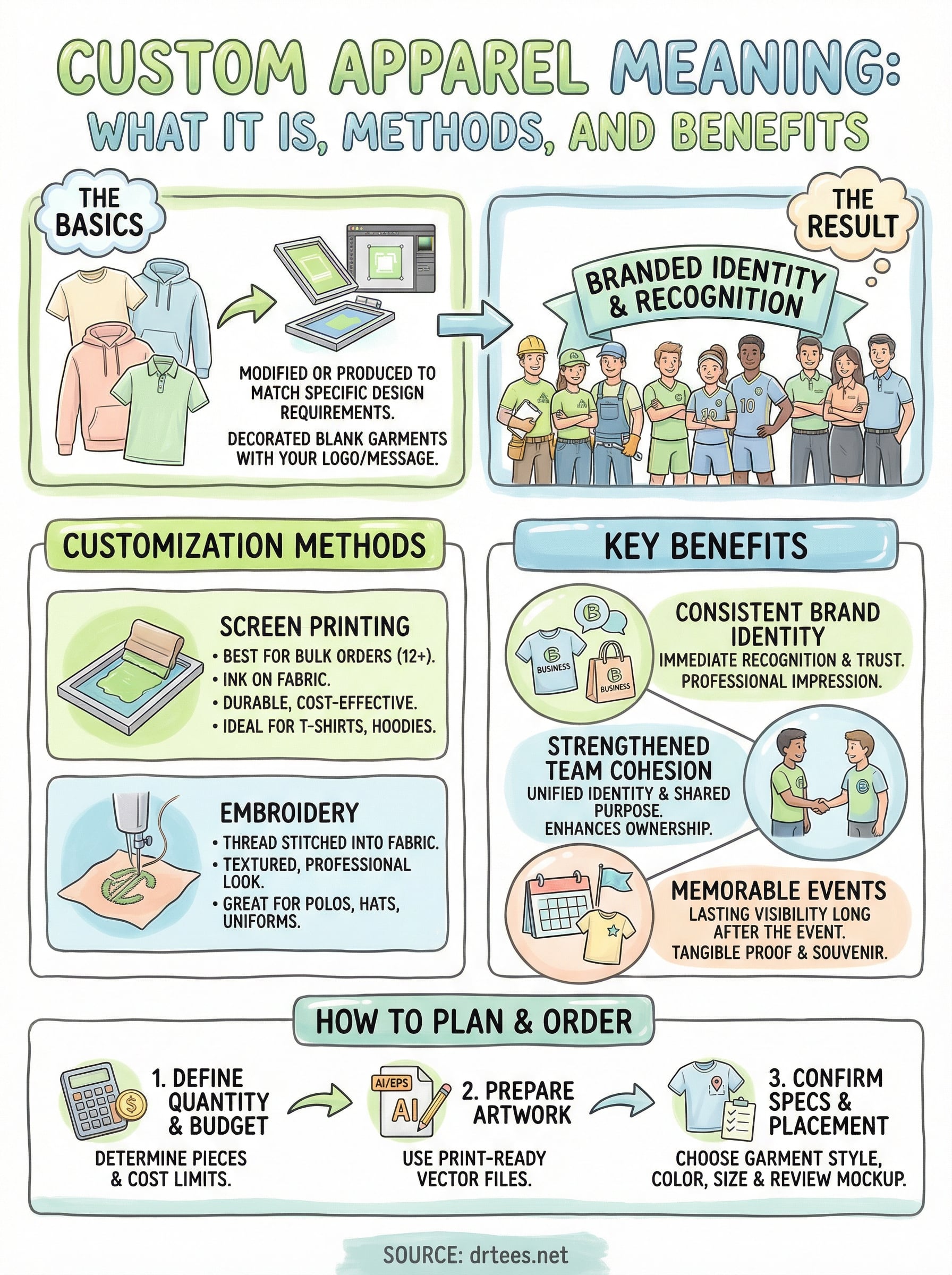
Custom apparel meaning comes down to one practical idea: blank garments decorated with your specific design to serve a clear purpose, whether that’s building brand recognition, unifying a team, or making an event memorable long after it ends. The methods vary. Screen printing works best for bulk orders, embroidery suits structured garments and professional settings, and your choice of blank matters as much as the decoration itself.
Your next move is straightforward. Nail down your quantity and prepare clean artwork before you contact a printer. Confirming your print placement before production starts eliminates most of the common problems that slow orders down or lead to disappointing results.
Ready to get moving? See exactly how the ordering process works at Dr. Tee’s Design & Screen Printing from design submission to final delivery. Over 20 years of Kansas City experience backs every order, and low minimums starting at 12 pieces mean you can get started without committing to a large run.
