
Starting a clothing line sounds exciting, until you realize there’s more to it than just picking cool designs. Whether you’re an entrepreneur with a vision or a small business owner looking to expand into branded merchandise, understanding what actually goes into launching your own apparel brand can save you time, money, and frustration.
The good news? You don’t need a fashion degree or a massive startup budget to get started. What you do need is a clear plan, reliable production partners, and quality materials that represent your brand well. As a Kansas City screen printing company with over 20 years of experience helping businesses bring their apparel ideas to life, we’ve seen firsthand what separates successful clothing lines from those that fizzle out.
This guide breaks down exactly what a clothing line is, the different types you can launch, and the step-by-step process to turn your idea into actual products people want to wear.
What a clothing line is and what it is not
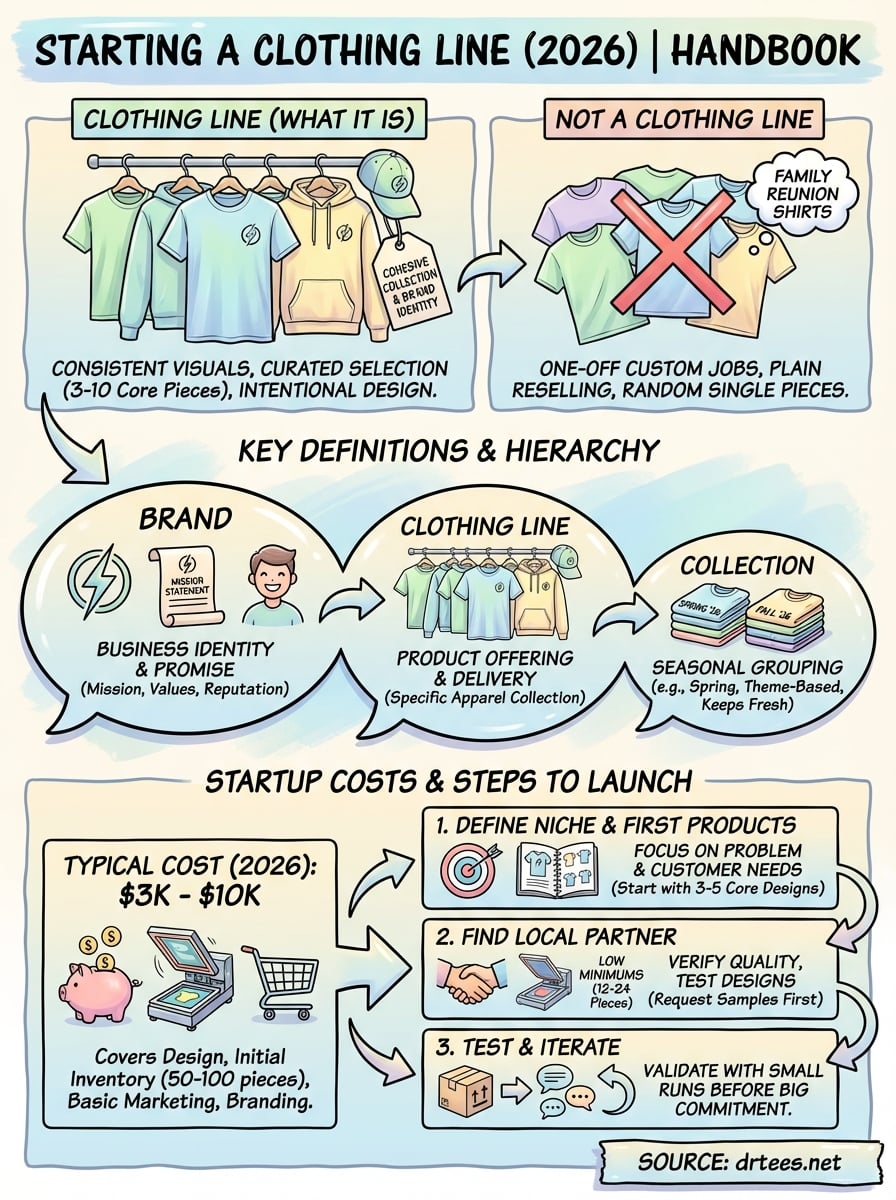
A clothing line is a collection of apparel pieces that share a common theme, design philosophy, or brand identity. Think of it as your cohesive product lineup that customers can identify with your business, whether that’s five basic t-shirt designs or a full range of hoodies, hats, and accessories. Your clothing line represents what you stand for as a brand and typically gets updated or expanded over time.
What actually defines a clothing line
Your clothing line needs consistent visual elements that tie everything together. This means using the same logo placement, color schemes, or design style across multiple products. You’re not just selling random shirts, you’re offering a curated selection that makes sense as a group. Most successful lines start with 3 to 10 core pieces rather than trying to launch with hundreds of options right away.
The key is that each item in your line should feel connected to the others. If you’re creating athletic wear, your entire lineup should reflect that purpose through fabric choices, fits, and functionality.
A real clothing line has intention behind every design decision, not just random graphics on whatever blanks you can find.
What a clothing line is not
Your clothing line is not a one-off custom order for a family reunion or bachelor party. Those are custom print jobs, not product lines. It’s also not just buying wholesale blank apparel and reselling it without any customization or branding. If you’re simply marking up plain Gildan t-shirts, you’re a distributor, not running your own line.
You’re also not creating a clothing line if you’re making single pieces without any plan for consistency or future production. A true line requires repeatable designs that you can produce in quantities and offer to customers regularly.
Clothing line vs brand vs collection
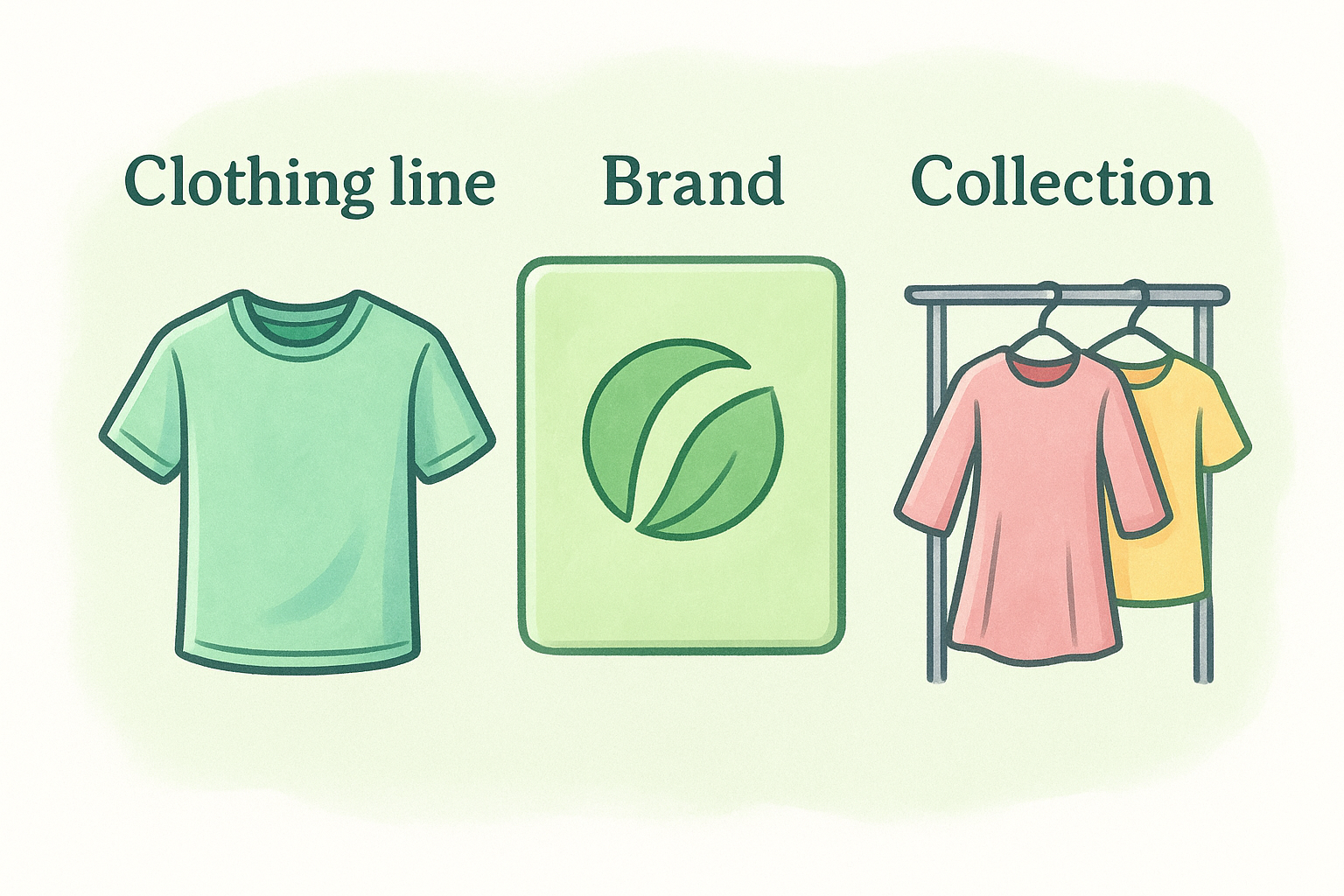
People often mix up these terms, but understanding the difference helps you communicate clearly with manufacturers and customers. Your brand is your entire business identity, while your clothing line is the specific product offering under that brand. Collections are seasonal or themed groupings within your line that keep your offerings fresh.
Your brand is bigger than your line
Your brand encompasses everything about your business: your logo, mission, values, customer service approach, and overall reputation. It’s the emotional connection people have with your company. Your clothing line is just one expression of that brand. For example, Nike is the brand, but they have multiple product lines like running apparel, basketball gear, and lifestyle wear, each targeting different customer needs.
Your brand is the promise you make to customers, while your clothing line is how you deliver on that promise through actual products.
Collections sit within your line
A collection is a curated group of pieces released together, usually tied to a season, theme, or specific purpose. You might launch a spring collection with lighter fabrics and brighter colors, then follow up with a fall collection featuring heavier materials. Collections help you keep your clothing line feeling current without completely abandoning your core designs. Many successful apparel businesses release two to four collections per year to maintain customer interest.
If you meant a clothesline for laundry
Some people searching “clothing line” might actually need information about outdoor drying equipment for hanging wet laundry. That’s a clothesline (one word), which is a completely different product than what we’re discussing in this article. A clothesline refers to the rope or wire you stretch between two points to air-dry your freshly washed clothes outside or in your laundry room.
The difference between the two terms
Your search query determines what you’ll find. If you need drying equipment, you’re looking for a “clothesline” (singular word) which you can find at major retailers like Amazon or Home Depot. These come in retractable models, umbrella-style drying racks, or traditional rope setups that connect between two poles or posts in your yard.
A clothesline dries your laundry, while a clothing line is a collection of branded apparel you create and sell.
What we cover in this guide is entirely about fashion and business, specifically how you can design, produce, and market your own branded apparel collection. If you’re here to start an apparel business rather than hang wet towels, you’re in the right place.
How much it costs to start a clothing line in 2026
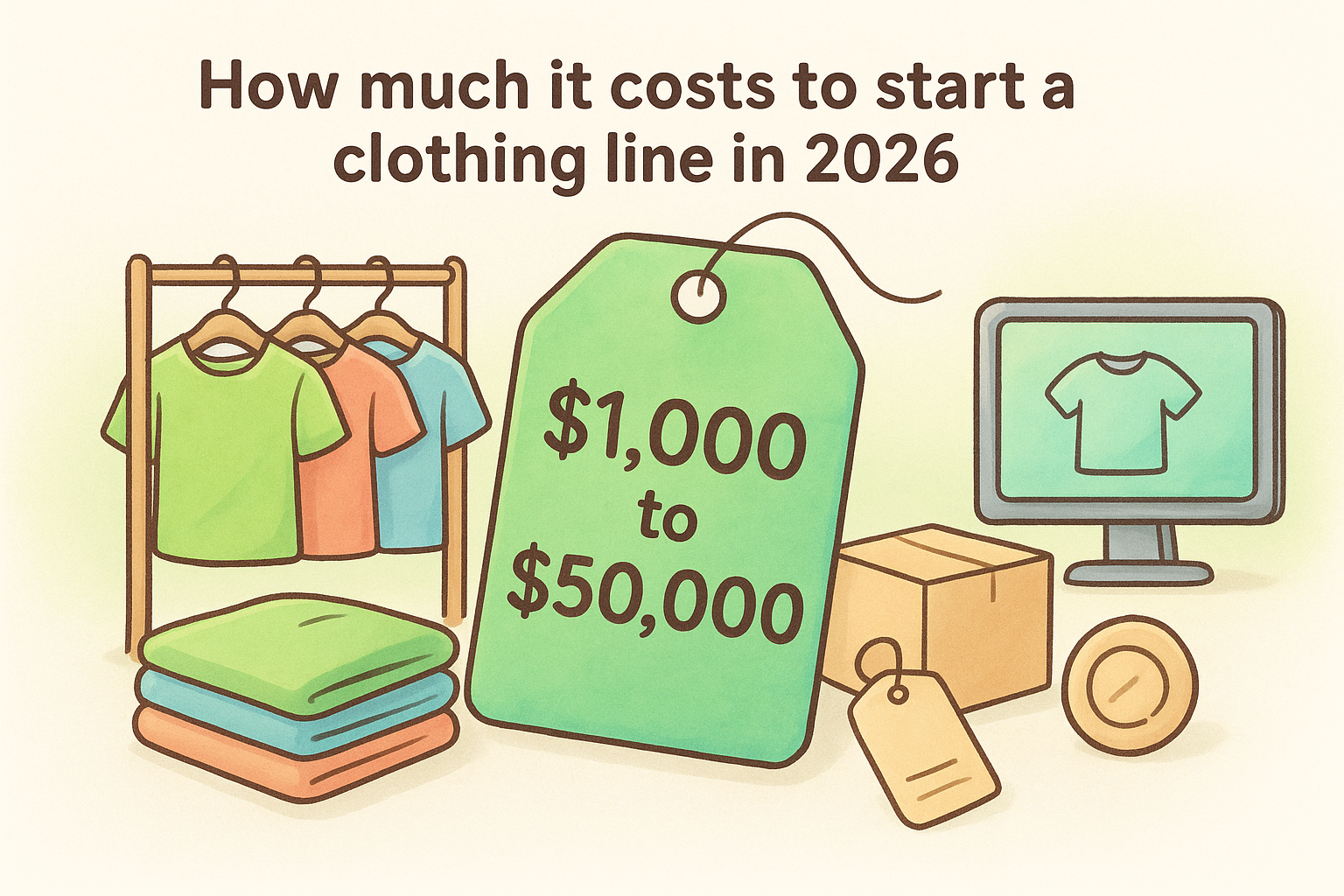
Starting a clothing line in 2026 can cost anywhere from $1,000 to $50,000 depending on your approach, production scale, and quality standards. The biggest variable is whether you’re doing small batch screen printing with a local shop or manufacturing overseas with higher minimums. Most small businesses find success starting in the $3,000 to $10,000 range, which covers initial inventory, design work, and basic marketing.
Your essential startup expenses
Your first round of expenses includes design and sampling (usually $200 to $1,000), initial inventory production (minimum order of 50 to 100 pieces typically runs $500 to $3,000), and setting up a basic online store through platforms like Shopify ($29 to $79 monthly). You’ll also need branding materials like hang tags, packaging, and care labels, which add another $200 to $500 to your budget. Screen printing minimums of just 12 pieces can help you test designs before committing to larger runs.
Starting small with local production partners lets you validate your designs without betting your entire budget on unproven products.
Ongoing costs beyond your first order
Marketing your clothing line requires a monthly budget of at least $300 to $1,000 for social media ads, influencer partnerships, or local events. You’ll need to reorder inventory as pieces sell, maintain your website, and possibly invest in photography and content creation to showcase new collections. Factor in around 15 to 20 percent of your revenue for these recurring expenses as your business grows.
How to start a clothing line step by step
Launching your clothing line requires a methodical approach rather than jumping straight into production. The process involves validating your concept, finding reliable manufacturing partners, and building a customer base before you invest heavily in inventory. Most successful apparel entrepreneurs start with a focused product range of three to five items rather than trying to create dozens of designs at once.
Define your niche and first products
Your clothing line needs a clear target customer and specific problem you’re solving for them. Are you creating work uniforms for trade professionals, athletic wear for a specific sport, or casual streetwear for a particular lifestyle? Choose your first three to five designs based on what your target audience actually needs, not just what you think looks cool. Research your competitors to find gaps in the market where you can stand out.
Starting with a specific niche makes your marketing easier and helps you build a loyal customer base faster than trying to appeal to everyone.
Partner with a production facility
Finding the right screen printing or embroidery partner determines your product quality and profit margins. Look for local manufacturers who offer low minimum orders (12 to 24 pieces) so you can test designs without huge upfront costs. Request samples before placing your first order to verify their work quality matches your standards.
Next steps
Starting your own clothing line becomes much simpler when you work with experienced production partners who understand small business needs. You’ve learned what differentiates a clothing line from random custom orders, how much capital you’ll need to launch, and the step-by-step process to bring your designs to market. The most successful apparel entrepreneurs start with a focused product range rather than overwhelming themselves with hundreds of options.
Your next move is finding a reliable screen printing partner who can handle low minimums while maintaining quality standards. Testing your designs with small production runs lets you validate your concepts before committing to large inventory orders. This approach saves you money and reduces risk as you build your customer base.
Ready to turn your apparel ideas into actual products? Learn how our streamlined production process helps businesses launch their clothing lines with low 12-piece minimums and over 20 years of screen printing expertise.
