
Carhartt has been outfitting workers since 1889, and over a century later, it’s still one of the most recognized names in durable workwear. Whether you’re a plumber, a roofer, or a landscaper, there’s a good chance you’ve owned at least one piece of Carhartt gear, or you’ve thought about it. The brand carries a reputation that few competitors can match, built on decades of real-world performance in harsh conditions.
At Dr. Tee’s Design & Screen Printing, we work with Kansas City trade professionals and business owners every day who want their team looking sharp and professional. That means we get a lot of questions about workwear brands like Carhartt, what makes them worth the price, what products they offer, and whether they’re a good fit for custom branding and embroidery. It’s a fair set of questions, especially when you’re investing in uniforms for your crew.
This article breaks down what Carhartt actually is, what they sell, and why the brand has earned loyalty from both blue-collar workers and streetwear fans alike. If you’ve been considering Carhartt for your business or personal use, this will give you the full picture.
What Carhartt is and where it came from
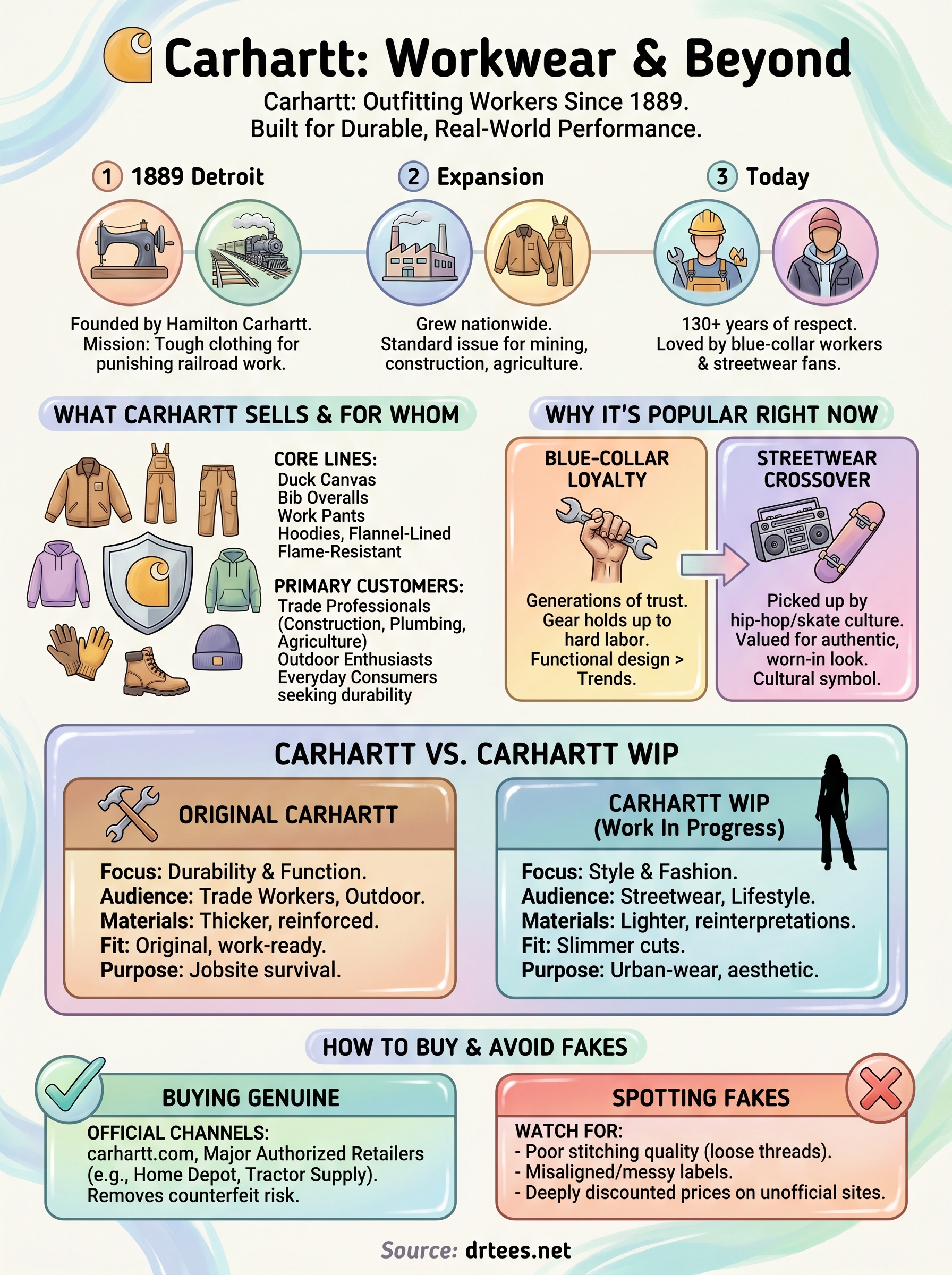
Carhartt is an American workwear brand founded in 1889 by Hamilton Carhartt in Detroit, Michigan. The company started with a single mission: build clothing tough enough to hold up under the physical demands that American workers put on their gear every single day. That focus has not shifted in over 130 years, which is a big part of why the brand still carries so much weight.
From a Detroit factory to every jobsite in America
Hamilton Carhartt launched the company with two sewing machines and a handful of employees, targeting railroad workers who needed clothing that could survive brutal conditions. Railroad work was physically punishing, and standard clothing at the time simply fell apart too fast. Carhartt built his early products specifically for that audience, and word spread fast.
The brand’s early growth came directly from earning the trust of workers who had no patience for gear that failed them on the job.
By the early 1900s, Carhartt had expanded across the country and opened factories in multiple states. The brand became a standard issue for workers in mining, construction, agriculture, and manufacturing. The duck canvas jacket and bib overalls became iconic because they solved a real problem, not because of marketing.
What makes the brand’s foundation matter today
Understanding where Carhartt came from helps explain why it still commands respect on a jobsite. The company was built around functional design and durable materials, not trends or aesthetics. Every product started with the question of whether a working person could actually use it in hard conditions.
That origin story carries practical weight for you if you’re looking at Carhartt gear for your crew. You’re buying into 130-plus years of product refinement aimed directly at people who work with their hands.
What Carhartt sells and who it’s for
Carhartt’s product catalog is built around durable workwear and outdoor gear, covering everything from jackets and pants to gloves, hats, and footwear. The brand also sells bags, base layers, and accessories designed for people who spend most of their day outside or in physically demanding environments.
Core product lines
The core lineup includes duck canvas jackets, bib overalls, work pants, hoodies, and flannel-lined gear built to handle cold weather and rough conditions. You’ll also find flame-resistant clothing designed for workers in environments where safety standards require specific protective materials.
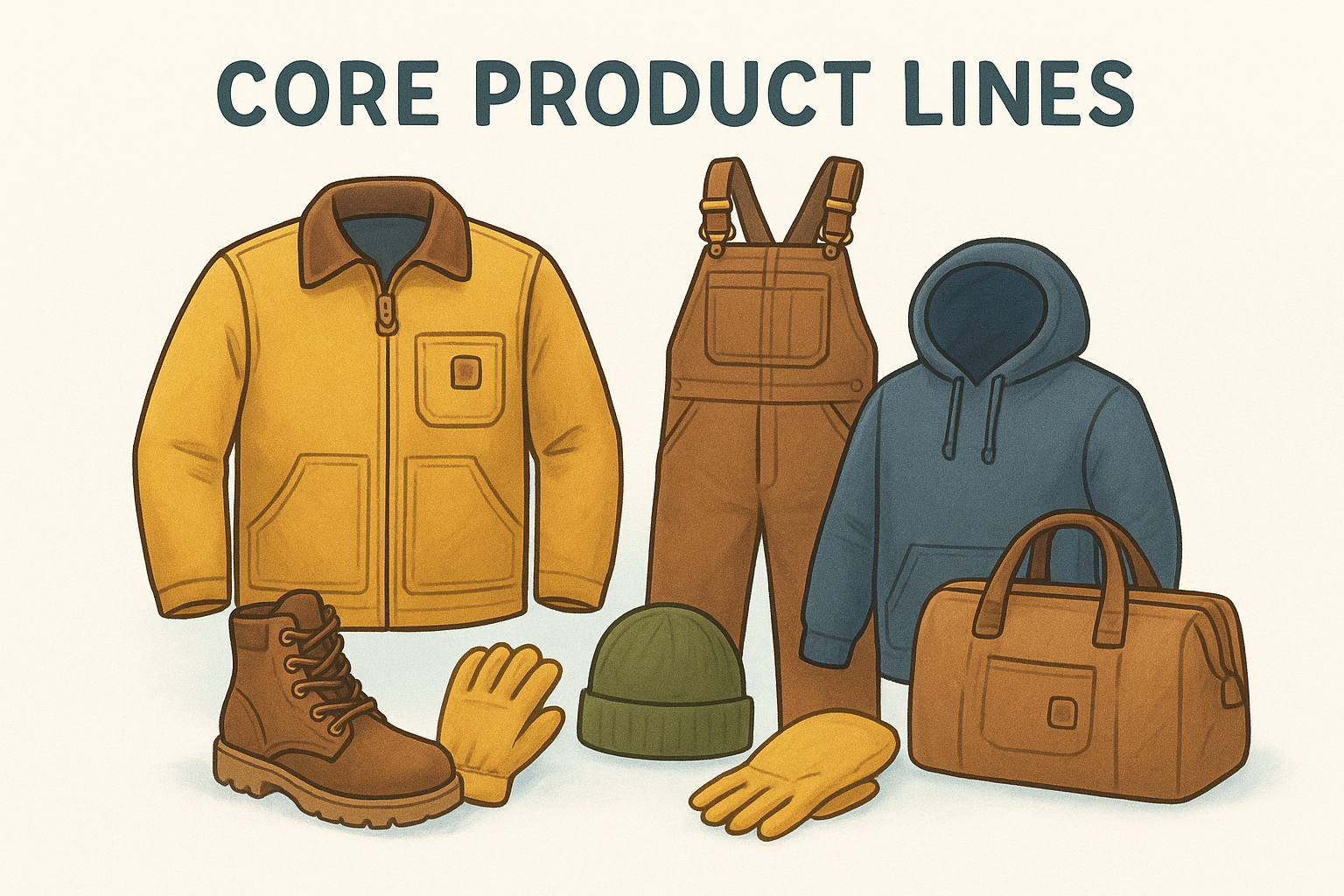
Carhartt’s product range is wide, but every category points back to the same core purpose: gear that holds up when the job gets hard.
Who actually buys it
The primary Carhartt customer is someone who works with their hands, whether that’s in construction, agriculture, plumbing, or any other trade. These buyers need clothing that lasts through a full season of hard use without falling apart at the seams.
Beyond trade professionals, outdoor enthusiasts and everyday consumers also buy Carhartt for its durability and straightforward style. If you want gear that performs without requiring constant replacement, Carhartt fits that need directly.
Why Carhartt is so popular right now
Carhartt’s current popularity comes from two separate audiences discovering the same product for very different reasons. Trade workers have relied on the brand for generations, and that loyalty has never faded. At the same time, streetwear and fashion communities picked up Carhartt as a cultural symbol sometime in the 1990s, and that momentum has only grown since.
The workwear-to-streetwear crossover
The brand’s crossover into street fashion started with hip-hop and skateboarding communities who valued the same things tradespeople did: gear that held up and looked worn-in without falling apart. A Carhartt beanie or canvas jacket carried a visual identity that felt authentic rather than manufactured.
When a product earns its reputation on jobsites first, it brings real credibility that no marketing budget can replicate.
That authenticity is exactly why younger consumers and lifestyle brands keep gravitating toward Carhartt. You’re not buying into a trend that started in a boardroom. You’re wearing something that has decades of real-world proof behind it. For Kansas City business owners thinking about branded workwear, that durability and built-in credibility is part of what makes Carhartt worth considering for your crew’s uniforms.
Carhartt vs Carhartt WIP
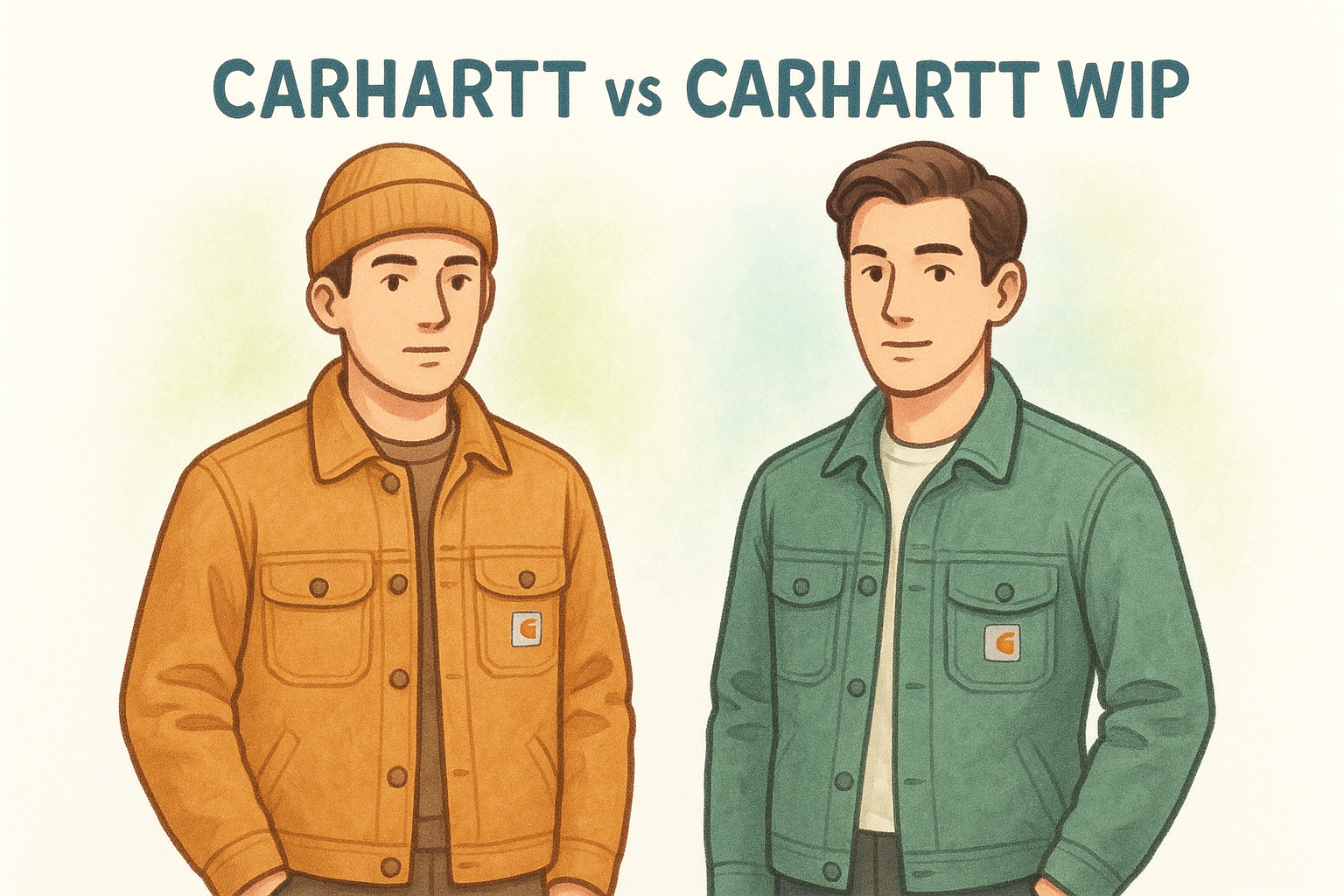
If you’ve shopped for Carhartt gear and noticed two different labels, you’re not imagining things. Carhartt and Carhartt WIP are two separate product lines with different audiences, price points, and design philosophies.
What Carhartt WIP actually is
Carhartt WIP stands for Work In Progress, and it operates as a European licensee that reinterprets original Carhartt designs for a fashion-forward market. The line launched in the early 1990s and targets streetwear and lifestyle consumers rather than trade professionals. You’ll find slimmer cuts, different colorways, and details that lean more toward style than function.
The same iconic silhouettes appear in both lines, but WIP versions are designed for wearing in the city, not on a worksite.
Which one fits your needs
For trade professionals, construction crews, and anyone working outdoors, the original Carhartt line is the right call. You get thicker materials, reinforced construction, and gear built to survive real working conditions. WIP products carry a higher price tag and are made for a different purpose entirely. If you’re buying branded workwear for your team, stick with the original line and skip the fashion markup.
How to buy Carhartt and avoid fakes
Buying genuine Carhartt products is straightforward if you know where to look, but counterfeit workwear has become common enough that it’s worth knowing what to watch for. The brand’s reputation makes it a target for knockoffs, and fake versions won’t hold up the way authentic gear is supposed to.
Where to buy genuine Carhartt
Your safest options are Carhartt’s official website at carhartt.com and major authorized retailers like Amazon, Home Depot, and Tractor Supply. These channels carry the full product line and back purchases with return policies you can actually use.
Buying directly from the brand’s official channels removes nearly all risk of receiving a counterfeit product.
How to spot a fake
Stitching quality is the fastest tell. Authentic Carhartt products use tight, consistent stitching with no loose threads or uneven seams. Check the label and tag placement as well since real Carhartt tags sit flush and print cleanly without smearing or misalignment. If a price seems dramatically lower than what carhartt.com lists, treat that as a warning sign. Sellers offering deep discounts on name-brand workwear through unofficial marketplaces are rarely selling the real thing.
Wrap It Up
Carhartt built its name the slow way, by making gear that actually holds up for the people who wear it every day. Over 130 years later, that same focus on durability and function is why both tradespeople and streetwear fans still reach for the brand. You now know the difference between the original line and WIP, what to watch out for when buying, and which products fit which kind of buyer.
If you’re a Kansas City business owner thinking about putting your logo on quality workwear for your crew, the next step is getting your branded apparel dialed in with a team that knows what they’re doing. Dr. Tee’s Design & Screen Printing has over 20 years of experience helping trade professionals look sharp on every jobsite. Get a quote and start your custom order and we’ll walk you through the whole process from design to delivery.
