
Choosing the best shirts for screen printing can make or break your final product. The wrong blank leads to cracked ink, shrinking fabric, and disappointed customers, while the right one delivers crisp prints that hold up wash after wash.
After over 20 years of screen printing hundreds of custom orders here at Dr. Tee’s Design & Screen Printing in Kansas City, we’ve tested just about every blank on the market. Some brands consistently deliver. Others look great on paper but fail under the squeegee or after a few trips through the dryer.
This guide breaks down our top six shirt recommendations for 2026, covering everything from budget-friendly workhorses to premium retail-quality blanks. Whether you’re printing uniforms for your crew, launching a merch line, or outfitting a sports team, you’ll find options that fit your project and your budget. We’ll cover fabric composition, printability, durability, and where each shirt shines, so you can order with confidence.
1. Next Level Apparel 3600
The Next Level 3600 consistently ranks among the best shirts for screen printing for a reason: it combines a soft hand feel with reliable printability at a mid-range price point. This 60/40 cotton-poly blend offers the drape and comfort of a retail tee while holding up to production volume and repeat washing. We’ve printed thousands of these blanks for everything from brewery merch to corporate events, and they deliver predictable results batch after batch.
What the fabric feels like and how it fits
You’ll notice the combed ring-spun cotton gives this shirt a noticeably softer feel than standard ringspun blanks. The modern fitted cut runs slightly slimmer through the body and sleeves, appealing to customers who want a contemporary retail look instead of a boxy fit. Shoulders sit closer to the body, and the longer torso length prevents ride-up during wear.
Why it prints well with plastisol and water-based ink
This blank handles both plastisol and water-based inks without major adjustments to your process. The cotton-poly blend provides enough tooth for ink adhesion while the tight knit prevents heavy bleed-through on lighter colors. Water-based prints soak into the fibers cleanly, and plastisol sits on top with minimal flashing needed for opacity.
The blend ratio gives you reliable flash times and consistent curing without the shrinkage issues you’ll see on 100 percent cotton blanks.
What to watch for on heathers and blends
Heather colors can show slight color variation between dye lots, so order all your blanks for one job at the same time. The polyester content in heathers may require a lower cure temperature to avoid scorching, particularly on darker tri-blends. Test your press settings before running a full batch.
Best use cases and order types
This shirt works well for retail merchandise, event apparel, and small business branding where quality perception matters. You’ll see it used heavily in craft beer collaborations, band merch, and boutique apparel lines. Minimum orders of 12 to 24 pieces make it accessible for small runs.
Typical blank cost and availability
Expect to pay $3.50 to $5.50 per blank depending on volume and color selection. Most wholesale suppliers keep popular colors in stock year-round, with special heathers sometimes requiring longer lead times.
2. Bella+Canvas 3001
The Bella+Canvas 3001 holds a reputation among professional printers as one of the best shirts for screen printing when print detail matters most. This 100 percent combed and ring-spun cotton blank delivers a retail-grade feel at a price point that still works for wholesale production. The tight knit structure and consistent fabric weight make it our go-to choice for designs with fine lines, halftones, or intricate artwork that demands clean registration.
What the fabric feels like and how it fits
You’ll feel the difference immediately when you handle this blank. The 4.2-ounce fabric weight creates a lightweight drape without feeling flimsy, and the side-seamed construction prevents twisting after washing. This shirt runs true to size with a slightly tapered waist that appeals to customers looking for a modern fit without the extreme slim cut of fashion blanks.
Why it works for high-detail prints
The smooth surface texture of combed cotton allows your squeegee to glide evenly across the fabric, laying down thin ink deposits that capture fine detail. You’ll achieve sharper edges on small text and complex graphics compared to looser-knit blanks. Screen mesh counts above 156 threads per inch work particularly well on this surface.
How to plan ink and underbase on dark colors
Dark colorways require proper underbase planning to maintain print vibrancy. Flash cure your white underbase completely before laying down top colors, and consider a second white layer on black or navy blanks when printing bright inks. The tight weave helps minimize ink absorption, so you won’t need excessive underbase thickness.
Test your underbase opacity with a single print before running production to dial in flash times and avoid scorching.
Best use cases and order types
This blank excels in retail merchandise, art prints, and fashion-forward apparel where customers expect premium quality. We print these regularly for online stores, galleries, and small brands launching new collections.
Typical blank cost and availability
Expect pricing between $4.00 and $6.00 per shirt depending on your order volume and color selection. Most suppliers stock core colors consistently, though specialty shades may require advance ordering.
3. Comfort Colors 1717
The Comfort Colors 1717 stands apart from other blanks on the best shirts for screen printing lists because of its distinctive garment-dyed construction. This process creates the signature soft, lived-in feel that drives demand for vintage-inspired apparel. You’ll pay more per blank compared to standard tees, but customers recognize the premium hand feel immediately, making it worth the investment for retail-quality merchandise and boutique collections.
What garment-dyed cotton changes for printing
Garment dyeing happens after the shirt gets sewn, which creates unique texture variations and slight color differences from piece to piece. The 100 percent ring-spun cotton absorbs dye unevenly, giving each blank subtle character that mass-produced tees can’t replicate. This process also preshrinks the fabric, so you’ll see minimal dimensional changes after customer washing.
How to keep prints looking vintage, not faded
Your ink deposit needs proper opacity to stand out against the textured surface without looking washed out. Flash your underbase longer than you would on standard blanks, and increase your print pressure slightly to push ink into the fabric valleys. Water-based inks blend naturally with the garment-dyed aesthetic.
Test cure temperatures carefully since the preshrunk cotton can scorch faster than raw blanks if you run too hot.
Best ink and art styles for this blank
Bold graphics with solid fills work better than fine details on this textured surface. Vintage designs, distressed artwork, and simple text treatments match the aesthetic customers expect from Comfort Colors.
Best use cases and order types
You’ll see these used heavily in Greek life apparel, campus bookstores, and coastal retail shops where the relaxed fit and soft hand feel drive sales. Plan for minimums around 24 pieces per color.
Typical blank cost and availability
Expect to pay $6.00 to $8.50 per shirt depending on volume and seasonal demand. Popular colors like blue jean and crimson move quickly during peak seasons.
4. Gildan Ultra Cotton 2000
The Gildan Ultra Cotton 2000 earns its place among the best shirts for screen printing through sheer reliability and value rather than premium feel. This 6.0-ounce 100 percent cotton blank delivers the durability and printability that high-volume jobs demand without the price tag of retail-grade alternatives. You’ll find this workhorse blank in uniform shops, promotional product catalogs, and budget-conscious merchandising projects where quantity matters more than fashion-forward fit.
What “heavyweight” means for durability and opacity
The 6.0-ounce fabric weight creates a substantial hand feel that customers associate with quality and longevity. This thicker construction provides better opacity on lighter colors, reducing the number of underbase layers needed for dark ink coverage. The weight also means fewer transparency issues when printing on white or natural blanks.
Why it works for simple, high-volume prints
Simple graphics with solid colors perform consistently on this blank without requiring extensive setup adjustments. The straightforward cotton construction handles standard plastisol inks with predictable flash times and curing temperatures. You’ll maintain consistent results across large production runs without unexpected variables.
How to avoid common print and feel issues
Prewash samples before quoting jobs since this blank shows higher shrinkage rates than preshrunk alternatives. Account for 3 to 5 percent dimensional change in both length and width after the first wash cycle.
Size up when ordering if your customers expect a relaxed fit after washing.
Best use cases and order types
This shirt works well for trade show giveaways, work uniforms, and promotional campaigns where budget constraints matter most. Minimum orders typically start around 12 to 24 pieces.
Typical blank cost and availability
Expect pricing between $2.50 and $3.75 per blank depending on order volume. Most distributors stock this blank year-round in core colors.
5. Hanes Beefy-T 5180
The Hanes Beefy-T 5180 earns a spot among the best shirts for screen printing through its reputation for consistency and straightforward printability. This 6.1-ounce 100 percent cotton blank uses a thicker knit structure that creates a sturdy foundation for ink deposits while maintaining the familiar feel customers expect from traditional tees. You’ll find this blank in uniform programs, work apparel, and promotional orders where reliability matters more than fashion-forward styling.
What the thicker knit does for print consistency
The heavier knit construction creates a more stable printing surface compared to lightweight alternatives. Your screens register more accurately across production runs because the fabric resists stretching during the printing process. Flash times stay predictable and consistent since the thicker cotton absorbs and releases heat at steady rates.
Why it works well for white tees and bold colors
White blanks show excellent opacity with this construction, requiring fewer underbase layers for dark ink coverage. Solid color prints pop against the dense fabric background without the bleed-through issues you might see on thinner blanks.
How to manage shrink and sizing expectations
Plan for standard cotton shrinkage of 3 to 5 percent after the first wash cycle. Order samples and prewash them before committing to large production runs to confirm final dimensions.
This blank runs true to size before washing, so account for shrinkage when selecting sizes for end users.
Best use cases and order types
This shirt works well for work crews, promotional events, and budget-conscious uniform programs where durability outweighs modern fit preferences. Minimum orders typically start around 12 to 24 pieces.
Typical blank cost and availability
Expect pricing between $3.00 and $4.50 per blank depending on order volume. Most suppliers maintain steady inventory in white and core colors throughout the year.
6. Port & Company Core Cotton PC54
The Port & Company Core Cotton PC54 rounds out our list of best shirts for screen printing as the reliable budget option that consistently delivers value over flash. This 5.4-ounce 100 percent cotton blank prioritizes function over fashion, making it the practical choice for projects where cost per unit directly impacts profitability. You’ll find this shirt powering large uniform programs, charity runs, and promotional campaigns where durability and printability matter more than retail-quality finishes.
When a “workhorse” blank beats a premium tee
Volume printing demands favor blanks that perform predictably without premium pricing. This shirt delivers consistent printability across thousands of impressions while keeping your blank costs low enough to maintain healthy margins on budget-conscious orders. Organizations ordering recurring uniform replenishments appreciate the stable pricing and year-round availability that keeps reorder programs simple.
What to expect from fit, seams, and fabric texture
You’ll notice the relaxed fit runs slightly boxier through the body and sleeves compared to fashion-forward alternatives. The standard cotton construction creates a straightforward fabric texture without special finishing treatments. Shoulder seams and sleeve hems use basic double-needle stitching that prioritizes durability over refined details.
How it handles large prints and repeated washing
Large print areas lay down smoothly on this blank without requiring excessive underbase layers. The straightforward cotton fiber accepts plastisol inks reliably and maintains print adhesion through commercial laundering cycles.
Plan for standard cotton shrinkage of 3 to 5 percent after the first wash to avoid sizing issues.
Best use cases and order types
This blank works well for company uniforms, volunteer events, and high-volume promotional campaigns where budget constraints drive purchasing decisions. Minimum orders typically start around 12 to 24 pieces per color.
Typical blank cost and availability
Expect pricing between $2.25 and $3.50 per blank depending on order volume and color selection. Most distributors maintain deep inventory in white and common colors throughout the year.
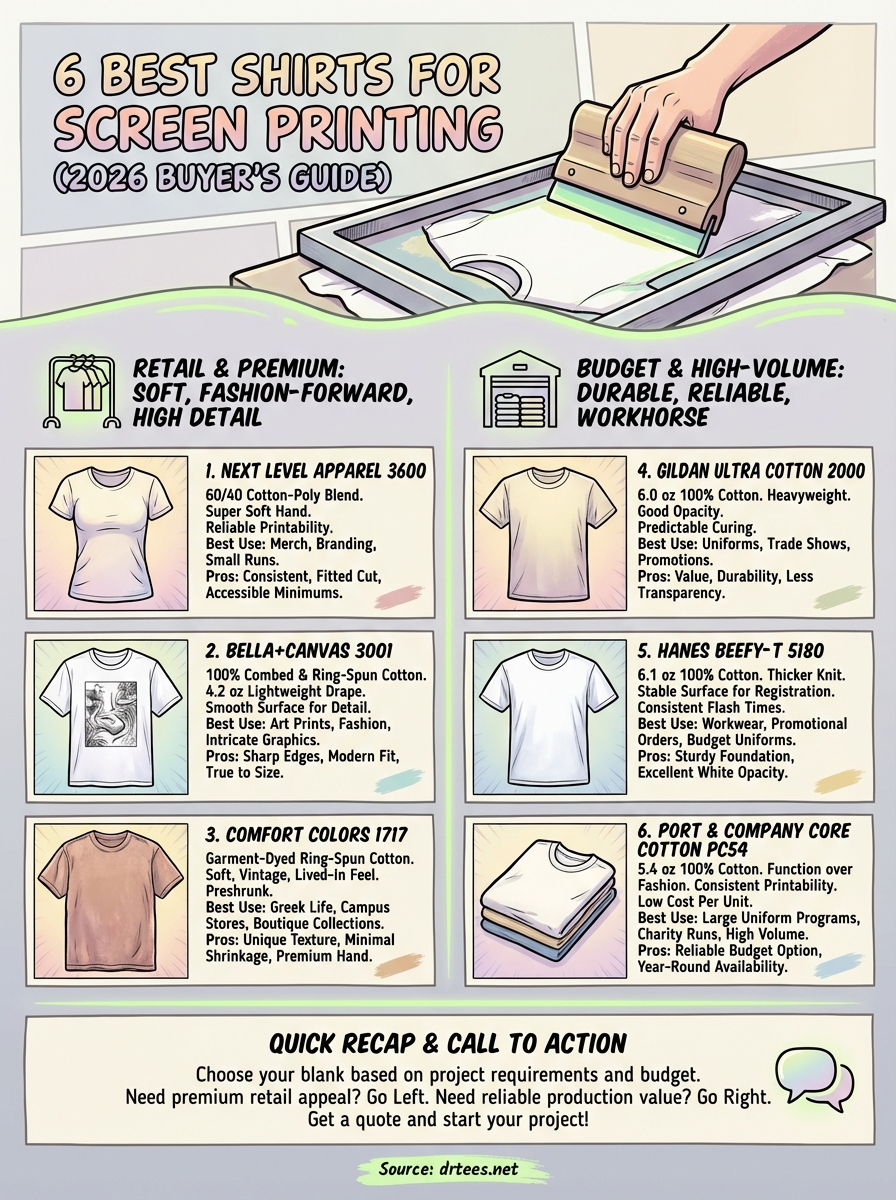
Quick recap
Choosing the best shirts for screen printing comes down to matching your blank to your project requirements and budget constraints. The Next Level 3600 and Bella+Canvas 3001 deliver retail-quality results for merchandise and fashion-forward apparel. Comfort Colors 1717 provides that premium garment-dyed feel customers recognize immediately. Gildan Ultra Cotton 2000, Hanes Beefy-T 5180, and Port & Company PC54 cover your high-volume and budget-conscious needs without sacrificing printability.
Each blank on this list has earned its reputation through thousands of successful print runs in professional shops. Your next step depends on whether you need premium retail appeal or reliable production value for your specific order.
Ready to start your custom apparel project? Get a quote from our team and we’ll help you select the perfect blank for your design, budget, and timeline.
